
Lieferung heute & morgen

Qualitätsgarantie

Willkommens-Angebote freischalten: KOSTENLOSE Lieferung | Bis zu 80 % RABATT | Kostenlose 30-Tage-JoyPlus-Testphase
App herunterladen
A baby monitor with camera lets you keep an eye on the nursery, sleeping area or living room with ease. Options range from traditional video baby monitors with a separate screen to Wi-Fi cameras with an app, motion detection and cloud storage. This variety can make it harder to compare models: some features sound impressive but may be of limited use in everyday life.
Specifications such as Full HD, 2K or 4K describe the picture resolution. How well the camera performs in low light, how much the image is compressed and whether the connection stays stable are all important too. A high-resolution image may be delayed if the Wi-Fi signal is weak. In a nursery, night vision, a stable connection and suitable positioning are just as important as the number of pixels.
A Wi-Fi baby monitor lets you access a camera through an app, even when you’re out and about. However, it needs a compatible Wi-Fi network, a working app and usually a smartphone. A traditional FHSS baby monitor, by contrast, transmits directly to its own monitor. This can be simpler to use at home and reduces reliance on the internet, an app account and cloud services.
Depending on the model, motion detection may react to people, pets, shadows or changes in light. When choosing an indoor camera, check whether it has detection zones, adjustable sensitivity or person detection. Automatic tracking can be useful, but it may also move the camera’s view away from the area you actually want to monitor.
Models with their own display are well suited to keeping an eye on things at home. Check the stated range, the walls in your home and the battery capacity. A 5-inch monitor with VOX or ECO mode can switch off the screen when things are quiet and turn it back on when it detects a sound.
A Wi-Fi camera with an app, on the other hand, offers remote access and often supports multiple user accounts. Check whether it supports 2.4 GHz Wi-Fi, 5 GHz Wi-Fi or both. Cameras with an app should also offer privacy features such as a privacy mode, privacy zones and local storage.
A baby monitor with night vision should let you see the sleeping area even when the lights are off. Infrared night vision usually works without visible illumination. Manufacturers’ range figures, such as 6 or 10 metres, should be treated as a guide, as they depend on the size of the room, the surfaces in it and the ambient light.
A camera with pan and tilt functions gives you a wider view. Even with a 360° camera, it’s worth checking how far it can tilt vertically. A model with 355° horizontal and 120° vertical movement covers a room differently from a camera with a 360° panoramic view and a more limited tilt.
A baby monitor with two-way audio lets you communicate through a microphone and speaker. When choosing one, consider voice delay, volume and how easy it is to use the feature in the app or on the monitor. Lullabies and temperature alerts can be useful extra features, but they don’t replace responsible supervision.
Recording options often include a microSD card, cloud storage or both. Check the storage capacity, any subscription costs and whether you can delete recordings. Position the camera so that it doesn’t capture private areas. Keep cables out of reach of babies and toddlers. Don’t place the camera in the cot or attach it directly to the cot bars if this could create a risk of pulling or strangulation.
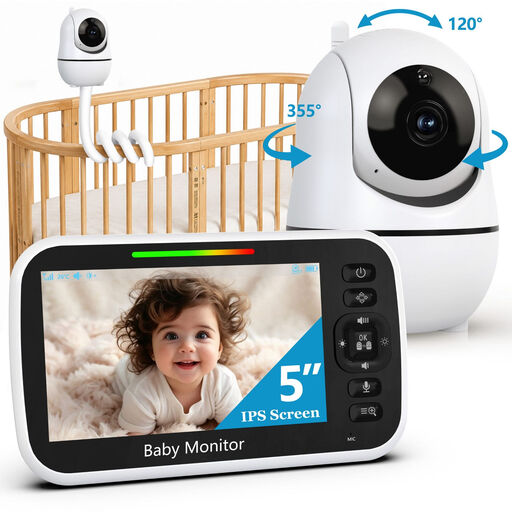
Why this product suits this type of user: According to the product description, its local 2.4 GHz FHSS connection needs neither Wi-Fi nor an app. The separate 5-inch monitor is a good choice for families who prefer direct monitoring at home.
It doesn’t rely on an internet connection or ongoing cloud services. ECO/VOX reduces screen activity during quiet periods.
355° rotation, 120° tilt, 2x zoom, infrared night vision, two-way audio and a temperature alert.
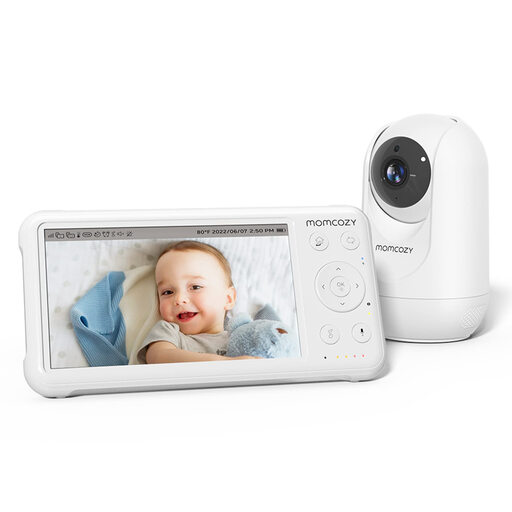
Why this product suits this type of user: This model combines a 1080p camera with a 5-inch display, infrared night vision and VOX mode. Its battery lasts up to 11.5 hours, according to the supplier.
The separate monitor means you don’t have to use a camera with an app. The specifications specifically list night vision, VOX and two-way communication.
1080p resolution, 360° field of view according to the product specifications, split-screen, loop playback and built-in lullabies.
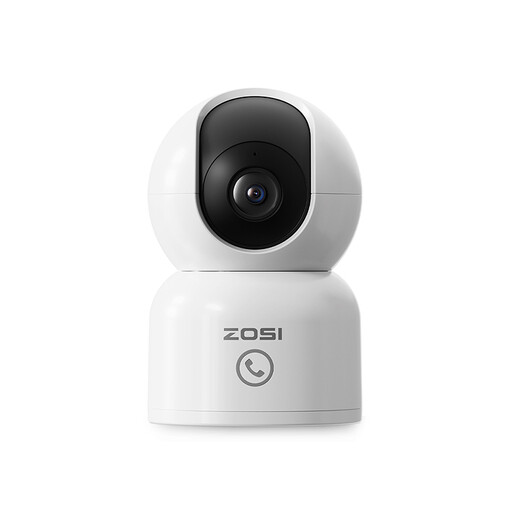
Why this product suits this type of user: This indoor camera is designed for households that want to keep an eye on children, dogs or other rooms using an app. It can be used as a baby monitor, pet camera or dog camera.
The specifications list person and motion detection, as well as privacy zones. This makes it easier to manage notifications and sensitive areas of the image.
2.5K resolution, 360° tracking, 10-metre infrared night vision, two-way audio and microSD storage up to 256 GB according to the product description.
We’ve put together a complete, regularly updated list of products that meet these strict selection criteria and fully comply with the safety regulations in force in the EU.
The two types of connection have different requirements. An FHSS baby monitor works locally between the camera and monitor. A Wi-Fi baby monitor offers remote access, but needs a secure Wi-Fi network, a strong password and regular software updates. Privacy mode and local storage can give you more control over image recordings.
The range depends on the infrared sensors, the size of the room and the surfaces in it. Manufacturers often quote figures of around 6 to 10 metres. In a nursery, position the camera so that furniture or curtains don’t block the view of the sleeping area. Check the specific range in the product description.
Electricity costs depend on the camera’s energy consumption. Cloud storage or advanced app features may involve additional charges. Depending on the model, storing recordings locally on a compatible microSD card may mean you can avoid a paid cloud subscription. Before buying, check the storage limit, card format and any free trial periods.