
Lieferung heute & morgen

Qualitätsgarantie

Willkommens-Angebote freischalten: KOSTENLOSE Lieferung | Bis zu 80 % RABATT | Kostenlose 30-Tage-JoyPlus-Testphase
App herunterladen
Introducing solid foods raises many practical questions: Which consistency suits your baby’s stage of development? Does “no added sugar” mean the same as low sugar? And when is a milk porridge for babies suitable, or a vegetable meal with meat? If you focus only on flavour pictures or eye-catching packaging when shopping, it is easy to overlook important details.
This shopping guide from the Joybuy Product Recommendation Officers explains the relevant information clearly and objectively. It focuses on baby porridge from 5 months, ingredient lists, age stages, allergens, pack sizes and the differences between ready-made jars and powder.
“From 5 months”, “from 6 months” and “from 7 months” are not interchangeable indications. According to the product information, Bebivita Good Night Porridge Biscuit & Banana is intended for babies from the 5th month. Bebivita Biscuit Milk Porridge, on the other hand, is recommended from 6 months, while Nestlé CERELAC Wheat & Fruits is offered for babies from 7 months.
Your baby’s individual readiness for solid foods is also important. Parents should follow the information on the packaging and, if unsure, consult a paediatrician or nutritional adviser.
Baby porridge with no added sugar can still contain sugar that occurs naturally in fruit, milk or cereals. It is therefore worth checking the nutrition table. For example, HiPP Fruit & Cereal Porridge Apple-Banana with Baby Biscuit lists 10.9 g of sugar per 100 g. According to the product description, the sweetness comes from the fruit it contains; no sugar has been added.
An organic seal describes the origin and production method of certain ingredients, but it does not automatically mean that a product is free from milk, gluten or other allergens. Organic baby porridge can also contain wheat, oats, milk or egg. The full ingredient and allergen labelling is therefore what matters when making your choice.
Various options are available when introducing solid foods:
The age recommendation should match the intended use. Cereal porridge from 5 months may have a different composition from baby muesli for older children. For products from 6 or 7 months, the relevant labelling is decisive.
In particular, check the following:
Powdered porridges are usually mixed with boiled, cooled water, milk or infant formula. Temperature and quantity instructions vary depending on the product. Prepare fresh, feed with a spoon and do not reuse leftovers unless the packaging states otherwise.
For jarred food, only remove the amount needed. Opened leftovers should be stored in the fridge and used according to the manufacturer’s instructions. Several products in this selection specify a period of up to three days; for vegetable meals, use on the following day is often recommended.
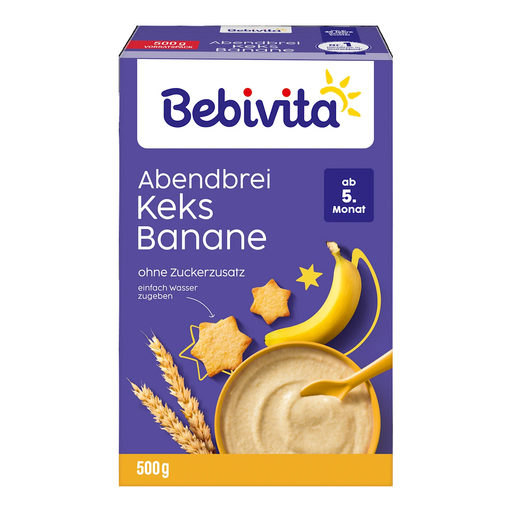
Why this product suits this profile: This milk and cereal porridge is mixed with water and is intended as an evening meal from the 5th month. The 500 g pack is suitable for regular servings.
The product information states that it contains no added sugar or sweetening juice concentrate. However, naturally occurring sugars from the ingredients are still present.
Age labelling from 5 months, simple preparation with water, and added calcium, iron and vitamin D according to the product data.
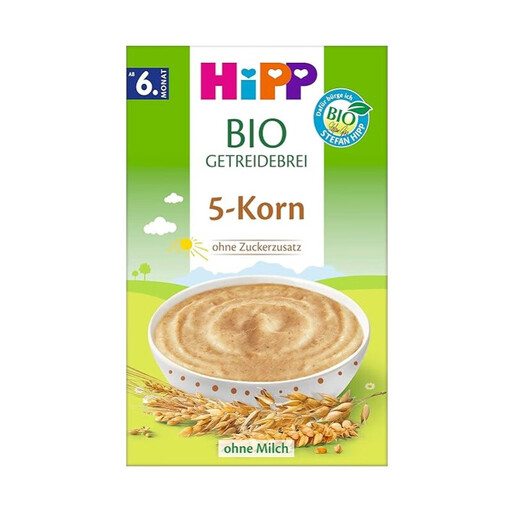
Why this product suits this profile: The pack contains five organic cereals and, according to the product description, can be prepared with water, milk or infant formula.
The ingredient list clearly names each type of cereal. Wheat, barley, rye, oats and spelt are easy to identify when checking for allergens.
Organic cereal blend, no added sugar according to the product information, and vitamin B1 listed as an added nutrient.
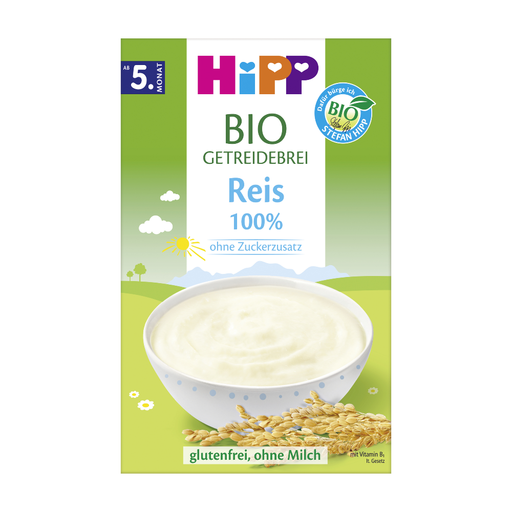
Why this product suits this profile: The large pack with seven sachets is designed for families who prepare porridge regularly and are looking for a gluten-free cereal base.
According to the product information, the recipe consists of 100% rice flour and vitamin B1. This makes the cereal base easy to understand at a glance.
Gluten-free recipe according to the product description, organic certification and no added sugar.
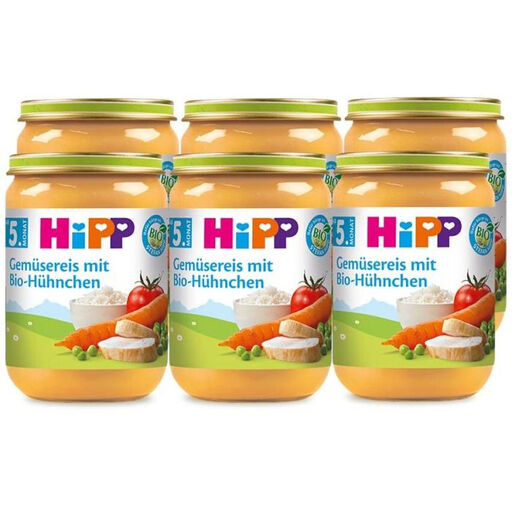
Why this product suits this profile: The multipack contains ready-made vegetable and rice meals with carrots, rice, tomatoes, peas and chicken. The jars require no powder preparation.
The ingredient and allergen information relates to a vegetable and rice meal with chicken. According to the product data, no salt has been added.
Ready-made portions in a six-pack, organic ingredients according to the product information, and a gluten- and lactose-free recipe.
We have put together a complete, regularly updated list of products that fully meet these strict selection criteria and the safety regulations applicable in the EU.
This depends on the age recommendation, your baby’s readiness for solid foods and your family’s individual requirements. Rice or multigrain porridges, fruit and cereal porridge and vegetable meals are all available. For specific dietary questions, seek medical or professional nutritional advice.
Powder should be stored in a dry place, tightly sealed and according to the instructions on the packaging. For the products mentioned, three to four weeks after opening is often specified. Opened jars must be refrigerated and are usually to be consumed within one to three days.
The cost depends on portion size, pack contents and preparation method. For regular use, powdered porridge may make larger packs more economical, while multipacks of jars simplify preparation. For a fair comparison, calculate the price per 100 g or per portion.