
Lieferung heute & morgen

Qualitätsgarantie

Willkommens-Angebote freischalten: KOSTENLOSE Lieferung | Bis zu 80 % RABATT | Kostenlose 30-Tage-JoyPlus-Testphase
App herunterladen
Baby wipes are part of many families’ essential kit. They are used when changing nappies, while out and about, and for cleaning hands and faces. The choice ranges from baby wipes with 99% water to fragranced versions with caring ingredients. However, a low price per wipe alone says little about whether a product suits your everyday routine.
The water content describes only part of the lotion. Preservatives, cleansing agents, fragrances and the structure of the fabric also play a role. If you are looking for baby wipes 99% water, you should therefore also check the full ingredients list and the intended use.
Fragrance-free wipes contain no added fragrance. Alcohol-free wipes, on the other hand, avoid certain types of alcohol. These two claims should be assessed separately. A product can be alcohol-free and still contain perfume. For families looking for wipes for sensitive skin, it makes sense to check both details.
A wipe made from plant-based or biodegradable fibres does not automatically belong in the toilet. Many biodegradable baby wipes must be disposed of in general waste after use. Even products labelled as flushable can cause problems in older pipes, septic tanks or where blockages are already known to occur. The disposal instructions on the packaging are decisive.
For everyday nappy changes, short, clearly presented formulations are often easier to assess. Depending on your personal preferences, look out for the following features:
For sensitive skin or skin that is prone to irritation, start with a small pack. If redness or irritation occurs, stop using the product. Baby wipes are intended for external use and are not a substitute for medical advice.
A high water content can be a suitable option for parents who prefer a lotion with as few additional ingredients as possible. However, the claim 99% water or 99.9% water should always be considered alongside the ingredients list. The moisture level of the wipe also affects how practical it is to use: if it is too dry, more friction is needed during cleaning; if it is very wet, taking it out of the pack can be awkward.
A sufficiently large, tear-resistant wipe can mean that fewer wipes are needed during a nappy change. For faces and hands, a soft, easy-to-control texture is more important. Also check the following:
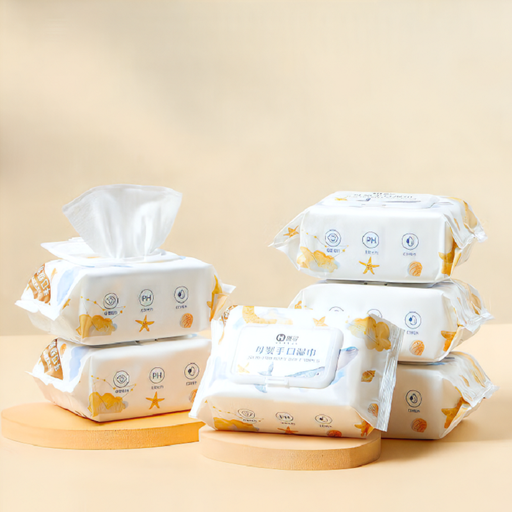
Why this product suits this profile: Ten resealable packs containing 80 wipes each provide a predictable household supply.
The product details state that the formulation contains pure water and is free from alcohol, parabens and fragrance.
A 130 × 170 mm wipe, 800 wipes in total and, according to the product description, dermatologically tested.
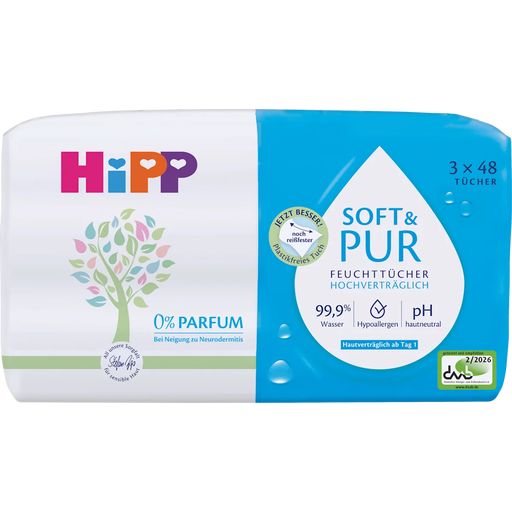
Why this product suits this profile: Suitable for families who value a very high water content and clearly presented product information.
The details state 99.9% water, 0% perfume and non-flushable use. This keeps fragrance and disposal information clearly separate.
100% plant-based fibres according to the product description, a skin-neutral formulation and 144 wipes across three packs.
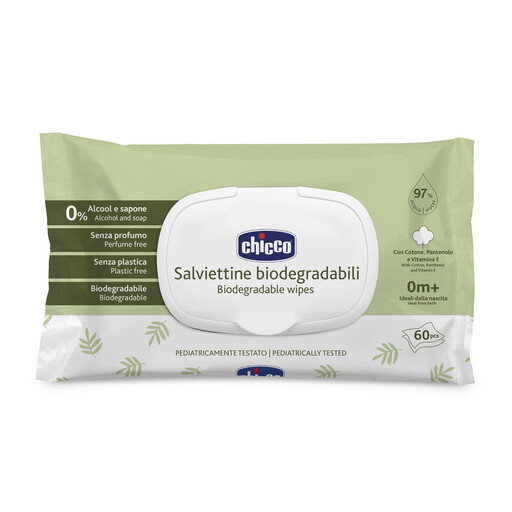
Why this product suits this profile: A bulk quantity for households with frequent nappy changes and a regular need for wipes for hands and faces.
The product details state that the wipes are made from 100% biodegradable natural fibres and have an alcohol-free, soap-free formulation. At the same time, disposal in general waste is expressly recommended.
720 wipes, plant-based natural fibres, plus panthenol, vitamin E and cotton extract according to the product description.
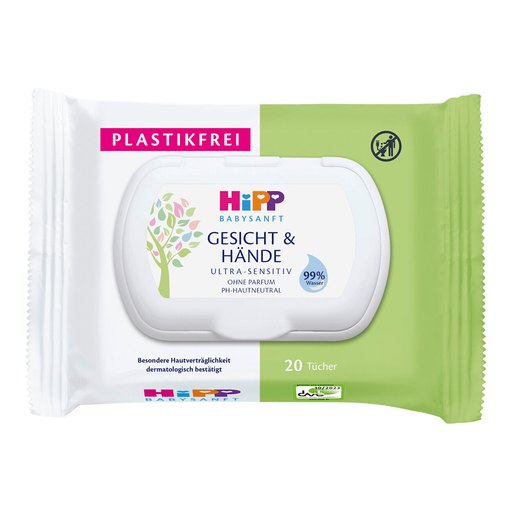
Why this product suits this profile: The compact pack is designed for cleaning faces and hands, and is easy to store in a changing bag.
The product description specifies that the wipes are intended for faces and hands. This helps prevent a specialist product from being confused with a bulk pack for nappy changes.
20 wipes, fine fibres, resealable packaging and an alcohol-free formulation according to the product details.
We have put together a complete, regularly updated list of products that fully meet these strict selection criteria and the safety regulations applicable in the EU.
When changing a nappy with baby wipes, clean the skin gently and then allow it to dry briefly. Wipe without applying strong pressure and avoid contact with the eyes. For faces and hands, choose products whose description expressly mentions these uses.
The pack should be closed fully after every use. Heat, direct sunlight and an open pack can cause the wipes to dry out. A small pack is ideal for a changing bag, while a bulk pack of baby wipes is best kept somewhere dry and cool at home. Used wipes should always go into the appropriate waste bin unless the packaging specifies another permitted method of disposal.
This depends on the manufacturer’s instructions for the product in question. Opened packs should ideally be used within the stated period and always kept properly sealed. If the smell, colour, moisture or consistency changes, stop using the product.
Fragrance-free wipes contain no added fragrance, but this does not automatically mean that every child will tolerate them. Also check the other ingredients and, if necessary, start by testing a small amount. Stop using the product if a skin reaction occurs.
A bulk pack can reduce the price per wipe and is practical if you use wipes every day. It is most worthwhile when the wipes are used up regularly. For occasional use or when out and about, smaller packs are more suitable, as individual wipes will not remain open for long.