
Lieferung heute & morgen

Qualitätsgarantie

Willkommens-Angebote freischalten: KOSTENLOSE Lieferung | Bis zu 80 % RABATT | Kostenlose 30-Tage-JoyPlus-Testphase
App herunterladen
A back cushion for your bed or sofa should provide stable support when you’re reading, watching television, or relaxing. In practice, however, many models don’t fit the seating area, slip during use, or are difficult to clean. If you’re looking for a reading cushion for the bed, a back support for the sofa, or a wall cushion for a bench, you shouldn’t focus solely on appearance.
A decorative cushion may feel pleasant, but it doesn’t automatically offer reliable back support. If the filling is too soft or too thin, your upper body can quickly sink backwards. This means the cushion often needs to be repositioned.
For more stable support, details about the type of filling, the padding thickness, and the shape are important. A wedge-shaped back cushion can promote a more upright sitting position thanks to its angled design. However, its actual suitability depends on your height, the seating furniture, and personal preference.
A large back cushion measuring 150 cm wide can accommodate two people, but it won’t automatically fit every bed or sofa. Before buying, you should check the following measurements:
A bed back cushion that is 80 cm wide is often easier to place in smaller areas. On a wide bed or a long bench, however, a model measuring 150 cm may be more suitable.
With daily use, dust, skin particles, and minor dirt accumulate on the cover. A washable cover with a zip makes cleaning much easier. It’s important to distinguish between a fully removable cover and a cushion that can only be wiped clean.
Drying should also be considered. Some covers can be tumble-dried on a low heat setting, while others should be air-dried. Incorrect care can damage the material and affect the fit.
For a sofa back cushion, the width and height are crucial. A cushion measuring 150 × 50 cm is generally suitable for a wide seating area or as a shared backrest for two people. A size of 80 × 50 cm can be used more flexibly on a single bed, armchair, or narrower sofa.
If you plan to use the cushion against a wall or on a bench, you should also check that the back has sufficient support. The cushion is not a substitute for a fixed backrest and should be placed on a stable, level surface.
A high-density polyester filling can offer more shape-retaining padding than a very loose filling. However, the name alone doesn’t tell you anything about personal sitting comfort. Pay attention to:
A seat cushion with a backrest, or a padded wall cushion, should not slip permanently. On some chair cushions, straps provide additional fixation. For freely placed bed and sofa cushions, however, the fit is the most important factor.
A removable cover with a concealed zip is practical in everyday use and discreet in appearance. An integrated side pocket offers space for a remote control, smartphone, or reading glasses. This is particularly useful if the cushion is used regularly on the bed or sofa.
However, extra features should not come at the expense of the main function. A side pocket does not replace stable back support, and a decorative fabric is not automatically suitable for outdoor use. Therefore, always check the care and usage instructions for the specific product.
The following models differ mainly in width, attachment, care, and area of use. The details are based on the respective product descriptions.
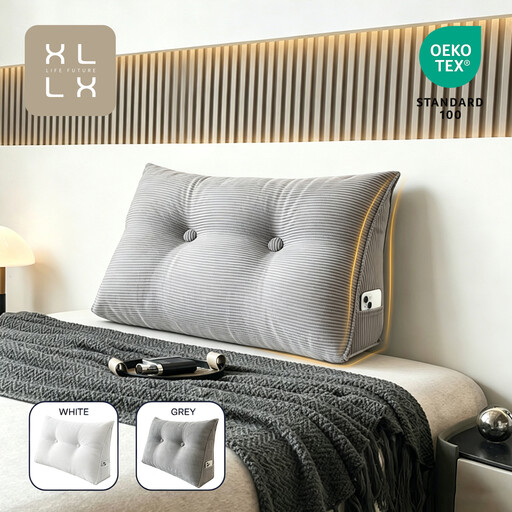
Why this product suits the profile: The 80 × 50 cm size is easy to handle on smaller beds, sofas, or individual seats. The side pocket is designed for remote controls and a smartphone.
The product description mentions a high-density polyester filling and a removable cover. This makes the filling and care clearer to assess before purchase than with a purely decorative cushion.
80 × 50 cm, wedge shape, concealed zip, machine-washable cover, and side pocket.
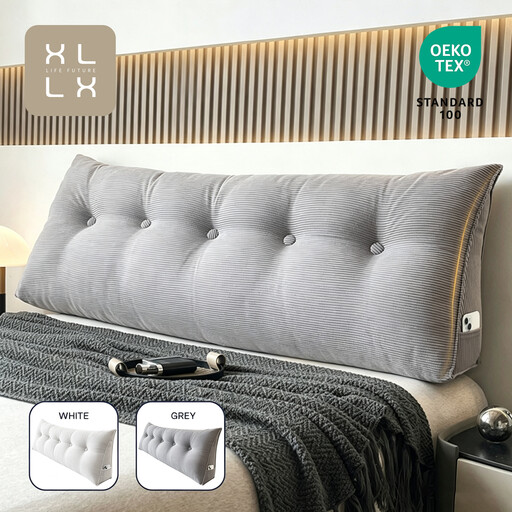
Why this product suits the profile: The 150 cm width is designed for large beds, wide sofas, and bench seats. The extra padding in the back area supports longer reading or television sessions.
The dimensions are clearly stated, making it possible to compare with your sofa or bed. The cover can be removed via a concealed zip and, according to the product information, machine washed.
150 × 50 cm, high-density polyester filling, breathable polyester cover, side pocket, and washable cover.
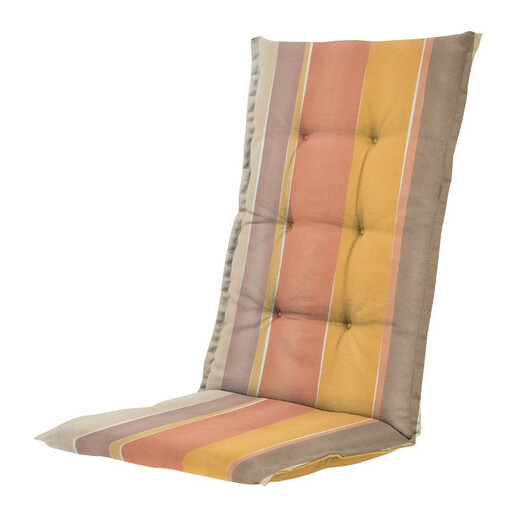
Why this product suits the profile: This model is designed for chairs and features adjustable straps for attachment. This makes it suitable for seats where a loose cushion might easily slip.
The adjustable attachment straps address the typical problem of slipping on chairs. At the same time, the product description explicitly states that the cushion is not water-resistant.
123 × 50 cm, adjustable straps, polyester fibre filling, and care at 30 °C on a delicate or hand-wash cycle.
We have compiled a complete, regularly updated list of products that fully meet these strict selection criteria and the safety regulations in force in the EU.
A back cushion is not a substitute for medical advice and is not intended for the treatment of health conditions. If you have persistent or severe back problems, you should seek medical advice.
The cushion should be placed with the wider, padded side against the wall or headboard. The bottom edge must rest as fully as possible on the mattress or seating surface. Before use, check that the cushion is stable and does not tip forward.
The lifespan depends on the frequency of use, the filling, the load, and the care given. Regular fluffing, correct washing of the cover, and dry storage can help maintain its shape. A fixed lifespan cannot be reliably stated without specific manufacturer information.
No. Measure the available width in advance and take into account the armrests and your desired sitting position. A 150 cm model may overhang on a narrow sofa, whereas on a wide couch or bench it can cover several seats.