Which design suits you?

Mixing vocals in a quiet space

If you’re mainly comparing recorded harmonies and their position in the mix, and aren’t recording at your desk at the same time, open-back headphones could work well. Beyerdynamic and Sennheiser describe their open-back models as suitable for mixing or analytical listening. Just bear in mind that you’ll still hear sounds from your surroundings.

Mixing in a shared workspace

If conversations or other sounds are distracting you at work, closed-back headphones with well-fitting ear pads are one option. Shure describes closed-back headphones as a way to reduce background noise, although how much they block out depends partly on the fit.

Mixing and recording your own vocals

If you record backing vocals and listen to the backing mix in the same space, closed-back headphones are a better choice as less sound escapes. Shure recommends closed-back headphones for recording; open-back designs don’t offer the same level of isolation.

What to consider when buying

Open-back, wired headphones

A good fit if: you’re comparing vocal layers and panning in a quiet space. Beyerdynamic and Sennheiser both offer open-back models for mixing or analytical listening.

The trade-off: sounds from your surroundings will reach your ears, and headphone audio may escape while you’re recording vocals. The Sennheiser HD 560S has a specified impedance of 120 Ohm, so check the volume you can get from your own audio output.

Closed-back, wired headphones

A good fit if: conversations at your desk are distracting, or you also record vocals there. Beyerdynamic, Audio-Technica and AKG all offer specific closed-back monitoring models.

The trade-off: passive isolation depends on the fit, and a closed-back design alone doesn’t guarantee neutral sound. Compare your vocal-mixing decisions with familiar reference tracks.

What matters to you What to check when buying Who it matters most to
Assessing backing vocal layers Design, fit and comparison with familiar vocal references. If I want to compare quiet harmonies and their balance repeatedly, being able to trust what I hear is my priority. Around 36% of consumers would put mix balance first.
Reducing distractions at work Closed-back design and a snug fit around the ears. If conversations interrupt my listening comparisons, I pay particular attention to passive isolation and a good fit. Around 29% of consumers would prioritise reducing background noise.
Recording vocals in the same space Closed-back design, fit and connection to your monitoring setup. If I want to hear the backing mix while recording vocals, as little headphone sound as possible should escape. Around 21% of consumers would put monitoring while recording first.
Long sessions and connectivity Ear pads and fit, suitable replacement parts, plug type and volume from your own output. If I’m editing for a long time and want to connect my headphones to a device I already own, comfort and a suitable connection matter most to me. Around 14% of consumers would put these points first.

Common buying misconceptions

  • Open-back headphones are the better choice for every vocal task

    Open-back designs let sounds from your surroundings reach your ears. Headphone audio may also escape while you’re recording vocals.

    Think about whether you’ll only be mixing or will also be recording in your actual workspace. For monitoring while recording vocals, closed-back headphones are worth considering.

    If you need different designs for mixing and recording vocals, you may need an extra pair of headphones.

  • “Studio” or a wide frequency range means neutral sound

    Manufacturer descriptions and technical specifications alone don’t tell you how reliably you’ll be able to judge the balance of your backing vocals.

    Try familiar vocal references on the model you’re considering, at a moderate volume.

  • You can sort out plugs, ear pads and the warranty later

    Connections, what’s included in the box and compatible replacement parts vary by model. A voluntary manufacturer’s warranty isn’t the same as your statutory consumer rights.

    Before buying, check the plug, any included adapters, whether replacement parts fit that exact model and the warranty terms.

    Depending on the connection or wear and tear, you may need a suitable adapter or model-specific replacement parts.

Key brands at a glance

beyerdynamic

The manufacturer describes the open-back DT 900 PRO X as suitable for mixing, and the closed-back DT 700 PRO X for recording, monitoring and mixing.

  • beyerdynamic specifies 48 Ohm, detachable cables and replacement parts for both models.
  • The open-back DT 900 PRO X doesn’t provide the same isolation as a closed-back model when you’re recording your own vocals. Manufacturer sound descriptions aren’t independent reviews.

Audio-Technica

Audio-Technica describes the ATH-M50x as closed-back monitoring headphones with passive isolation and a detachable cable.

  • The closed-back design is an option if monitoring or distractions at work are a concern.
  • The manufacturer’s claims about sound and popularity don’t prove that these headphones will sound neutral for every vocal mix.

Sennheiser

Sennheiser describes the open-back HD 560S as suitable for analytical listening and A/B comparisons in a quiet mixing space.

  • The manufacturer specifies 120 Ohm and a 3.5 mm connection with a 6.3 mm adapter.
  • Check the volume you can get from your output. The open-back design won’t isolate you during recording like a closed-back model.

AKG

AKG describes the closed-back, foldable over-ear K371 as suitable for monitoring and music production, among other uses.

  • AKG specifies 32 Ohm and includes several cables in the box.
  • Claims about neutral sound and comfort come from the manufacturer. Check the fit and sound profile with your own mix.

RØDE

RØDE offers the closed-back NTH-100 for monitoring, mixing and audio editing.

  • The cable is detachable, and RØDE says users can replace the ear and headband pads.
  • The manufacturer’s claims about precise sound and comfort aren’t independent comparison results.

Joybuy products to consider

These Joybuy options are for wired listening and monitoring. Check whether the design and sound reproduction suit your particular mixing or recording setup.
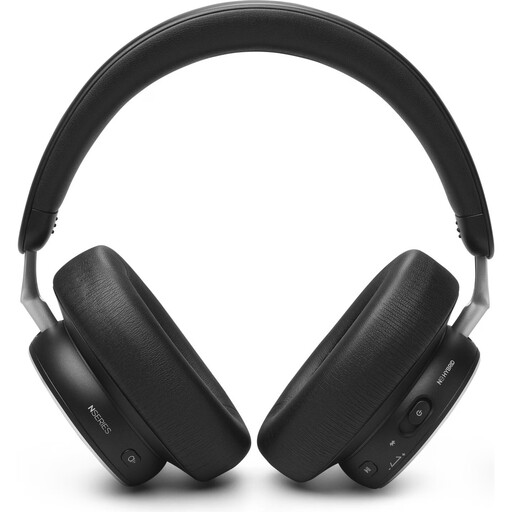
AKG N9 Hybrid over-ear headphones with Active Noise Cancellation

AKG N9 Hybrid over-ear headphones with Active Noise Cancellation

The closed-back over-ear design and specified 3.5 mm cable option could suit you if you want to listen over a wired connection at your desk. You’ll need to decide for yourself whether they’re suitable for making mixing decisions.

Features listed in the product name include Bluetooth 5.3 with multipoint, 55 hours of battery life, 40 mm neodymium drivers and a foldable design. Active Noise Cancellation is also specified.

View on Joybuy
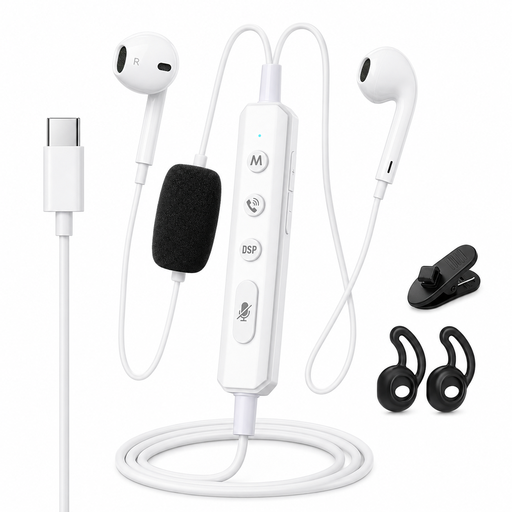
VoxorAI KM08 White wired in-ear headphones with sound card

VoxorAI KM08 White wired in-ear headphones with sound card

This wired in-ear model is listed as having a built-in sound card, real-time monitoring and recording. It isn’t suitable for judging the stereo positioning of vocal layers because playback is mono.

Type-C compatibility is specified. Before buying, check that the connection is compatible with your device.

View on Joybuy

Frequently asked questions

Should I buy open-back or closed-back headphones for backing vocals?

Open-back headphones could work for comparing mixes in a quiet space. If you also record vocals or find conversations distracting, closed-back headphones are a better choice: they let less sound escape and provide passive isolation. Check the fit on your own head.

How do I connect my headphones to my audio interface?

Check that the plug and, if needed, the adapter match your audio interface’s connection. If the available volume matters, check the output specifications alongside impedance and sensitivity. Only choose replacement ear pads or cables that fit your exact model.

Is a manufacturer’s warranty the same as your statutory consumer rights?

No. Your statutory rights entitle you to seek a remedy from the retailer if a product is faulty; a warranty is a voluntary offer governed by its own terms. The Verbraucherzentrale explains that these are two different entitlements.

Which labelling and disposal rules apply in Germany?

According to the European Union, CE marking is only required for products covered by relevant harmonised EU rules that require it; it isn’t a sound or quality mark. The Umweltbundesamt says that waste electrical equipment must not go in household rubbish. It should be taken for separate collection, for example to a recycling centre.

Should I just turn the volume up to hear details during long listening sessions?

No. The World Health Organization notes that the risk of hearing damage increases with the volume and duration of sound exposure. Listen at a low volume and take breaks. In a noisy environment, well-fitting closed-back headphones can help reduce the temptation to turn the volume up.