Who practises in the library?

Quiet listening at your desk

You’re preparing a backing vocal using recordings, without singing along audibly. The Berlin Central and Regional Library prohibits loud speech and other noise in its reading areas; headphones won’t make an audible voice inaudible.

Singers with access to an approved rehearsal room

You want to hear your own voice or record it, and can use a room where the rules allow singing practice. The Friedrichshain-Kreuzberg City Library offers a music room that must be booked in advance. Check the rules for your specific practice session directly with the library.

Long listening sessions and changing devices

You’re repeating sections for longer periods or using different devices. So check the fit over a realistic practice session, and make sure the connection and any adapters suit the audio source you actually plan to use.

What should you look for when buying?

Quiet listening at your desk

A good fit if: you listen to recordings repeatedly or prepare a vocal part silently.

The trade-off: A closed-back design can help limit sound leakage, but it won’t stop you singing audibly or guarantee a comfortable fit.

Singing or recording in an approved room

A good fit if: you want to hear your voice while singing or recording and have confirmed that you can use the room.

The trade-off: Closed-back headphones can reduce playback leaking into the microphone when recording. Direct monitoring also depends on your interface’s features and settings.

Open-back or semi-open headphones in a separate listening space

A good fit if: you’re comparing recordings somewhere quiet and isolation isn’t a priority.

The trade-off: Near other library users or a vocal microphone, consider possible sound leakage or audio bleed.

What matters What to check when buying Who it matters most to
Being considerate at your desk Check the closed-back design and fit; at a moderate listening volume, check whether any sound is audible to others. If I’m listening quietly at my desk, I don’t want to disturb others with sound leakage; around 36 % of consumers put consideration for others first.
Hearing your own voice Check room use in advance; for recording, check the microphone, headphone output and monitoring settings on your specific device. If I’m going to sing or record, I need a suitable room and the right monitoring setup; around 29 % of consumers prioritise monitoring their own voice.
Fit during repeated practice Try the fit for a realistic length of time and check that replacement ear pads are available for the exact model variant. For longer sessions, I want a fit and ear pads that work for me; around 21 % of consumers put long-term comfort first.
Compatibility with your device Check the output, plug and any adapters you need; test the volume you can reach with your specific setup. If I want to keep using my laptop or interface, the connection and listening volume need to suit it; around 14 % of consumers prioritise device compatibility.

Common misconceptions

  • Closed-back headphones soundproof a singing practice session

    The design affects what you hear and can reduce sound leaking into the microphone when recording. But it won’t muffle the sound of your own voice.

    Check the rules at the specific library before singing audibly there. Only use a room where your planned practice session is allowed.

    Singing audibly may also require a suitable room that has been approved for that purpose.

  • Impedance or the word ‘studio’ is enough to prove they’re suitable

    According to Focusrite, the volume you can reach also depends on headphone sensitivity, the output and the source material. Impedance alone won’t tell you for certain.

    Check the full model variant against your device, then try the plug, any adapter and the volume in practice.

    An incompatible connection may mean you need to check your setup further or find a suitable adapter.

  • Fit and ear pads don’t matter much for longer practice sessions

    Fit affects comfort and practical sound isolation; a tight seal won’t feel comfortable for everyone.

    If possible, try them for a realistic length of time and check that replacement ear pads are available for the exact model.

Relevant brands at a glance

Audio-Technica

The closed-back ATH-M30x and ATH-M50x are different wired monitoring headphones, and their features aren’t interchangeable.

  • Audio-Technica lists a detachable cable for the ATH-M50x.
  • The manufacturer also describes the ATH-M30x as closed-back, but the M50x’s features and cable specifications don’t apply to it. Fit should be checked individually.

beyerdynamic

The DT 770 PRO X is a closed-back, wired studio model with a detachable cable.

  • beyerdynamic lists a nominal impedance of 48 Ohm and a locking mini-XLR cable for the DT 770 PRO X.
  • You’ll need to check whether the fit, isolation and volume work with your own device.

Sennheiser

The HD 280 PRO is a closed-back monitoring option for repeated listening and travel.

  • Sennheiser lists a foldable design, replaceable ear pads and ambient noise attenuation of up to 32 dB.
  • The up-to-32 dB figure is the manufacturer’s claim for the model, not a guaranteed result for every user or an indication of how loud your own voice will sound.

Yamaha

The closed-back, over-ear HPH-MT5 is a foldable monitoring option for travel.

  • Yamaha lists a weight of 250 g and a closed-back, over-ear design.
  • The supplied 3-m cable may need managing in a small workspace. The manufacturer’s descriptions of comfort and sound aren’t independent test results.

Sony

The MDR-7506 is a closed-back, wired studio headphone.

  • Sony lists an impedance of 63 Ohm and a 3.5-mm/6.3-mm adapter for the MDR-7506.
  • These connection specifications alone don’t prove that the fit will suit you or that the volume will be sufficient with your device.

Joybuy products for quiet listening

The following over-ear models are worth considering for quiet listening; the AKG model is also listed with a wired playback option.
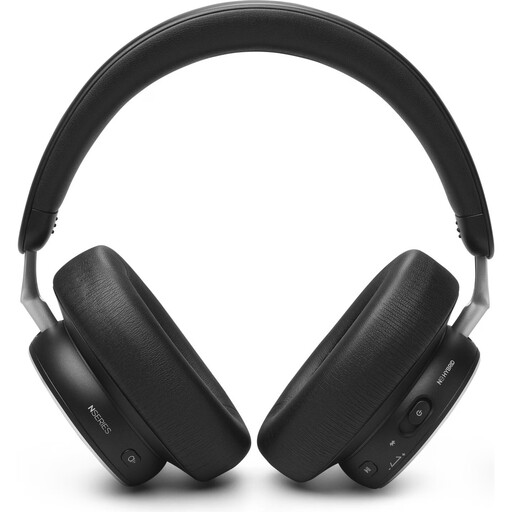
AKG N9 Hybrid over-ear headphones with 3.5-mm cable option

AKG N9 Hybrid Over-Ear Headphones, Black

The listed 3.5-mm cable option may suit you if you prefer a wired connection; check the connection and fit with your own device.

The product name lists Bluetooth 5.3, a 55-hour battery life, 40-mm drivers and a foldable design.

These headphones won’t make audible singing quiet; the rules of the particular library still apply.

View at Joybuy
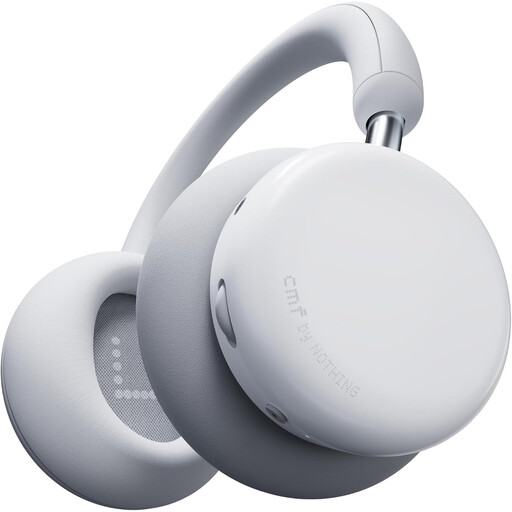
CMF Headphone Pro over-ear headphones in light grey

CMF Headphone Pro, Light Grey

The closed-back design may be a starting point for quiet listening; check the fit and whether anyone in the next seat can hear sound from them.

The product name lists Bluetooth 5.4 and battery life of up to 100 hours. The description mentions replaceable ear pads and a weight of 283 g.

These headphones won’t make audible singing quiet; the rules of the particular library still apply.

View at Joybuy

Frequently asked questions

Can I sing along audibly at my desk while wearing headphones?

It depends on the rules at the specific library and whether you have permission to use a suitable room. The Berlin Central and Regional Library prohibits noise in its reading areas; headphones don’t change the fact that your own voice may still be audible. The Friedrichshain-Kreuzberg City Library offers a music room that must be booked in advance. Check whether your planned practice session is allowed there; these local rules are neither a universal permission nor a general ban.

Why do I hear my recorded voice with a delay or twice?

With a compatible Focusrite interface, direct monitoring can send the input signal straight to your headphones. If software monitoring is also enabled, you may hear the signal again a little later. Check the settings on your specific interface and recording software.

What should I know about ear pads and making a claim?

Check for replacement ear pads for your exact model; Sennheiser lists replaceable pads for the HD 280 PRO. If there’s a fault, remember that your statutory rights are different from a voluntary guarantee. The Verbraucherzentrale explains that, in general, your statutory rights are against the seller.

Should I turn the volume up a lot for quiet passages?

No, don’t simply turn the volume up significantly. The World Health Organization notes that both volume and listening time affect the risk to your hearing. First, check the fit, background noise and playback level instead.