
Lieferung heute & morgen

Qualitätsgarantie

Willkommens-Angebote freischalten: KOSTENLOSE Lieferung | Bis zu 80 % RABATT | Kostenlose 30-Tage-JoyPlus-Testphase
App herunterladen
A robot vacuum that empties itself promises to make household chores significantly easier. But the market is flooded with models whose performance claims often don't hold up in practice. Before making a purchase, it's crucial to understand the common pitfalls that can lead to disappointment and unnecessary running costs. This guide will help you separate the wheat from the chaff and find a model that truly fits your needs.
Many devices advertise impressive specs and features, but not all are relevant for daily use. Pay close attention to these three points to avoid a bad purchase:
To ensure your new household helper performs its duties reliably, you should closely examine three technical features. These define its performance and convenience in daily use.
The core function of an auto-empty station is to automatically empty the small dustbin in the robot. In a bagless system, the dirt is suctioned into a larger, built-in container in the station. Depending on the model and the amount of dirt, this container only needs to be emptied manually every 30 to 60 days. Pay attention to the bin's volume (measured in litres) and a well-sealed system that prevents dust from escaping back into the air during emptying. This is a key aspect of a low-maintenance self-cleaning robot vacuum.
For efficient, gap-free cleaning in larger or complex homes, a robot vacuum with laser navigation (often called LiDAR) is the most reliable solution. This technology allows the device to create a precise map of your home and follow systematic paths. Advanced models combine LiDAR with additional sensors (e.g., ToF or structured light) to reliably detect and avoid low-lying obstacles like cables, shoes, or pet toys. This minimises the risk of the robot getting stuck.
A robot vacuum's effectiveness depends heavily on its ability to adapt to different floor types.
Instead of making a one-size-fits-all recommendation, we have identified models tailored to specific user profiles and their living situations.
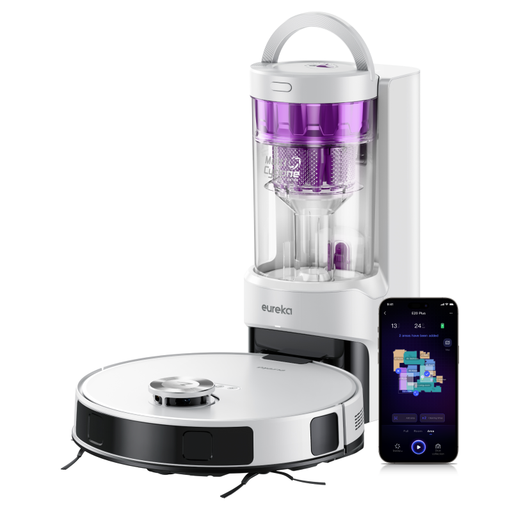
Why it's a good fit: This model is designed for demanding environments. Its high suction power of 8,000 Pa, combined with the anti-hair-tangle brush, is ideal for effectively removing pet hair from carpets and hard floors. The AI-powered obstacle avoidance reliably detects scattered toys or shoes.
The bagless auto-empty station with a 2-litre bin eliminates the running costs of dust bags. The anti-tangle system specifically addresses the problem of tangled hair, which high suction power alone cannot solve.
The combination of very high suction power, a bagless station, and a special anti-tangle brush makes it a powerful solution for homes with pets.
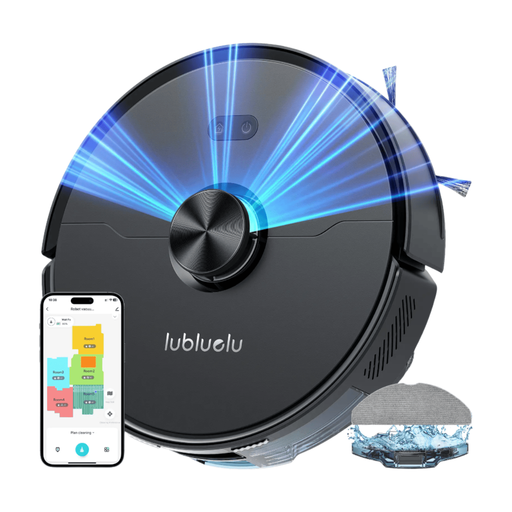
Why it's a good fit: This 3-in-1 device is designed for users seeking comprehensive, automated floor care for both vacuuming and mopping. With large tanks for dust (3L in the station) and water (4L), it can clean large areas of up to 300 m? without interruption.
Laser navigation ensures systematic cleaning, avoiding the inefficient random pattern. The bagless auto-empty station makes buying replacement bags obsolete.
The high-capacity tanks and long battery life enable continuous cleaning of large living spaces, making it a true 'set-and-forget' device.
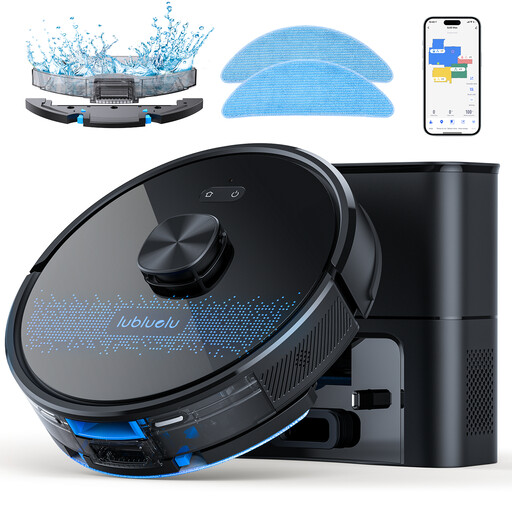
Why it's a good fit: This device offers the essential features for convenient, automated cleaning: an auto-empty station, laser navigation, and a mopping function. It's a solid choice for anyone who wants the convenience of a self-emptying system without complex extra features.
The auto-empty station eliminates the need for daily dustbin emptying. Laser navigation ensures a structured and therefore more efficient clean than basic models.
Offers the core features of low-maintenance cleaning—an auto-empty station and laser navigation—in a package with excellent value for money.
We have compiled a complete, up-to-date list of products that fully meet these strict selection criteria and safety standards.
1. How often does the bin of a bagless auto-empty station need to be emptied? The frequency depends on the size of your home, the number of pets, and the general level of dirt. On average, the collection bin in the station for most models needs to be emptied about every 30 to 60 days. Most apps will notify you when the bin is full.
2. Is a robot vacuum with high suction power always the right choice for pet hair? Not necessarily. While high suction power helps pull hair from carpets, the design of the brush roll is even more important. Models with rubber fin rollers or special V-shaped bristles are often more effective because they prevent hair from tangling and blocking the brush. Good anti-tangle technology is more crucial for pet owners than the raw Pascal number.
3. How does laser navigation work, and is it necessary for my home? A robot vacuum with laser navigation (LiDAR) uses a rotating laser on its top to scan the room in 360 degrees and create a detailed map. This allows it to clean systematically in straight lines, recognise rooms, and plan efficient routes. For homes over 60 m? (approx. 650 sq ft) or with multiple rooms, this technology is highly recommended as it ensures a faster, more thorough, and more reliable clean than models with simpler gyroscope or random navigation.