
Lieferung heute & morgen

Qualitätsgarantie

Willkommens-Angebote freischalten: KOSTENLOSE Lieferung | Bis zu 80 % RABATT | Kostenlose 30-Tage-JoyPlus-Testphase
App herunterladen
The search for a new vacuum cleaner often leads to a fundamental question: with or without a bag? A bagless vacuum cleaner offers clear advantages: there are no recurring costs for replacement bags, and suction power remains high even as the bin fills up. However, the market is diverse, and the choices can quickly become overwhelming. Which model is right for a household with pets? Which is particularly quiet? And what should allergy sufferers look out for?
This guide is here to help. We'll highlight the most important criteria for your purchasing decision and present a selection of models with different specialities to provide you with an informed basis for your choice.
Three technical features are particularly crucial for finding the right appliance for your needs.
For households with allergy sufferers, or for anyone who values high air quality, the filtration system is of central importance. A vacuum with a HEPA filter (High-Efficiency Particulate Air) is an excellent choice here. These filters are capable of removing even the smallest particles like pollen, fine dust, and dust mite allergens from the exhaust air. Pay attention to the filter class (e.g., HEPA 13 or 14) and whether the filter is washable to keep running costs low.
Most bagless models operate using cyclonic technology. A cyclone vacuum generates a vortex of air inside the dustbin. Through centrifugal force, dust and dirt particles are spun out of the airflow and collected in the bin. The advantage: there's no bag to clog and reduce suction power. A strong suction power is therefore maintained for longer. This is especially useful for effectively removing stubborn dirt or for a vacuum for pet hair.
The noise level of a vacuum cleaner is measured in decibels (dB). While older models often exceeded 80 dB, equivalent to the noise of heavy traffic, there are now much quieter devices available. A quiet vacuum with a rating below 70 dB allows you to clean without drowning out conversations or music. For noise-sensitive individuals or families with small children, this can be a decisive criterion.
Based on the criteria mentioned, we have compiled a selection of appliances that cater to different needs.
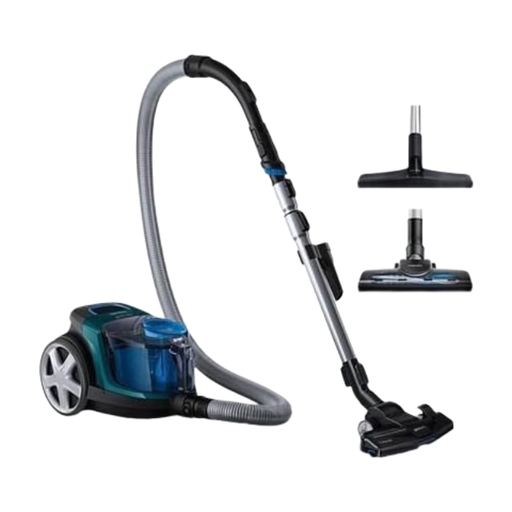
Why this model stands out: The Philips PowerPro Compact combines solid cleaning performance with a very lightweight and agile design. Weighing just 2.3 kg, it can be carried effortlessly through the home and up stairs.
Advantages:
Who is this model for? This model is a practical solution for small to medium-sized apartments, multi-story homes, and for those looking for a lightweight, straightforward appliance for daily cleaning.
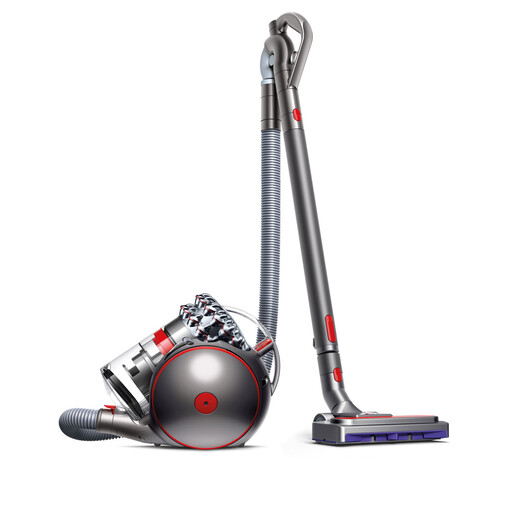
Why this model stands out: With this model, Dyson relies on its Cinetic technology. According to the manufacturer, the cyclone tips are so efficient that no filters need to be washed or replaced. The Big Ball design ensures that the vacuum rights itself if it tips over.
Advantages:
Who is this model for? Ideal for households with various floor types (hard floors and carpets), for pet owners, and for users who prefer a low-maintenance device with advanced technology.
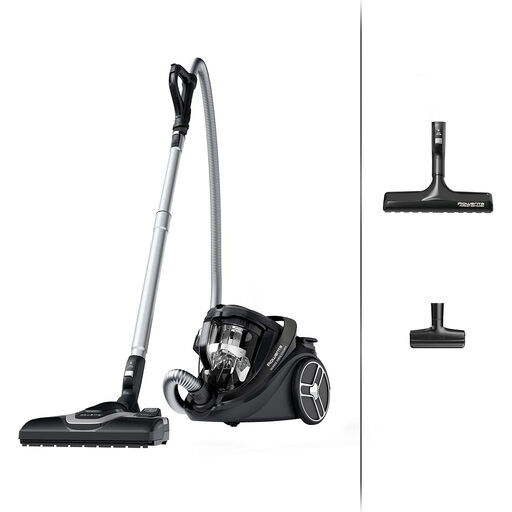
Why this model stands out: This model from Rowenta clearly focuses on quiet cleaning. With an operating noise of just 59 dB(A) according to the manufacturer, it is one of the quietest devices in its class and barely louder than a normal conversation.
Advantages:
Who is this model for? An excellent choice for families, residents of larger homes, and anyone who places a high value on a peaceful living atmosphere. Due to its high filtration performance, it is also well-suited for households with allergy sufferers.
A bagless canister vacuum is the right choice for many. However, for users who prioritise maximally hygienic disposal and want to avoid all contact with dust, bagged models can be an interesting alternative. The sealed bag securely traps dirt and is disposed of as a single unit.
If this is relevant to you, discover our selection of HEPA Bagged Vacuums, which also offer high filtration performance for clean indoor air.
Most bagless vacuums use cyclonic technology. A powerful vortex of air is generated inside the device, which separates dust and dirt from the air using centrifugal force and collects it in a bin. The cleaned air is then passed through additional filters before being released back into the environment.
Yes, especially models equipped with a high-quality filtration system. A vacuum with a HEPA filter is the recommended choice for this, as it reliably filters the smallest allergens like pollen, fine dust, and dust mite droppings from the exhaust air. For the most hygienic handling, the dustbin should ideally be emptied directly into an outdoor rubbish bin to minimise the release of dust in living spaces.
The dustbin should be emptied as soon as it reaches the maximum fill line to ensure consistently high suction power. The cleaning intervals for the filters vary depending on the model and frequency of use. Many filters are washable and should be cleaned according to the manufacturer's instructions (e.g., every few months). It is important that the filters are completely dry before being reinserted. Some models, like the featured Dyson, advertise maintenance-free filtration systems.