
Lieferung heute & morgen

Qualitätsgarantie

Willkommens-Angebote freischalten: KOSTENLOSE Lieferung | Bis zu 80 % RABATT | Kostenlose 30-Tage-JoyPlus-Testphase
App herunterladen
Choosing a new fishing reel is a process that should be based on analysing technical specifications and matching them to your intended application. For specialised freshwater predator fishing, anglers often face a choice between a baitcasting reel and a spinning reel. Both systems offer distinct mechanical advantages. A baitcaster, also known as a multiplier reel, positions the spool parallel to the rod's axis, enabling direct power transfer and precise lure control. A spinning reel, in contrast, has a fixed spool, which tends to simplify casting lighter lures. This guide focuses on the technical parameters relevant to selecting the right predator reel.
When planning to buy a fishing reel, several technical parameters are crucial. An informed decision is not based on subjective impressions, but on an evaluation of objective performance characteristics.
The braking system of a baitcasting reel is fundamental for controlling spool rotation during the cast and minimising line tangles, known as backlash or a "bird's nest".
The gear ratio (e.g., 6.3:1) indicates how many times the spool rotates with each turn of the handle.
The number of ball bearings is a frequently advertised feature, but their quality is more critical. High-quality, sealed ball bearings made of stainless steel or ceramic reduce friction, ensure smoother operation, and increase the reel's longevity, especially for freshwater fishing reel applications. Bearings in the line roller and on the handle shaft are particularly important.
The reel's weight affects the balance of the entire rod-and-reel setup and reduces fatigue during long days of fishing.
The following models have been selected based on their technical specifications and potential applications.
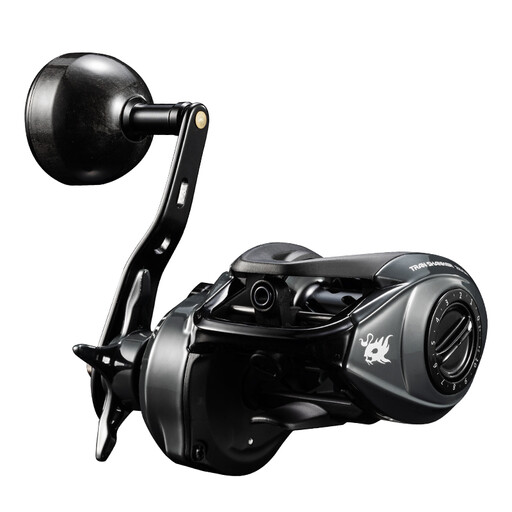
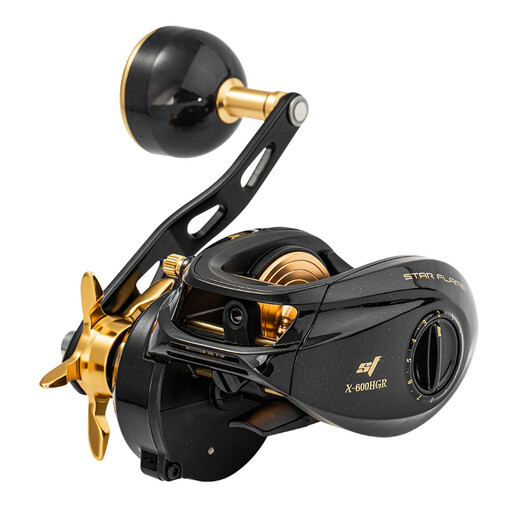
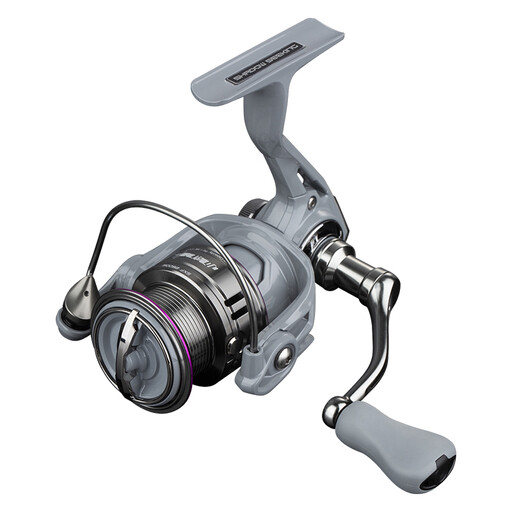
The models presented here represent a selection covering specific applications. The full spectrum of reel types, gear ratios, and sizes offers further specialised solutions. You can find a comprehensive overview of various models in our main Fishing Reels category.
1. What is the main difference between a baitcasting reel and a spinning reel? The fundamental difference lies in the spool design. On a baitcasting reel, the spool itself rotates during the cast and retrieve (parallel to the rod's axis). On a spinning reel, the spool is fixed (perpendicular to the rod's axis), and the line is wound on by a bail arm. This results in differences in casting technique, lure control, and power transfer.
2. How do I avoid backlash (bird's nests) with a baitcasting reel? Avoiding backlash requires correct adjustment of the casting brake (magnetic or centrifugal) and the spool tension knob (mechanical brake). The settings should be adapted to the lure's weight. Additionally, controlled thumbing of the spool during the final phase of the cast is crucial to prevent the spool from over-rotating.
3. What gear ratio is suitable for fishing for zander and perch? For typical zander and perch fishing with soft plastics (jigging or slow-retrieving), a medium to high gear ratio (e.g., 7.1:1 to 8.1:1) is often advantageous. It allows you to quickly make contact with the fish after a bite and rapidly take up slack line, which is important for an effective hook set.