
Lieferung heute & morgen

Qualitätsgarantie

Willkommens-Angebote freischalten: KOSTENLOSE Lieferung | Bis zu 80 % RABATT | Kostenlose 30-Tage-JoyPlus-Testphase
App herunterladen
Choosing a new baitcaster reel can be overwhelming given the vast array of models and technical specifications. Many anglers, especially those switching from a classic spinning reel, invest in a model that doesn't suit their fishing style or target species. This guide will help you understand the crucial features, avoid marketing traps, and make an informed purchasing decision.
Before we dive into the technical details, it's important to know the most common mistakes that can lead to a poor purchase.
A high number of ball bearings is often advertised as a primary indicator of quality. However, the sheer number says nothing about the quality, material (e.g., stainless steel), or corrosion resistance of the bearings. A reel with five high-quality, sealed stainless steel bearings can deliver significantly better and more durable performance than a reel with ten low-quality bearings that run rough or rust after a short time.
Baitcasters, also known as multiplier reels, primarily use two types of casting brakes to prevent the dreaded "bird's nest" (line tangles): magnetic brakes and centrifugal brakes. Beginners are often better served by a magnetic braking system that is easily adjustable from the outside. Complex, internal centrifugal brakes require more practice and are intended for experienced anglers seeking finer adjustments for maximum casting distance.
Every baitcaster is designed for an optimal lure weight range. Attempting to cast very light lures with a reel designed for heavy pike baits usually results in short, inaccurate casts. Conversely, a lightweight baitcaster can be overloaded by the continuous use of lures that are too heavy, leading to premature wear on the gears.
To buy the right fishing reel, you should check the following parameters and match them to your personal needs.
The gear ratio (e.g., 6.4:1) indicates how many times the spool rotates with one turn of the handle.
The body material affects weight, stability, and corrosion resistance.
Here are some recommendations tailored to different types of anglers and their requirements.

Why it's a match: This model is designed to be lightweight, making it well-suited for finesse fishing for perch and zander with light lures. Its low weight allows for hours of fatigue-free casting.
The reel is specifically designed as a lightweight baitcaster, thus avoiding the problem of using an unsuitable, heavy reel for light lures. The braking system is tuned for low lure weights.
Engineered with a focus on weight reduction. Suitable for precise casts with light jigs, rigs, and wobblers.
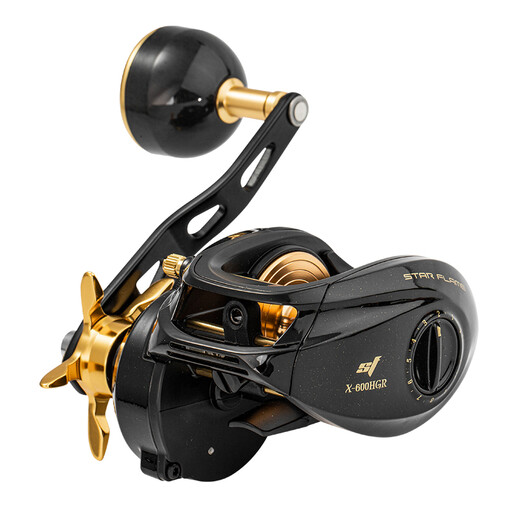
Why it's a match: This predator reel is designed for fishing with large, heavy lures for hard-fighting fish like pike. Its construction is aimed at maximum power transfer and stability.
This model focuses on high-quality, durable components rather than a high bearing count. The stable gearing and robust frame prevent overload when using big baits.
High power reserves ("big power") and a robust build for fighting trophy fish. Designed for use with heavy lures over 50 grams.
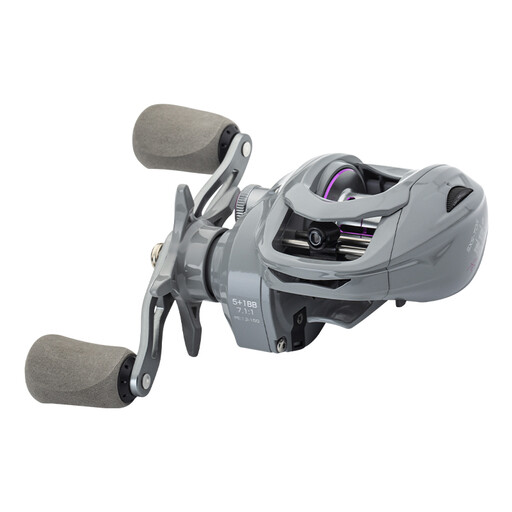
Why it's a match: This reel combines a sturdy aluminium metal body with features relevant to surf casting. It is intended for anglers who need a robust reel for coastal use, targeting species like cod or sea bass.
Instead of relying on a high bearing count, this model focuses on a corrosion-resistant and rigid metal body that withstands the stresses of saltwater and powerful fish.
Robust full-metal construction. Designed for longer casting distances and use in harsh conditions like surf fishing.
We have compiled a comprehensive, up-to-date list of products that meet these strict selection criteria.
Monofilament or braided lines are typically used for baitcaster reels. Braided lines are very popular for predator fishing due to their low stretch and high strength-to-diameter ratio. For beginners, a thicker monofilament line (e.g., 0.25 mm - 0.30 mm) can be more forgiving initially, as it is less prone to digging into itself during a backlash.
Start with a relatively tight setting for both the spool tension knob (mechanical brake) and the casting brake (magnetic or centrifugal). The spool tension should be set so that the lure falls slowly and steadily to the ground when the spool is released. Initially, set the magnetic brake to a high value (e.g., 8 out of 10). From this safe setting, you can gradually loosen the brakes to achieve more casting distance once you get a feel for the reel.
Yes, it's possible, but it requires a reel specifically designed for it. These models are often referred to as "BFS" (Bait Finesse System) or lightweight baitcasters. They feature a very light, shallow spool that starts up with minimal force, and a finely adjustable braking system. Attempting to cast lures under 5-7 grams with a standard baitcaster is usually inefficient.