
Lieferung heute & morgen

Qualitätsgarantie

Willkommens-Angebote freischalten: KOSTENLOSE Lieferung | Bis zu 80 % RABATT | Kostenlose 30-Tage-JoyPlus-Testphase
App herunterladen
The aroma of freshly baked cake or bread is hard to beat. But that joy can quickly fade when your creation sticks to the pan, browns unevenly, or your new bakeware warps after just a few uses. The market is full of promises, but not every product delivers. Before you invest, it's crucial to understand the common pitfalls that often lead to disappointment and unnecessary expense.
As your Joybuy Product Recommendation Officer, I've analysed the most frequent problems buyers encounter and will show you what to look for to make an informed decision.
The 3 Most Common Frustrations When Buying Bakeware:
To avoid these problems, you should check three core aspects before buying. These parameters are the primary determinants of your pan's longevity and baking performance.
The material is the foundation of any good baking pan. It influences heat conduction and durability.
A good non-stick effect depends on the type and application of the coating.
As a general rule for care: Clean non-stick pans by hand with a soft sponge and mild dish soap to maximise their lifespan.
Choose the pan that matches your baking project:
Here are some recommendations tailored to specific user profiles and the quality criteria mentioned above.
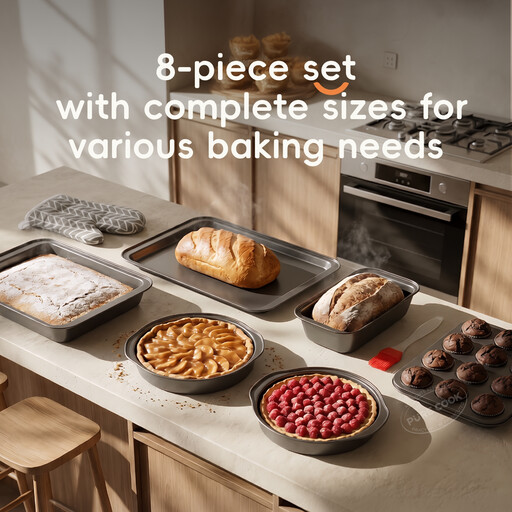
Why This Fits Their Persona: This set is ideal for baking novices or home bakers who want to try various recipes without immediately investing in expensive individual pans. It covers many basics, from brownies and sheet cakes to small casseroles.
Instead of buying a single, potentially unsuitable pan, this set offers a selection. The carbon steel construction ensures even heat distribution, preventing the uneven results common with thinner materials.
The bakeware set offers great versatility for various baking projects. The non-stick coating makes it easier for beginners to release their baked goods.

Why This Fits Their Persona: Anyone who regularly bakes bread, especially sourdough, needs a pan that can withstand the acidity and weight of the dough. This model is specifically designed for these demands.
It bypasses the trap of low-quality coatings that are corroded by sourdough. The enamelled base is cut- and scratch-resistant, while the KAIRAMIC ceramic coating is rated as sourdough-safe.
Extreme durability and acid resistance. The pan is heat-resistant up to 250°C and warp-resistant, ensuring an even crust when baking bread.
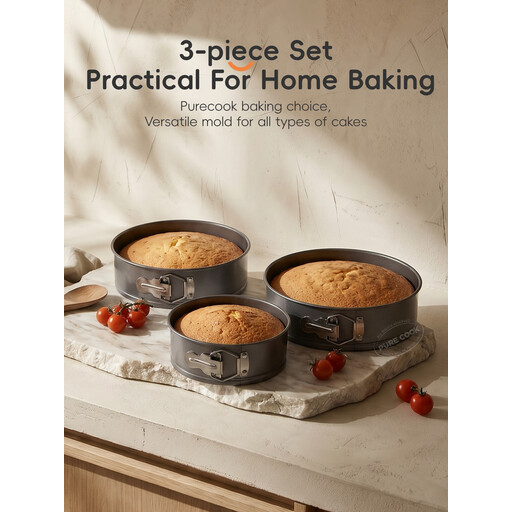
Why This Fits Their Persona: For those who love baking multi-layered cakes or cheesecakes in various sizes, reliable springform pans are essential. This set offers three common diameters for maximum flexibility.
It solves the problem of leaky springform pans. The adjustable metal clasp seals the seams tightly, preventing liquid batter, typical for cheesecakes, from leaking out—a common frustration with budget models.
The quick-release latch allows for tool-free unmolding, preserving the cake's shape. The non-stick coating helps it release cleanly from the base and sides.
We've compiled a complete, up-to-date list of products that fully meet these strict selection criteria and safety standards.
Proper care is crucial for longevity. After the pan has cooled, always clean it by hand with warm water, a mild dish soap, and a soft sponge. Avoid abrasive cleaning tools or metal utensils, as they can damage the coating. Dry the pan thoroughly afterwards to prevent rust.
Silicone baking pans are excellent for muffins, small cakes, and pastries with intricate details, as the baked goods release easily from the flexible material. However, for large, heavy cakes, the lack of stability can be a disadvantage; it's advisable to place the silicone pan on a sturdy baking sheet before putting it in the oven. The heat conduction also differs from metal, which can lead to slightly different baking times or browning results.
Sourdough has a low pH, meaning it is acidic. Over time, this acid can attack and break down low-quality non-stick coatings, compromising their effectiveness. A loaf pan declared as sourdough-safe has a resilient surface, often made of enamel or a special ceramic alloy, that can withstand this chemical stress over the long term without being damaged.