
Lieferung heute & morgen

Qualitätsgarantie

Willkommens-Angebote freischalten: KOSTENLOSE Lieferung | Bis zu 80 % RABATT | Kostenlose 30-Tage-JoyPlus-Testphase
App herunterladen
If you want to buy high-quality bakeware, you will find a wide choice of ceramic, stoneware, steel and coated tins. However, product images and terms such as “premium” alone reveal little about how practical an item is for everyday use. Clear information about the material, temperature range, cleaning requirements and size is what really matters.
The term ovenproof is only useful when a maximum temperature is stated. For cakes, bread and bakes, temperatures such as 240 °C or 260 °C are relevant. How the item handles changes in temperature is equally important: ceramic baking dishes and stoneware bakeware should not be moved straight from the freezer into a very hot oven unless this is expressly permitted. Even with suitable products, allowing them to cool slowly is advisable to prevent thermal shock.
Dishwasher-safe baking tins and dishes are convenient for everyday use. However, according to the product information, coated metal tins may still require gentle hand washing to prevent harsh detergents or abrasive sponges from damaging the non-stick coating. On ceramic items, a non-porous glaze helps prevent odours and colourants from sticking, but it does not make the bakeware unbreakable.
A large baking dish is suitable for lasagne, but it does not replace a bread tin or cake tin. In a dish that is too large, a shallow cake can quickly dry out, while bread in a small tin may not have enough room to rise properly. Before buying, make sure that the capacity, internal dimensions and rim height suit the recipe you plan to make.
Stoneware and ceramic retain heat for comparatively long periods and are suitable for bakes, gratins, cakes and desserts. Even heat distribution can help prevent food from browning more heavily in certain areas. However, the exact baking time will still depend on the recipe, oven and fill level.
Coated steel usually heats up more quickly and is popular for bread tins and cake tins. A non-stick coating can make it easier to remove baked goods, but it generally requires care when using metal utensils. If you regularly prepare tarts, quiches or small cakes, you can choose between ceramic, stoneware and coated carbon steel according to your cleaning and storage habits.
Before buying, check whether the dish or tin is approved for use in the intended oven, microwave, freezer or dishwasher. Not all ovenproof bakeware may be used on a hob or direct heat source. For example, the Le Creuset stoneware bakeware described here is specified for use up to 260 °C, while some coated Kaiser tins are designed for temperatures up to 250 °C.
Also look out for clear safety instructions:
For a small household, ramekins holding around 200 ml can be useful for soufflés, crème brûlée, desserts or side dishes. A set containing several sizes, on the other hand, can accommodate family-sized bakes as well as individual portions. Stackable dishes save space in small kitchens. You should also check whether handles and high rims make storage more difficult in drawers and deep kitchen cupboards.
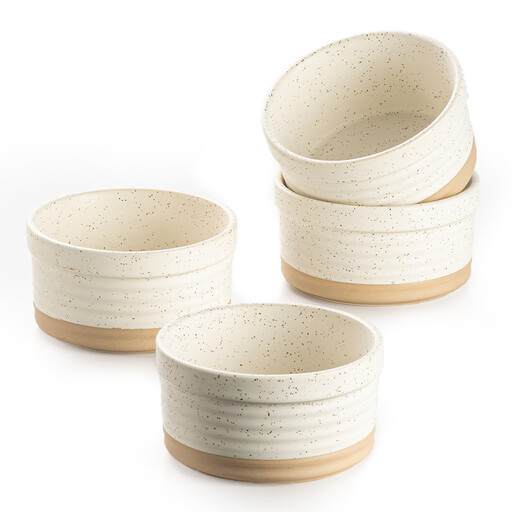
Why this product suits this profile: The four white porcelain ramekins, holding approximately 8 oz or around 237 ml, are suitable for smaller portions, dips, puddings, quiches and desserts. They are a practical way to add bakeware for specific recipes as and when needed.
The product description specifies suitable uses as well as compatibility with ovens, freezers and dishwashers. This makes the appliance limitations clearer than a purely promotional claim.
Set of four individual portions; glazed, non-porous surface according to the product description, and dishwasher-safe.
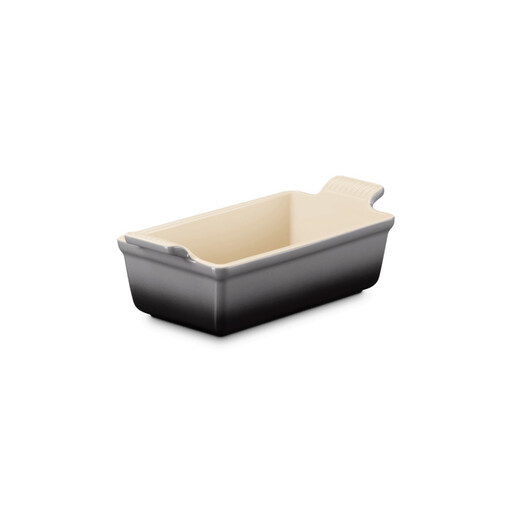
Why this product suits this profile: The 23 cm stoneware baking dish, with a capacity of 1.4 l, is designed for bread, cakes, lasagne and bakes. Its design allows it to go straight from the oven to the table.
The stated temperature range of -23 °C to 260 °C, together with the information on oven, freezer, microwave and dishwasher use, makes it easier to plan how to use the dish. It is expressly not designed for direct use on a hob.
Stoneware with a scratch-resistant glaze; according to the product description, suitable for ovens, freezers, microwaves and dishwashers.
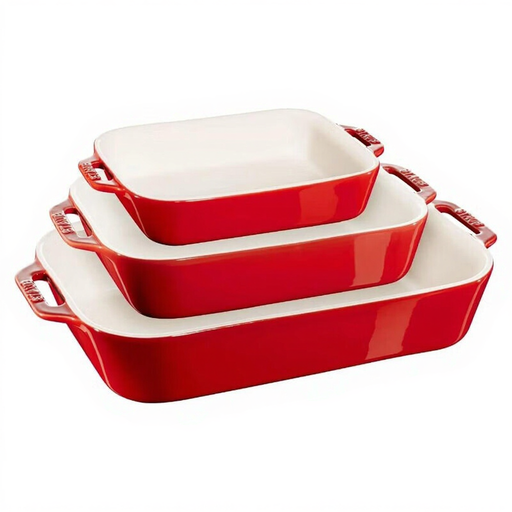
Why this product suits this profile: The set includes three rectangular dishes measuring 20 × 16 cm, 20 × 27 cm and 24 × 34 cm, with a total capacity of 4.5 l. It covers individual side dishes, gratins and larger bakes.
Three clearly specified sizes mean you do not have to use a single dish for every portion size. According to the product description, the dishes are stackable and dishwasher-safe.
Three sizes; ergonomic handles and a stated ovenproof temperature of up to 260 °C.
We have put together a complete, regularly updated list of products that fully meet these strict selection criteria and the safety regulations applicable in the EU.
For tarts and quiches, shallow tart tins with fluted edges are a good choice. According to the product description, the Le Creuset tartlet tin with six cavities is made from carbon steel, is ovenproof up to 240 °C and should be washed by hand. For larger cakes, Kaiser La Forme Plus cake tins are worth considering. It is particularly important to check whether the specific version is dishwasher-safe, as care instructions can vary within the same range.
If you bake bread regularly, pay attention to the internal length, rim height and dough quantity. A Kaiser bread tin for 1,500 g loaves is designed for temperatures up to 250 °C, but according to the product description is not suitable for the dishwasher. This information is more important for ongoing care requirements than a general statement about the quality of the coating.
Ceramic and stoneware work well for bakes, gratins, tarts and desserts because they retain heat and can often be used directly at the table. Coated steel is practical for bread tins and cake tins when easy release is the priority. The key factors are always the approved temperature range, care instructions and the specific type of recipe.
Avoid sudden changes in temperature unless the manufacturer expressly permits them. Place hot dishes on a stable, heat-resistant surface and allow them to cool before washing. Before every use, check the bakeware for cracks or chips.
For households that bake frequently, dishwasher compatibility can save time. However, hand washing is often gentler on coated tins. With ceramic and stoneware, check whether the handles, glaze and product size are suitable for your dishwasher. The binding care instructions for the specific product always take precedence.