
Lieferung heute & morgen

Qualitätsgarantie

Willkommens-Angebote freischalten: KOSTENLOSE Lieferung | Bis zu 80 % RABATT | Kostenlose 30-Tage-JoyPlus-Testphase
App herunterladen
A good baking dish is the cornerstone of many kitchens. It's the foundation for creamy gratins, hearty lasagnas, or a succulent Sunday roast. But the market is overwhelming, and many products don't live up to their promises. Before you make a decision you'll later regret, it's crucial to understand the most common pitfalls that often lead to disappointment and unnecessary expense.
As your Joybuy Product Recommendation Officer, I'll help you navigate the marketing jungle and find a dish that truly fits your needs.
Many buyers are swayed by advertising claims that often don't hold up in practice. Pay special attention to these three points to avoid a bad buy:
To make the right choice, you should focus on objective and verifiable features. The following three aspects are crucial for the longevity and functionality of your new baking dish.
Each material has specific pros and cons that make it ideal for certain dishes and cooking needs.
The shape should match the dishes you prepare most often.
A matching lid significantly increases functionality. It keeps moisture in the food, protects against splatters in the oven, and makes storage easier.
Pay attention to the maximum temperature resistance specified by the manufacturer. A good oven-safe dish should withstand temperatures of at least 250°C (482°F). Dishwasher suitability is a convenience feature, but a smooth, seamless interior is often more important for easy hand washing.
Here are some recommendations tailored to different needs and cooking habits.
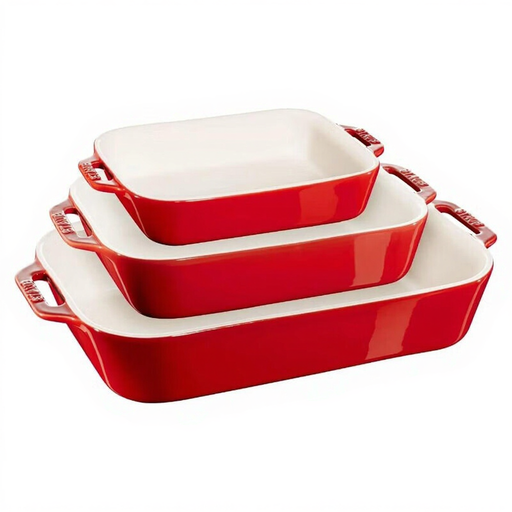
Why This Fits Their Persona: This set is ideal for everyday family life, offering three practical sizes for main courses, side dishes, and desserts. The dishes are elegant enough to go straight from the oven to the table.
The set solves the problem of limited versatility by providing three formats for various occasions. The high-quality ceramic with a smooth enamel surface is scratch-resistant, debunking the illusion of only short-term easy cleaning.
Three stackable dishes for space-saving storage. Heat-resistant up to 260°C (500°F) and dishwasher-safe for maximum convenience.
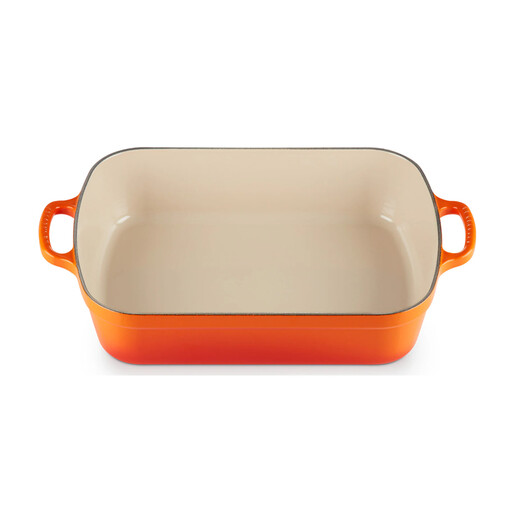
Why This Fits Their Persona: For those who invest in long-lasting quality and refuse to compromise on cooking performance. This cast iron roaster is a statement piece that will last for generations and deliver excellent cooking results.
Cast iron is naturally extremely heat-resistant and robust, thus avoiding the "oven-safe" trap. Le Creuset's high-quality enamel is renowned for its durability and ease of cleaning, even after years of use.
Excellent heat retention and distribution for even cooking. Suitable for all stovetops (including induction) and the oven.
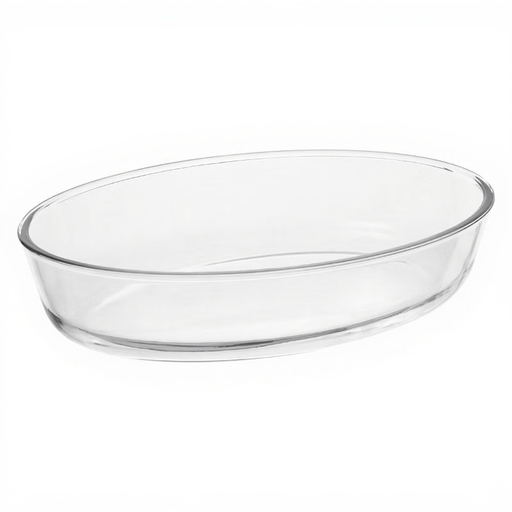
Why This Fits Their Persona: A straightforward and functional solution for daily use. The combination of heat-resistant glass and a practical lid makes this dish an all-rounder for preparing, serving, and storing.
Made from borosilicate glass, this dish is highly resistant to thermal shock, bypassing the "oven-safe" trap. The smooth glass surface is naturally easy to clean, and the included lid enhances its versatility.
Oven, microwave, and dishwasher safe. The polypropylene lid allows for easy covering and storage of food.
We have compiled a complete, up-to-date list of products that fully meet these strict selection criteria and safety regulations.
Generally, it is not recommended to place a cold glass dish into a hot oven, as the sudden temperature difference (thermal shock) can cause it to crack. Even though dishes made of borosilicate glass are more resistant, it is safer to let the dish come to room temperature for a few minutes before heating.
The terms are often used interchangeably, but there are functional differences. A roaster, typically a cast iron roaster, is often heavier, has a tight-fitting lid, and is suitable for both the stovetop (for searing) and the oven (for braising). A classic baking dish made of ceramic or glass is primarily designed for use in the oven and is usually lighter.
For enamelled cast iron, care is simple: after it has cooled, clean it with warm water and a soft sponge. It is usually dishwasher-safe, but hand washing is recommended to extend the life of the enamel. Avoid metal scouring pads. For non-enamelled cast iron, it is important to dry the dish thoroughly immediately after cleaning and occasionally rub it with a thin layer of oil to prevent rust.