
Lieferung heute & morgen

Qualitätsgarantie

Willkommens-Angebote freischalten: KOSTENLOSE Lieferung | Bis zu 80 % RABATT | Kostenlose 30-Tage-JoyPlus-Testphase
App herunterladen
A baking dish should do more than just hold lasagne. Depending on its design, it can also be used as an oven dish, baking dish, gratin dish or cake tin. However, poor purchases are often not caused by the recipe, but by unclear information about the material, capacity and cleaning requirements.
The stated dimensions, such as “24 × 36 cm”, do not always describe the usable area. Handles, reinforced edges and sloping sides can reduce the interior space. For lasagne sheets, baking tray inserts or layered gratins, the internal dimensions are therefore crucial.
Also check the height. A shallow baking dish is suitable for biscuits or thin gratins, while a deep rectangular baking dish is better for bakes, casseroles and cakes with plenty of filling.
A non-stick baking dish can make it easier to remove food. However, the coating will only remain effective if you avoid using sharp-edged or metal kitchen utensils. Abrasive cleaning products and excessive mechanical stress can also damage the surface.
Look for specific information about the coating, such as PFOA-free, and read the care instructions. “Dishwasher-safe” and “recommended for a long service life” do not always mean the same thing. Hand washing is recommended for several coated dishes, even though individual product details may also state that they can be washed in a dishwasher.
A dish may be suitable for use in the oven but not for going directly from the freezer into a hot oven. Ceramic and cast iron in particular are sensitive to sudden temperature changes. Specifications such as -18 °C to 260 °C or up to 240 °C should therefore always be considered together with the safety instructions.
The capacity should match the recipe and number of people. A dish holding around 1.3 to 1.6 litres is suitable for smaller households, side dishes or compact desserts. Models with a capacity of around 4.5 to 4.75 litres are more practical for family meals.
A baking dish with a lid offers additional uses: leftovers can be covered, transported or stored after baking. However, the lid is not a substitute for checking its temperature rating. Not every lid is suitable for use in the oven.
A rectangular baking dish generally makes efficient use of the available space for lasagne sheets. Side handles make it easier to remove the dish while wearing oven gloves, but require additional storage space. If a dish has a removable base, check whether it is suitable for liquid batters and very juicy bakes.
For care, allow hot dishes to cool down, do not use metal utensils on coated surfaces, and avoid sudden temperature changes with enamel or ceramic.
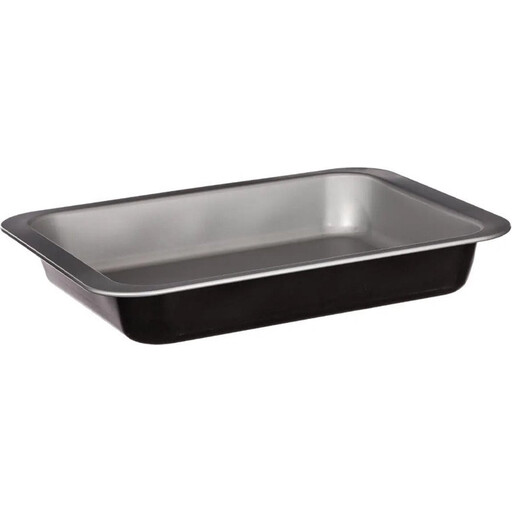
Why this product suits this profile: With a compact design and a capacity of 2.4 litres, this dish is suitable for smaller households, side dishes and modest-sized bakes.
The stated capacity and dimensions make its limits of use clearer than a size description alone.
Metal construction, ILAG non-stick coating and a capacity of 2.4 litres.
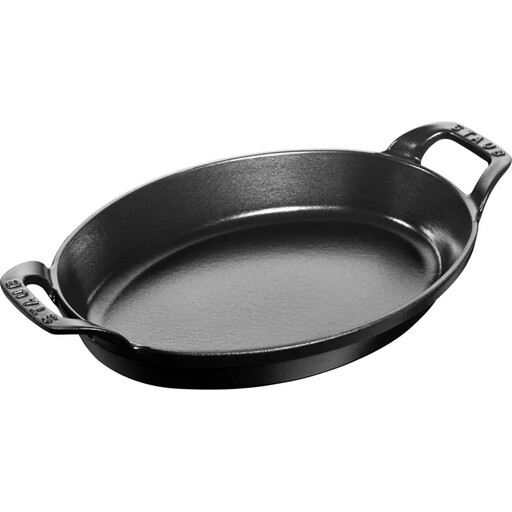
Why this product suits this profile: Enameled cast iron combines excellent heat retention with the convenience of taking the dish straight from the oven to the table.
The temperature specifications of up to 240 °C and down to -20 °C indicate its limits, although sudden changes should still be avoided.
Capacity of 1.6 litres, enameled cast iron and two side handles.
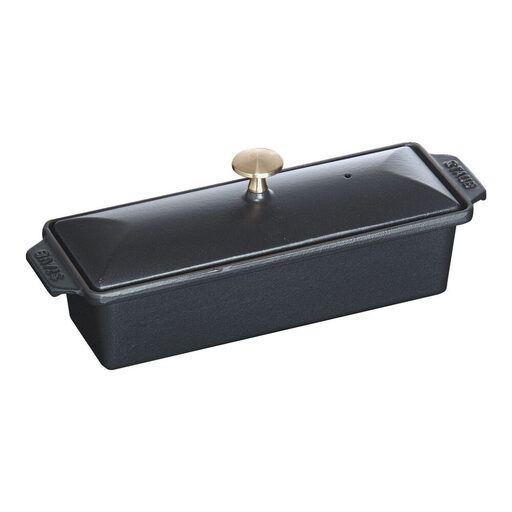
Why this product suits this profile: With a capacity of 1.45 litres and a lid, this terrine is designed for households that want to cook, store and transport food gently.
The lid features a steam vent, while the capacity, temperature range and compatibility are also clearly specified.
Cast iron, glazed interior, lid and suitability for all hob types including induction, according to the product description.
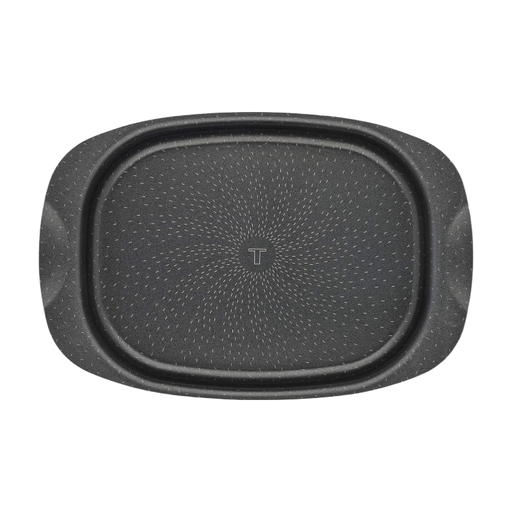
Why this product suits this profile: The 4.75-litre capacity provides plenty of room for lasagne, pasta bakes and large vegetable gratins.
The large capacity is clearly stated, reducing the risk of having to bake a family recipe in several batches.
Recycled aluminium, rectangular design, lid and PFOA-, lead- and cadmium-free coating according to the product information.
We have compiled a complete, regularly updated list of products that fully meet these strict selection criteria and the safety regulations applicable in the EU.
For four to six people, a capacity of around 4 to 5 litres is usually suitable. A dish measuring approximately 24 × 36 cm may be suitable for lasagne and larger gratins. The internal dimensions, height and size of your oven remain the key considerations.
This depends on the material and the manufacturer’s instructions. Ceramic and cast iron should not be exposed to severe thermal shock. Unless the instructions expressly permit a direct transition, allow a cold dish to reach room temperature first.
It is not possible to give a reliable fixed service life. This depends on the temperature, frequency of use, cleaning method and utensils used. Hand washing, soft sponges and wooden or silicone utensils can help preserve the coating for longer. If the dish shows visible damage, it should no longer be used in accordance with the manufacturer’s instructions.