
Lieferung heute & morgen

Qualitätsgarantie

Willkommens-Angebote freischalten: KOSTENLOSE Lieferung | Bis zu 80 % RABATT | Kostenlose 30-Tage-JoyPlus-Testphase
App herunterladen
A baking dish is a staple in many British kitchens, yet it’s often chosen by looks rather than by the features that really matter. Small differences in material, capacity and everyday care can make a big difference. A dish that works for lasagne won’t automatically be suitable for the microwave, the freezer or for storage with a lid.
The term oven-safe dish on its own doesn’t tell you much. What really counts is the maximum temperature the material can withstand and whether the lid must be removed. With glass and ceramic dishes, the switch between very cold and very hot environments is also critical. A cold dish straight from the fridge should not be placed into an already preheated oven unless the manufacturer says it’s safe.
A rectangular baking dish with long outer edges can still have a limited usable volume if the sides are low. For lasagne, potato gratin or a family bake, it’s the internal dimensions, height and actual capacity that matter. Smaller dishes are better suited to side dishes, single portions or desserts.
A common misunderstanding with a baking dish that comes with a lid: the container may be oven-safe, while the plastic lid is only intended for the fridge, freezer or transport. With the LocknLock glass container, for example, only the glass container – not the lid – can be used in the oven or microwave. Such instructions should be checked before you buy and before every use.
A glass baking dish lets you see the contents and, depending on the model, is suitable for the oven, microwave, fridge and freezer. Borosilicate glass is used in several products, but specific temperature limits vary. The LocknLock glass container is rated up to 400 °C without the lid, according to the product information.
A ceramic baking dish or stoneware dish retains heat and can often be taken straight to the table. However, it is heavier than glass or steel and is sensitive to sudden temperature changes. An enamelled surface can make cleaning easier, but it doesn’t replace the manufacturer’s instructions.
Steel and aluminium are relatively light. A coated baking tin should be used with wooden, plastic or silicone utensils to avoid scratching the surface. With a roasting dish made of enamelled cast iron, the focus is on heat retention and suitability for larger dishes. The extra weight should be considered when lifting.
A rectangular baking dish often makes practical use of oven space and works well for layered dishes. An oval baking dish is ideal for roasts, whole vegetable portions or an attractive table presentation. Before you buy, compare the internal dimensions and the oven rack.
A dishwasher-safe baking dish cuts down on cleaning effort. However, different rules often apply to lids, seals and coated baking tins. So check each point separately:
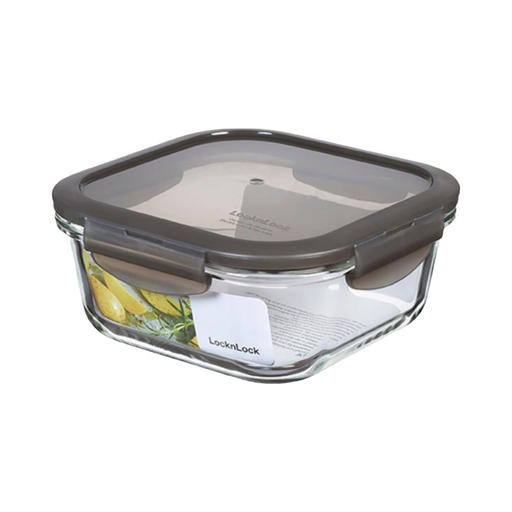
Why this product fits the profile: The 750 ml container is ideal for single portions, meal prep and smaller bakes. The square shape stacks neatly in the fridge to save space.
The product details state 750 ml, dimensions of 15.5 × 15.5 × 6.9 cm and the clear instruction to remove the plastic lid before using in the oven or microwave.
Borosilicate glass, rated up to 400 °C without the lid according to the product information; lid and silicone seal are separately removable and dishwasher-safe.
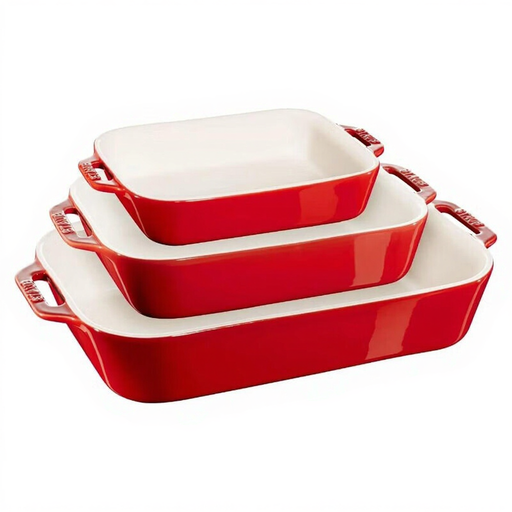
Why this product fits the profile: Three rectangular ceramic dishes measuring 20 × 16 cm, 20 × 27 cm and 24 × 34 cm cover different portion sizes.
The different sizes prevent you from using the same dish for both small and large meals, avoiding it being either too big or too small.
Enamelled ceramic, oven-safe up to 260 °C according to the product information, dishwasher-safe and stackable.
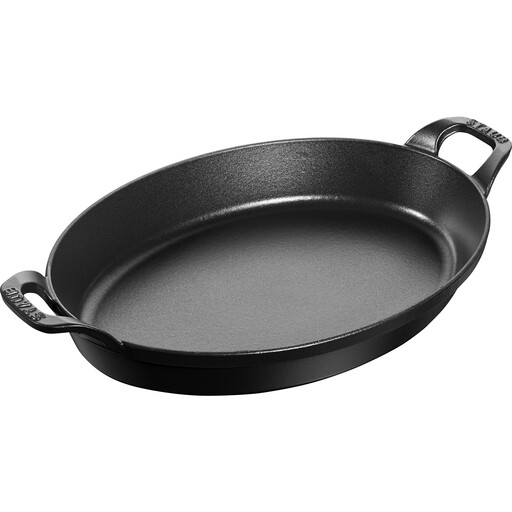
Why this product fits the profile: The oval cast-iron dish with a 3.7-litre capacity is designed for larger roasts, gratins and dishes to serve at the table.
The capacity and temperature range of −20 to 240 °C make the usage limits clearer than a simple marketing claim about versatility.
Enamelled cast iron, two side handles, suitable for induction hobs and, according to the product information, dishwasher-safe and freezer-safe.
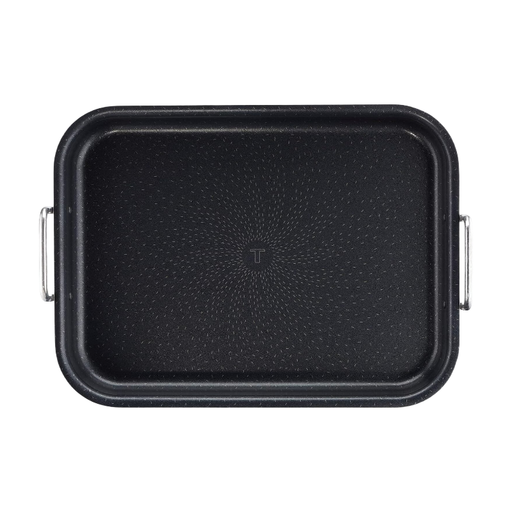
Why this product fits the profile: The rectangular oven dish measures 37 × 27 × 4.5 cm and offers a capacity of around 4.5 litres, according to the product information.
The dimensions, low profile and integrated side handles make it easy to check whether the dish suits your desired portion size and oven.
Recycled aluminium, non-stick coating, heat-resistant handles and, according to the product information, dishwasher-safe and freezer-safe.
We’ve put together a full, regularly updated list of products that meet these strict selection criteria and all applicable EU safety regulations.
For lasagne, a rectangular baking dish with enough length, straight sides and a capacity of around 2 to 4 litres is practical. The internal dimensions, the height of the dish and the maximum oven temperature are what matter. If you’re making several portions, also check whether the filled dish can be lifted safely.
That depends entirely on the product’s approval. Glass can be damaged by sudden temperature changes. Even if a container is both freezer-safe and oven-safe, you must follow the temperature limits and any preheating instructions. A hot dish should also not be placed in cold water or onto a cold surface.
The dish, lid and silicone seal should be cleaned separately according to the manufacturer’s instructions. With a dishwasher-safe baking dish, the lid can often go on the top rack. Coated steel or aluminium dishes should be washed by hand with soft utensils if the care instructions say so.