
Lieferung heute & morgen

Qualitätsgarantie

Willkommens-Angebote freischalten: KOSTENLOSE Lieferung | Bis zu 80 % RABATT | Kostenlose 30-Tage-JoyPlus-Testphase
App herunterladen
If you’re looking to buy baking dishes and casserole dishes, you’ll find a huge range of materials, shapes and coatings. But the product name alone doesn’t tell you whether a dish will suit your oven, your recipe and your cleaning routine. What really matters are clear details like temperature range, capacity, dimensions and care instructions.
A non-stick baking dish can make it easier to release cakes or bread. However, metal knives, sharp-edged utensils or abrasive scourers can still damage the surface. What’s more, not all coated dishes are dishwasher-safe.
So always check the manufacturer’s specific instructions. A steel tin like the Original Kaiser La Forme Plus Loaf Tin is oven-safe up to 250 °C according to the product description, but should be washed by hand. Using mild washing-up liquid and a soft sponge will help protect the non-stick coating.
A dish that’s suitable for the oven shouldn’t necessarily be taken straight from a hot oven and placed on a cold or wet surface. Glass and ceramic are particularly sensitive to sudden temperature changes.
With glass baking dishes, you should therefore follow the manufacturer’s guidance. Terms like “oven-safe”, “microwave-safe” or “freezer-safe” each describe different uses and don’t replace instructions about safe temperature changes.
Two dishes with a similar external length can hold very different amounts of batter or casserole. Deep sides are ideal for bread, gratins and layered dishes, while shallow dishes are designed for tarts, quiches and fruit cakes.
Before you buy, check:
Silicone baking moulds are lightweight, flexible and space-saving. They’re usually easy to unmould, but need a stable base like a baking tray when you fill them. Silicone moulds such as a madeleine tray, tart tin or heart-shaped mould are especially handy for small cakes, tarts and desserts.
Steel and aluminium are rigid and conduct heat relatively directly. A cake tin made from steel is ideal for loaf cakes, sponge cakes or bundt cakes. Coated surfaces can make release easier, but should be handled with suitable kitchen tools.
Glass and ceramic retain heat well and are perfect for casseroles, gratins and dishes that you serve straight from the dish. A oven-safe glass baking dish should be checked for cracks or damage before use.
The right dish depends on your recipe and the number of people you’re cooking for:
Bear in mind that volume measurements can be given as usable capacity or total capacity, depending on the manufacturer.
Before you buy, compare the maximum oven temperature with your recipes. For the products listed here, the ratings range from 230 °C, 250 °C, 260 °C to 300 °C, depending on the material. These values apply only as stated by the manufacturer and for the intended use.
Cleaning is also a practical factor to consider:

Why this product suits the profile: This six-piece set made from flexible silicone is designed for individual portions. Each mould measures 8 × 7.5 × 3.1 cm and is ideal for cupcakes, small cakes, jellies or chocolate.
The temperature range of -40 °C to 230 °C is clearly stated. Oven, microwave, freezer and dishwasher suitability are also specified.
Six identical moulds, low individual weight and a stackable design for space-saving storage.
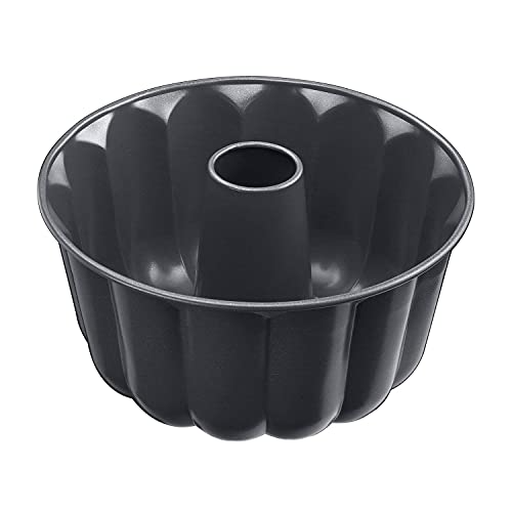
Why this product suits the profile: This steel bundt tin features a KAIRAMIC non-stick coating, an enamelled base and a capacity of 3.6 litres.
The maximum oven temperature of 250 °C, the capacity and the care instructions are clearly stated. Metal utensils should be avoided.
Steel construction, central tube for the bundt cake and a manufacturer-stated 10-year guarantee on the non-stick coating.
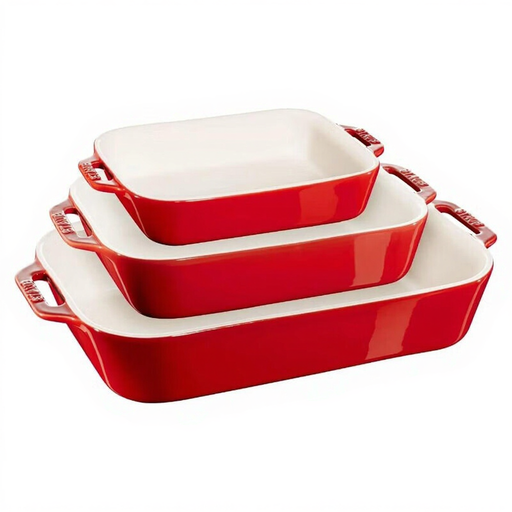
Why this product suits the profile: The set contains three rectangular ceramic dishes measuring 20 × 16 cm, 20 × 27 cm and 24 × 34 cm. This covers both individual portions and larger casseroles.
The three sizes and the stated oven safety up to 260 °C make it easy to choose based on recipe quantity. The manufacturer also specifies microwave, freezer and dishwasher suitability.
Three sizes, side handles and stackable storage; the set is designed for both sweet and savoury dishes.
We’ve put together a full, regularly updated list of products that meet these strict selection criteria and the safety regulations in force in the EU.
That depends on your preferred recipe. A coated steel tin is ideal for loaf cakes and sponge cakes, a silicone mould works well for small portions, and a glass or ceramic dish is perfect for casseroles and gratins. Before you buy, check the temperature range, capacity and cleaning instructions.
There’s no one-size-fits-all answer to its lifespan. It depends on how often you use it, the temperature, how you clean it and the utensils you use. Avoid scratches from metal, harsh abrasives and overheating. Manufacturer details like a guarantee or warranty should be considered separately from the expected service life.
Many glass baking dishes are stated by the manufacturer to be suitable for both, but not every glass product automatically meets these criteria. Check the product details for oven, microwave, freezer and dishwasher use. Avoid sudden temperature changes so the material isn’t put under unnecessary strain.