
Lieferung heute & morgen

Qualitätsgarantie

Willkommens-Angebote freischalten: KOSTENLOSE Lieferung | Bis zu 80 % RABATT | Kostenlose 30-Tage-JoyPlus-Testphase
App herunterladen
When buying cooking and baking dishes with lids, you will usually expect several functions: baking in the oven, braising on the hob, serving food straight away and storing leftovers covered afterwards. In practice, however, the dish, lid and intended use do not always match. Taking a close look at the material, dimensions and manufacturer’s information helps prevent disappointing purchases.
With a baking dish with lid, the dish itself may be suitable for high temperatures, while the lid is intended only for storage. Polypropylene plastic lids generally should not be placed in a hot oven unless the manufacturer specifies an approved temperature range. Before buying, you should therefore check the following separately:
A non-stick pan with lid makes it easier to release food and can reduce the cleaning required. However, metal utensils, abrasive scourers and severe overheating can damage the surface. With coated models, the care instructions are therefore more important than a general claim about durability.
Depending on its height, a round dish with a diameter of 28 or 30 cm can have a very different capacity. For casseroles, braised dishes and bread, capacity, internal dimensions and dish height are therefore crucial. Also check whether the dish fits in your oven and whether the lid leaves enough room when stored.
A baking dish made from borosilicate glass is transparent and, subject to the manufacturer’s approval, suitable for use in the oven and microwave. Glass retains heat but is sensitive to thermal shock. A hot glass casserole dish should not be placed directly on a cold or wet surface.
Cast iron distributes heat slowly and evenly. A cast-iron baking dish or cast-iron vessel is suitable for braised dishes, casseroles and serving at the table. The STAUB model has an enamelled interior. According to the product information, it is ovenproof up to 230 °C and can be used on all hob types, including induction.
With an aluminium braising pan with lid, a sturdy base plate is important. The selected 5five model has an integrated stainless-steel induction base and, according to the product description, is compatible with all hob types. Nevertheless, an induction pan should always be used according to the relevant manufacturer’s instructions.
A capacity of 0.75 l may be sufficient for individual portions. For a family casserole or larger quantities of cake batter, 2.3 to 4.5 l is more practical. A cake tin with lid should also provide enough height for the batter and sufficient clearance beneath the lid.
For bread lovers, a toast loaf tin with lid is worth considering if you want evenly shaped, rectangular slices. The 450 g filling capacity provides a specific guideline. The tin should not be overfilled, as the dough can press against the lid as it rises.
A dish with a matching lid can make it easier to transfer food from the oven to the fridge. However, check that the dish is completely dry after cooling and that the lid is actually intended for food storage. Hand washing is often recommended for coated pans, while some glass or cast-iron models are listed as dishwasher-safe. If the product information is contradictory, the specific care instructions on the product page should take priority.
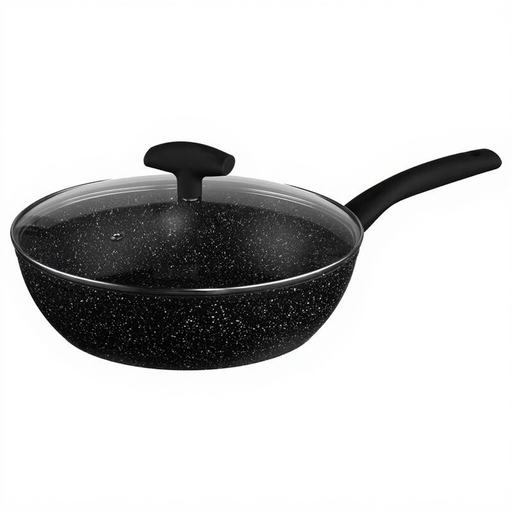
Why this product suits this profile: The 28 cm pan combines frying, braising and serving in one vessel, making it ideal for households looking to buy just one versatile model.
The induction base is explicitly specified. The glass lid lets you monitor the cooking process without having to remove it constantly.
Forged aluminium, non-stick coating, stainless-steel induction base and a transparent glass-lid design.
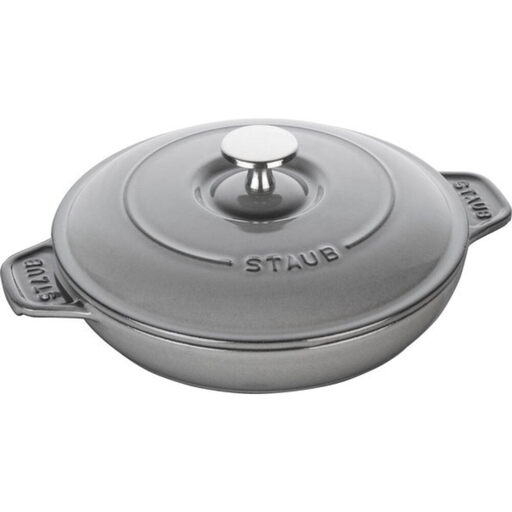
Why this product suits this profile: The 20 cm enamelled cast-iron vessel is designed for individual dishes and direct use on the hob, in the oven and at the table.
The specifications clearly state the material, 0.75 l capacity, induction compatibility and maximum oven temperature of 230 °C.
Enamelled interior, matching lid, suitable for all hob types and dishwasher cleaning possible according to the product information.

Why this product suits this profile: The toast loaf tin with lid is designed for households that regularly make sandwich loaves, mini cakes or evenly shaped baked goods.
The stated 450 g capacity helps with recipe planning. The non-stick coating helps release the baked goods.
Lid for an even shape, non-stick surface and, according to the product description, suitability for oven use.
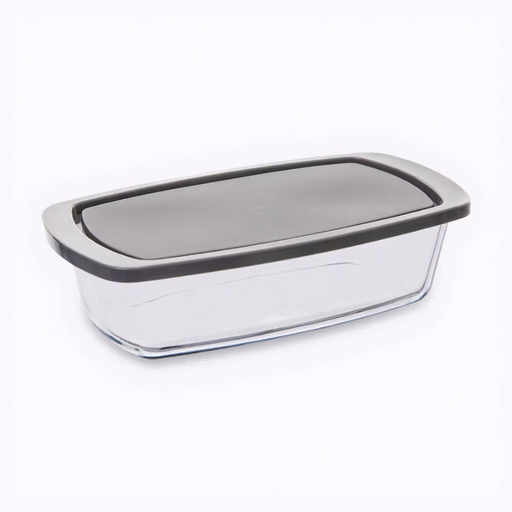
Why this product suits this profile: With a usable capacity of 2.3 l, the rectangular glass dish is suitable for cakes, bread and casseroles, followed by storage in the fridge.
The shape, dimensions and capacity are clearly specified. Its borosilicate glass construction and suitability for the microwave, oven and dishwasher are stated.
2.3 l usable capacity, a transparent borosilicate glass dish and a separate polypropylene lid.
We have put together a complete, regularly updated list of products that fully meet these strict selection criteria and the safety regulations applicable in the EU.
That depends on the specific type of glass and the manufacturer’s instructions. Even an ovenproof baking dish made from borosilicate glass should not be exposed to significant temperature changes without explicit approval. Allow chilled dishes to acclimatise for a while first, and avoid placing a hot dish on cold, wet surfaces.
For evenly rectangular slices, a loaf tin with lid or a toast loaf tin with a matching lid is suitable. The stated quantity of dough or bread, the internal dimensions and the approved temperature range are all important. The lid should only be baked with the loaf if this is expressly permitted.
Not necessarily. According to the product information, glass and enamelled cast iron may be dishwasher-safe, whereas hand washing is often recommended for coated pans. Plastic lids can warp when exposed to high temperatures or harsh detergents. You should therefore check the dish and lid separately and follow the relevant care instructions.