
Lieferung heute & morgen

Qualitätsgarantie

Willkommens-Angebote freischalten: KOSTENLOSE Lieferung | Bis zu 80 % RABATT | Kostenlose 30-Tage-JoyPlus-Testphase
App herunterladen
If you’re looking to buy baking leavening agents, you’ll find a wide selection online: dried yeast, instant yeast, baking powder, cream of tartar baking powder, bicarbonate of soda and sourdough extract all serve different purposes. The right choice therefore depends on the recipe, the desired dough method and the quantity you plan to use.
Dried yeast and instant yeast are intended for yeast doughs. They need time to ferment and are typically used for bread, pizza or rolls. Baking powder, on the other hand, reacts in the dough with moisture and heat. It is mainly suitable for cakes, muffins, sponge batters and pastries.
Bicarbonate of soda is not a complete substitute for baking powder. It requires an acidic ingredient such as buttermilk, yoghurt, lemon juice or vinegar. Without this acid, the dough can taste unbalanced and may not rise as well.
Depending on the product, one sachet may be intended for different amounts of flour. For several available items, one sachet of dried yeast corresponds to the yeast quantity for 500 g of flour. With baking powder, a dosage per 500 g of flour is also common, but the specific instruction on the packaging is what matters.
Large packs are practical for frequent users, but they can absorb moisture once opened. For occasional baking, individually wrapped portions are often clearer and reduce the risk of the product being stored open for a long time.
Sourdough extract does not simply improve any yeast dough; it is used for a specific flavour and an appropriate dough method. A rice flour starter is also not automatically the same as conventional baking yeast.
The product Angel Rice Leaven 8 g × 2 is, according to the product description, intended for making sweet rice wine. It contains rice powder as well as active cultures from Rhizopus and yeast, and must not be consumed directly. Therefore, it is not the obvious choice for bread or pizza.
Pay attention to the net weight, the recommended flour quantity, allergens and storage instructions. Cream of tartar baking powder, for example, may contain maize starch, sodium hydrogen carbonate and monopotassium tartrate. With dried yeast, additional ingredients such as emulsifiers may be present depending on the product.
For households with specific dietary requirements, labels such as vegan, gluten-free or organic may be relevant. Such claims should not be assumed from the product name alone, but should be verified against the specific product description and packaging.
Leavening agents should always be stored in a dry, cool place away from direct heat. Opened dried yeast should be kept in a well-sealed container; for some products, refrigeration is recommended. Bicarbonate of soda absorbs moisture and odours and should be sealed tightly after opening.
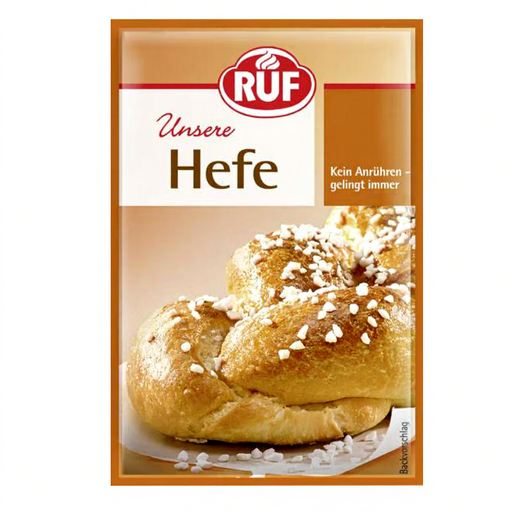
Why this product suits the profile: The ten individually portioned sachets are ideal for households that bake bread, pizza or rolls regularly and prefer a yeast with a long shelf life.
The portioning makes dosing straightforward. According to the product information, one sachet is enough for 500 g of flour; no separate dissolving is required.
210 g total quantity, ten sachets and, according to the description, suitable for both sweet and savoury baked goods.
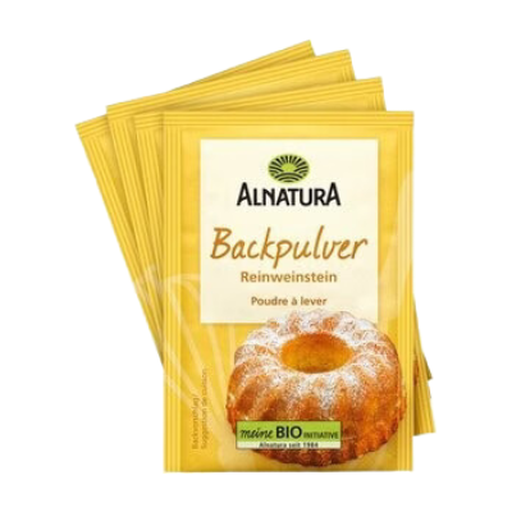
Why this product suits the profile: Four portioned sachets and the certified organic quality are a good match for delicate cakes, shortcrust pastry and biscuits where clear ingredient choices matter.
The composition is clearly stated: maize starch, sodium hydrogen carbonate and 25 % monopotassium tartrate. One sachet is intended for 500 g of flour.
Organic quality, gluten-free and vegan labelling according to the product description, and 72 g total content.
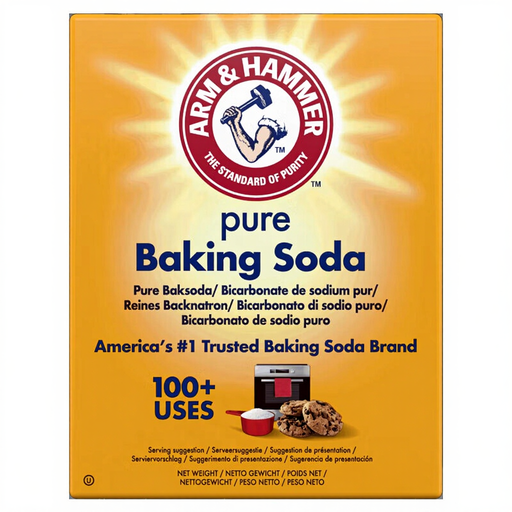
Why this product suits the profile: The 454 g pack is aimed at households that want to use bicarbonate of soda both for suitable baking recipes and for designated household applications.
The ingredients list states 100 % sodium hydrogen carbonate. This makes it clear that an acidic ingredient is needed for it to work as a leavening agent in dough.
Large format, pure composition according to the product information and resealable storage to protect against moisture.
We have put together a complete, regularly updated list of products that fully meet these strict selection criteria and the safety regulations in force in the EU.
For classic yeast doughs, dried yeast or instant yeast are the norm. The dosage depends on the amount of flour and the recipe. Sourdough extract can be used for rye and mixed-grain breads as well as sourdough pizza, but it does not automatically replace the entire dough method.
The specific best-before date is on the packaging. Unopened portion sachets can generally be stored well in the pantry. Once opened, dried yeast and bicarbonate of soda should be kept airtight, dry and protected from foreign odours.
Only if the recipe contains enough acid and the quantities are adjusted. Baking powder already contains an acidulant, whereas bicarbonate of soda essentially consists of sodium hydrogen carbonate. If you use bicarbonate of soda without a suitable acid, you risk a flat dough or a noticeable off-flavour.