
Lieferung heute & morgen

Qualitätsgarantie

Willkommens-Angebote freischalten: KOSTENLOSE Lieferung | Bis zu 80 % RABATT | Kostenlose 30-Tage-JoyPlus-Testphase
App herunterladen
The right baking pan is the foundation for any successful bake, whether it's a moist cake, a crusty loaf of bread, or delicate cookies. However, the market is crowded, and many products fail to deliver on their promises. A low-quality pan can not only ruin your baking results but also become unusable very quickly. As your Joybuy Product Recommendation Officer, I'll help you identify the common pitfalls and make an informed decision.
Many buyers are swayed by marketing promises that often disappoint in practice. Pay close attention to these three weaknesses to avoid making a bad investment:
To avoid the problems mentioned above, you should check three technical features before buying. These largely determine the functionality and longevity of your bakeware.
The material is the most important factor for the baking result. The most common materials have specific advantages and disadvantages:
A high-quality non-stick baking pan has a multi-layered, abrasion-resistant coating. Look for the PFOA-free label to ensure that no harmful substances have been used. To maximise the lifespan of any coating, you should avoid using metal utensils and clean the pan by hand with a soft sponge.
Examine the details of the workmanship. A good loaf pan or baking sheet has rolled or beaded edges that provide additional stability and prevent warping. On a springform pan, the locking mechanism should feel sturdy and snap firmly into place when closed, without wobbling.
Based on these criteria, we have compiled a selection of products suitable for different needs and projects.
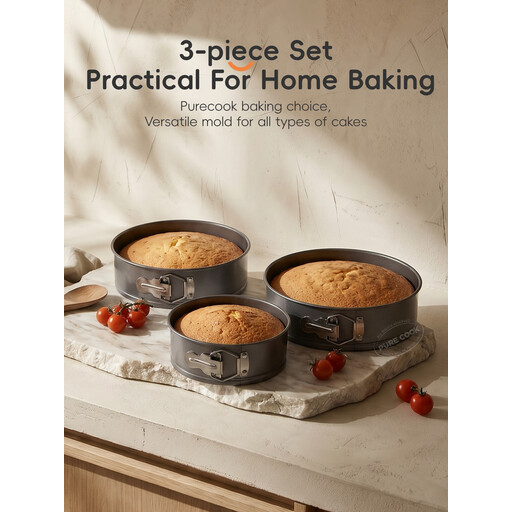
Why it's a great fit: This baking pan set is ideal for anyone starting out with baking. It covers the most important sizes for round cakes with three common diameters (18, 20, and 24 cm) and offers excellent value for money to get started.
The robust buckle closure is designed to minimise the typical leakage found in cheap springform pans. It ensures a tight seal, which is particularly advantageous for cheesecake batter.
The set offers great versatility for various recipes and occasions. The carbon steel material ensures even heat distribution.
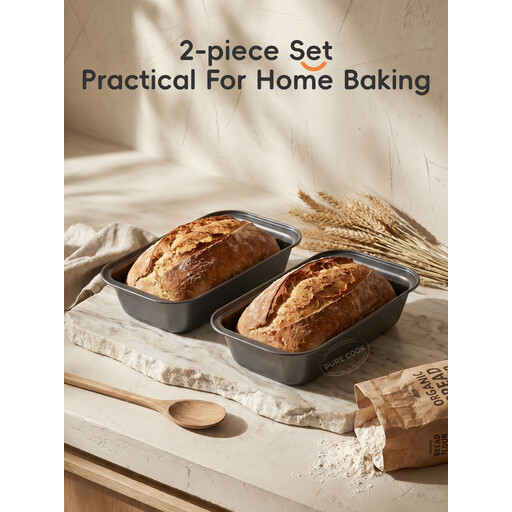
Why it's a great fit: Anyone who values perfectly shaped loaf bread with sharp edges and an even crust needs a specialised bread pan. This model is designed for exactly that purpose.
The pan is made of thickened carbon steel that won't warp even at high temperatures. This avoids the trap of unstable, thin-walled all-purpose pans and ensures professional baking results.
The material's excellent and uniform heat conductivity promotes a light, tender crumb and even browning of the bread on all sides.
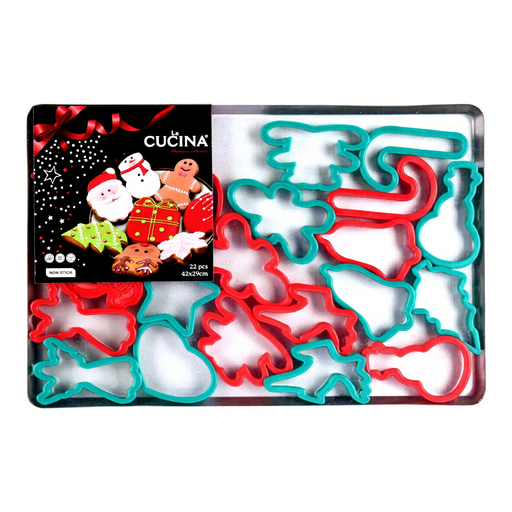
Why it's a great fit: This set is perfect for the Christmas season and baking with the family. It includes not only 21 different Christmas cookie cutters but also a matching, generously sized baking sheet.
Instead of buying individual, often low-quality cutters and an ill-fitting sheet, this set offers a coordinated, complete solution. The included sheet is sturdy and designed for frequent use.
An all-in-one package that is ready to use and ideal for baking activities with children. The wide variety of shapes ensures creative fun in the kitchen.
We have compiled a complete, up-to-date list of products that fully meet these strict selection criteria and UK safety regulations.
1. How do you properly care for a non-stick baking pan to extend its life? Proper care is crucial. Always clean the pan by hand with warm water and a soft sponge. Avoid the dishwasher, as harsh detergents can damage the coating. Never use metallic or sharp-edged objects (knives, forks) in the pan. Let the pan cool completely after baking before exposing it to cold water to avoid thermal shock.
2. Are carbon steel or aluminium baking pans better? There is no one-size-fits-all answer; it depends on the intended use. Carbon steel heats very evenly and retains heat well, which is ideal for breads and cakes that require uniform browning. Aluminium heats up faster, which can be advantageous for delicate batters like sponge cake. For ambitious bakers, a combination of both materials in the kitchen cupboard is often the most functional solution.
3. How can I identify a leak-proof springform pan? Look for three features: a wide bottom rim that extends beyond the ring, a sturdy and precisely crafted locking mechanism that latches securely, and a clean, tight seal between the ring and the base when closed. If you can easily wiggle the ring back and forth, it's a sign of a potentially leaky design.