
Lieferung heute & morgen

Qualitätsgarantie

Willkommens-Angebote freischalten: KOSTENLOSE Lieferung | Bis zu 80 % RABATT | Kostenlose 30-Tage-JoyPlus-Testphase
App herunterladen
The right baking pan is the foundation for every perfect cake, crusty loaf of bread, and flawless torte. But the selection is vast, and not every pan delivers on its promise. Many home bakers invest in products that quickly prove to be impractical or short-lived. Before you purchase a new baking pan, it's helpful to know the typical pitfalls that often lead to disappointment in the kitchen.
As your Joybuy Product Recommendation Officer, I filter the essential information from the marketing hype for you. This guide focuses on the objective features that distinguish a good baking pan from an inadequate one, helping you make an informed decision.
The 3 Most Common Frustrations When Buying a Baking Pan:
To avoid these problems, you should check three key aspects before buying. These largely determine the durability and baking performance of your new cake pan.
The choice of material has a direct impact on heat conduction and stability.
A good coating is robust and durable. Simple PTFE layers are often susceptible to scratches. Multi-layer systems or special coatings like ILAG offer greater resistance. Regardless of quality, proper care is crucial: avoid using metal utensils and clean the pan by hand with a soft sponge to maximize the coating's lifespan.
The build quality is just as important as the material. On a springform pan, the latching mechanism must close precisely and firmly to prevent liquid batter from leaking. For a bread pan or a rectangular baking pan, reinforced rims provide stability and prevent the pan from warping at high temperatures. A solid bakeware set often offers consistent quality across different types of pans.
Instead of presenting an overwhelming list, we have selected a few products from our range that fit specific user profiles and meet the quality criteria mentioned.
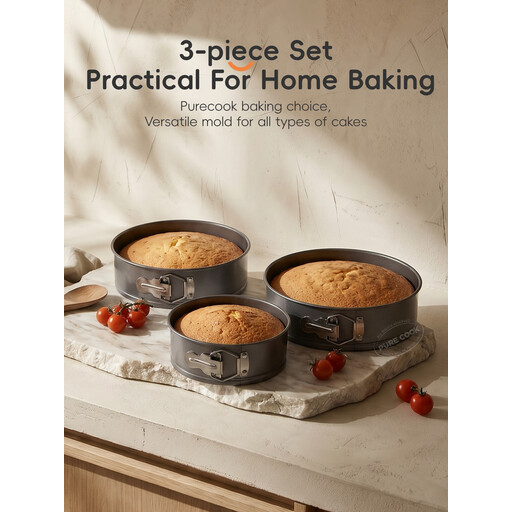
Why This Fits Their Persona: This set provides an excellent starter kit for anyone new to baking. With three common sizes (18, 20, and 24 cm), you're equipped for most standard recipes without needing to buy multiple individual pans right away.
The quick-release latch ensures a tight seal and minimises batter leakage—a typical problem with budget springform pans. The carbon steel material also prevents warping under heat.
Three pans in one set for maximum flexibility. The buckle clasp makes releasing the cake easy and is especially beginner-friendly.
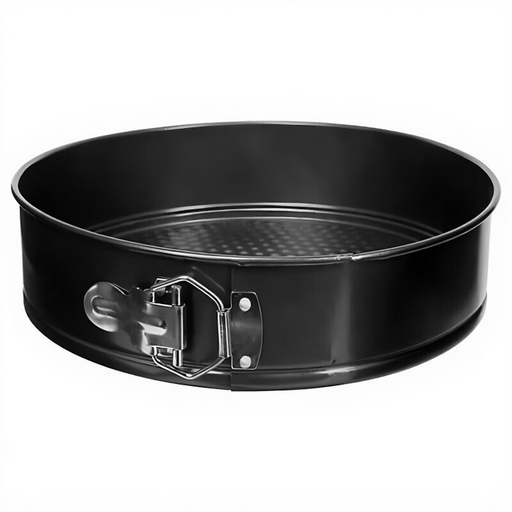
Why This Fits Their Persona: Anyone who regularly bakes elaborate tortes or cheesecakes needs a reliable, standard springform pan. With a 26 cm diameter and a 6.8 cm height, this model is ideal for multi-layered cake bases and classic cake recipes.
The robust steel construction ensures it remains stable even at high temperatures and provides even heat distribution. The secure latching mechanism prevents warping and batter leakage.
Classic 26 cm diameter, suitable for countless recipes. The durable steel construction ensures reliable and repeatable baking results.
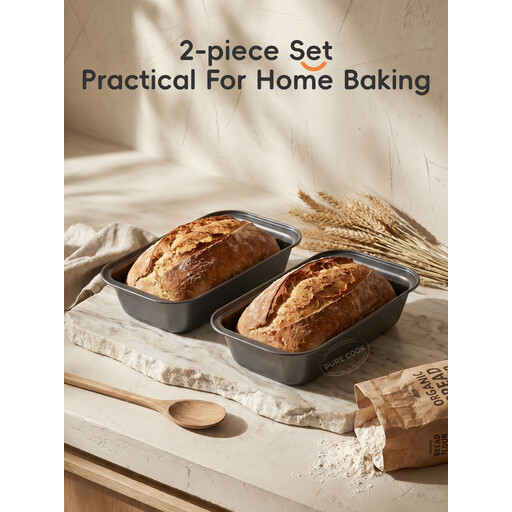
Why This Fits Their Persona: Ideal for those who regularly bake bread or moist loaf cakes. This set, made from thickened carbon steel, is specifically designed for the demands of bread dough—from proofing to baking.
The thickened material provides exceptionally even heat distribution, preventing the bottom from burning while the center is still raw. It resists warping and ensures loaves with clean edges.
Optimised for bread baking thanks to thickened carbon steel. The non-stick coating facilitates easy release without extra greasing.
We have compiled a complete, up-to-date list of products that meet these strict selection criteria and comply with current regulations.
The longevity of a non-stick coating heavily depends on its care. After it cools, always wash the pan by hand with a soft sponge and mild dish soap. Absolutely avoid using steel wool, abrasive sponges, or sharp objects like knives in the pan. Most manufacturers recommend against cleaning the pan in the dishwasher, as harsh detergents can damage the coating.
There is no one-size-fits-all answer; it depends on your baking project.
A slight leakage with very liquid batters (like cheesecake batter) can happen even with high-quality pans. A proven trick is to tightly wrap the bottom and lower rim of the closed pan with one or two layers of aluminum foil from the outside. This creates an additional barrier. In general, a high-quality cake pan with a precise and robust locking mechanism significantly minimizes this risk.