
Lieferung heute & morgen

Qualitätsgarantie

Willkommens-Angebote freischalten: KOSTENLOSE Lieferung | Bis zu 80 % RABATT | Kostenlose 30-Tage-JoyPlus-Testphase
App herunterladen
By the Joybuy Product Recommendation OfficerDate: July 28, 2026
Choosing the right baking pan can make or break a recipe. A cake that sticks to the bottom or bread that bakes unevenly are common frustrations often caused by the wrong pan. Many home bakers invest in products that make big marketing promises but quickly fall short in practice. This guide will help you avoid common pitfalls and make an informed decision.
Before you decide on a model, it's helpful to know the most common problems that arise with low-quality bakeware.
To avoid these problems, you should look for a few fundamental quality features. These parameters determine the durability and performance of your baking pan.
The material is crucial for baking performance. Most baking pans are made of steel sheet because it conducts heat well. However, the quality of the finish is even more important.
Solid construction ensures even baking results and a long lifespan. Pay attention to the material thickness. Heavier pans made of thicker steel are generally more stable and less prone to warping. For a springform pan, the locking mechanism is a critical component. Models like the WMF La Forme Plus series often use optimised clasps (e.g., SafeClick) that ensure a secure closure, easy opening, and a reliable seal.
The essential collection for a home baker typically includes several pans for different types of baked goods:
Instead of making a one-size-fits-all recommendation, we have identified products that are tailored to specific user profiles.

Why This Fits Their Persona: This pan is aimed at bakers who value durability and material quality, especially when baking bread. The combination of steel and enamel is designed for regular use and demanding doughs like sourdough.
The cut- and acid-resistant enamel base solves the problem of peeling coatings. It withstands the acidity of sourdough and mechanical stress from knives.
The ceramic-reinforced KAIRAMIC non-stick coating on the sides ensures easy release, while the robust base guarantees longevity. The heavy-gauge steel provides excellent, even browning.

Why This Fits Their Persona: This standard 26 cm **cake pan** is an all-rounder for classic cakes and tortes. It's designed for frequent use and offers functional details that make family baking easier.
The base, engineered to be leak-proof, combined with the precision clasp, prevents batter from escaping—a classic problem with cheaper springform pans.
The enamelled base is cut-resistant, so you can slice and serve the cake directly in the pan. The high-quality non-stick coating on the ring makes cleanup effortless.
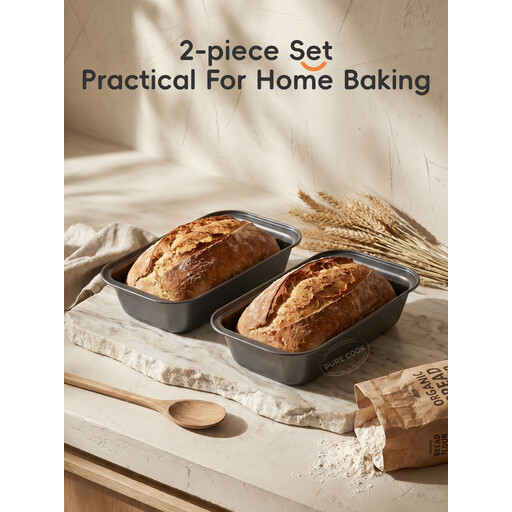
Why This Fits Their Persona: This set offers a cost-effective entry point into the world of baking. With two loaf pans, you can bake your first breads and cakes without a large initial investment. Ideal for anyone looking to discover their passion for baking.
By using thickened carbon steel, it mitigates the pitfall of poor structural integrity and heat distribution. The material is more stable than ultra-lightweight budget pans, ensuring more even baking results.
The set offers excellent value for money. The food-safe non-stick coating makes it easy to release baked goods and simplifies cleanup by hand.
There are specialised pans available, especially for baking bread. We have compiled a current selection of products that meet our criteria for quality and performance.
1. How do you properly clean a non-stick baking pan to extend its life? After the pan has cooled, clean it exclusively by hand with warm water, a mild dish soap, and a soft cloth or sponge. Avoid abrasive sponges, steel wool, and harsh cleaning agents. Even if some bases are labelled as dishwasher-safe, hand washing is gentler on the coating and preserves the non-stick properties for longer.
2. Is a more expensive baking pan (e.g., from Kaiser or WMF) worth the investment? For occasional bakers, a budget-friendly model may suffice. However, those who bake regularly will benefit from investing in a higher-quality pan. These are characterized by thicker material, better heat distribution, more robust coatings, and more durable clasps. This leads to more consistent baking results and a significantly longer lifespan.
3. Can you bake sourdough bread in any loaf pan? No, this is not recommended. The acid in sourdough can attack and damage simple non-stick coatings. The best pans for sourdough bread are those with an acid-resistant enamel base or uncoated pans made of cast iron or stainless steel, which must be greased well before each use.