
Lieferung heute & morgen

Qualitätsgarantie

Willkommens-Angebote freischalten: KOSTENLOSE Lieferung | Bis zu 80 % RABATT | Kostenlose 30-Tage-JoyPlus-Testphase
App herunterladen
The right baking pan is the foundation for every perfect cake, every moist loaf of bread, and every elaborate torte. But the market is overwhelming, and many products don't live up to their promises. The wrong choice often leads to burnt edges, a raw center, or the frustrating moment when the cake sticks to the pan. As your Joybuy Product Recommendation Officer, I'll help you navigate the common pitfalls and make an informed decision.
Many baking pans look great on the shelf but reveal their weaknesses only in a hot oven. Watch out for these three common problems to avoid disappointment:
To avoid these mistakes, you should check two core aspects before buying: the material and the construction. These determine durability, baking performance, and handling.
The material of your baking pan has a direct impact on heat conduction and, therefore, on the browning and doneness of your baked goods.
Besides the material, it's often small construction details that separate a good pan from a useless one.
Instead of presenting an overwhelming list, we have selected products for specific user profiles.
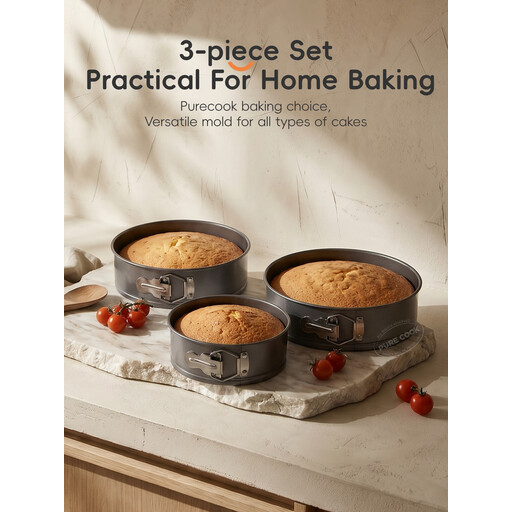
Why it's a great fit: This set is ideal for anyone starting out with baking. It offers three common sizes (18, 20, 24 cm), covering a wide variety of recipes, from small birthday cakes to larger torte layers. The springform mechanism is particularly beginner-friendly.
This set solves the "wrong size" problem by offering three options. The tight-sealing latch prevents batter from leaking, a common issue with low-quality springform pans.
The carbon steel material ensures even heat distribution. The buckle latch allows for easy and clean release without any tools.
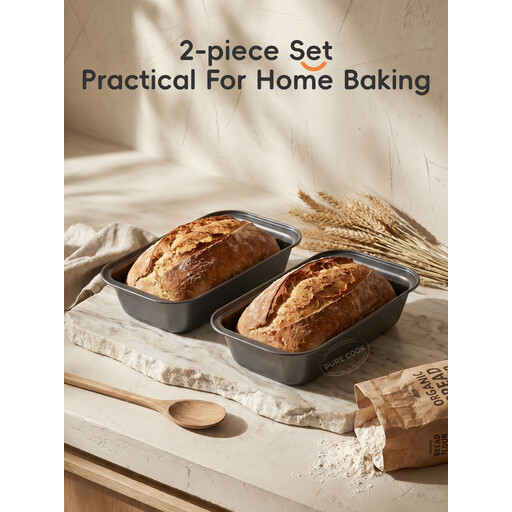
Why it's a great fit: Those who regularly bake their own sandwich or loaf bread need a pan that gives the dough structure. This set is specifically designed for this purpose and is ideal for health-conscious bakers who want to control their ingredients.
This pan avoids the "wrong type" pitfall. Its straight, smooth inner walls and standard loaf shape ensure an even rise and a loaf with clean edges that is easy to slice.
The thickened carbon steel material prevents warping and provides excellent, even heat distribution, resulting in a light, tender crumb.
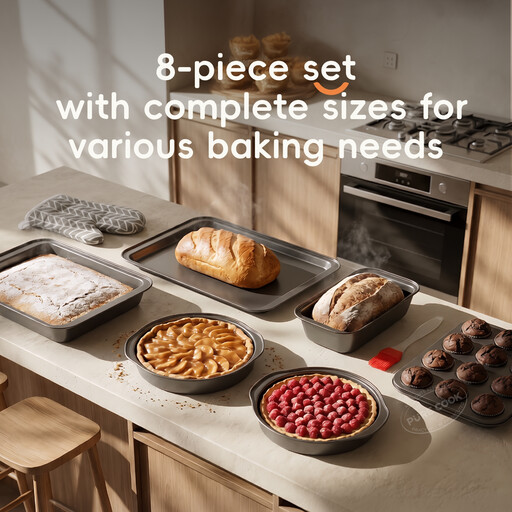
Why it's a great fit: For ambitious home bakers, small baking studios, or families who love to bake together. This comprehensive set includes various square and rectangular pans plus accessories, suitable for brownies, sheet cakes, pizza, and much more.
This set prevents the need to constantly buy individual, often mismatched, pans. It provides a comprehensive, coordinated set of equipment for a wide range of baking projects, from sweet to savory.
The incredible versatility of the 8-piece set. The non-stick coating makes releasing food easy, which boosts the sense of achievement, especially in baking classes or when baking with children.
We've compiled a complete, up-to-date list of products that meet these strict selection criteria and current standards.
1. How do I properly care for a non-stick baking pan to make it last? To maximize the lifespan of the non-stick coating, you should always wash the pan by hand with a soft sponge and warm water. Avoid using metal utensils or abrasive cleaning sponges. Most manufacturers advise against cleaning in the dishwasher, as harsh detergents and high temperatures can damage the coating.
2. Can I place a silicone mold directly on the oven rack? Technically, it's possible, but not recommended. Due to its flexibility, a silicone mold can be unstable when placing it in or taking it out of the oven, especially when filled with liquid batter. For more stability and easier handling, always place the silicone mold on a solid baking sheet.
3. How can I identify a high-quality loaf pan for bread? You can recognize a good bread pan by several features. Look for a heavy, thick-walled material like carbon steel, which retains heat well and distributes it evenly. The walls should be as straight as possible to give the bread a classic shape. Also, check that the size of the pan is appropriate for the amount of your bread dough, so it can rise optimally.