
Lieferung heute & morgen

Qualitätsgarantie

Willkommens-Angebote freischalten: KOSTENLOSE Lieferung | Bis zu 80 % RABATT | Kostenlose 30-Tage-JoyPlus-Testphase
App herunterladen
The right baking pan is the foundation for every perfect cake. However, the market is flooded with products whose marketing promises often don't hold up in practice. A low-quality pan not only leads to frustration but also results in unevenly baked, burnt, or broken cakes. As your Joybuy Product Recommendation Officer, I'm here to help you identify the common pitfalls and make an informed decision that will pay off in the long run.
Before you invest, you should be aware of the most common issues found in low-quality products. These problems often cause a seemingly budget-friendly pan to become unusable in no time.
To avoid these problems, you should focus on three key features before buying. These define the quality and longevity of your future cake pan.
The material determines how evenly your cake will bake.
The term non-stick is not a protected standard. Quality varies greatly. A good coating is multi-layered and resistant to high temperatures and abrasion. To maximize the lifespan of any non-stick coating, it is always recommended to wash it by hand with a soft cloth and to avoid using metal utensils.
Choose the pan that matches your baking project.
Instead of an overwhelming list, we present specific product recommendations tailored to different user profiles.
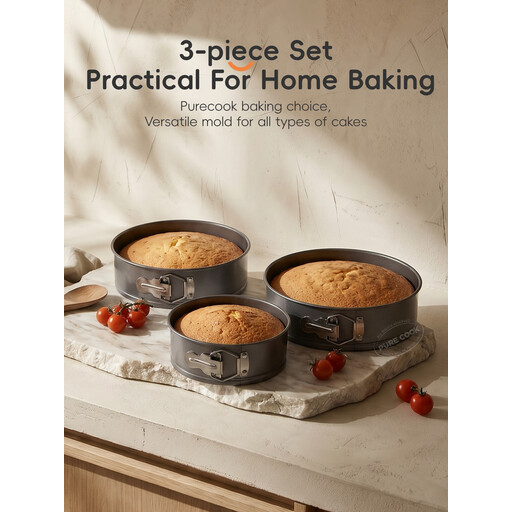
Why This Fits Their Persona: This set provides a solid starter kit for anyone new to baking. With three common springform sizes (18, 20, and 24 cm), you're equipped for most standard recipes, from a small birthday cake to a larger torte.
The set is made of carbon steel, which ensures even heat distribution and resists warping. The latch mechanism is designed to seal the ring tightly, minimizing batter leakage.
Three versatile sizes in one set. The quick-release latch allows for easy and clean demolding without tools, which is ideal for beginners.
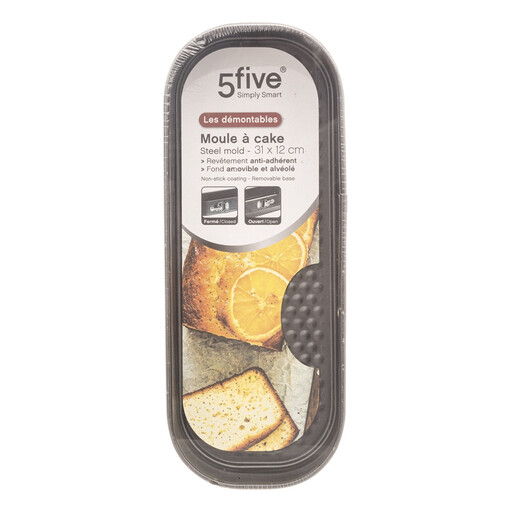
Why This Fits Their Persona: For those who want to get creative beyond the classic round cake, this is the perfect tool. The pan is ideal for rectangular tortes, creamy cheesecakes, or dense brownies that require a clean edge.
The springform design with a removable base solves the problem of awkward demolding. Delicate creations can be served without inverting or cutting them in the pan, which prevents structural damage.
The combination of a rectangular shape and a springform mechanism allows for professional-looking desserts. The reliable non-stick coating ensures a flawless release.
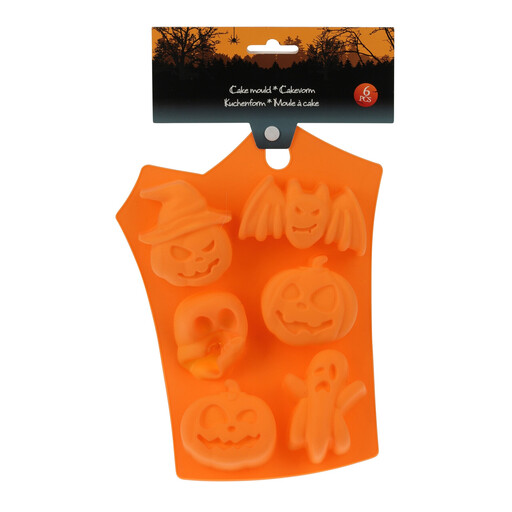
Why This Fits Their Persona: Perfect for seasonal baking, kids' birthdays, or theme parties. This silicone mold turns baking into a creative experience, and the results are guaranteed to delight guests of all ages.
High-quality, food-grade silicone ensures that even detailed shapes release easily and completely—a common problem with rigid or inferior novelty pans. Its flexibility prevents delicate details from breaking.
Creates six detailed novelty cakes at once. The mold is heat- and cold-resistant, making it suitable for puddings or ice cream, and it's also dishwasher-safe for easy cleanup.
We have compiled a complete, up-to-date list of products that fully meet these strict selection criteria and rigorous safety standards.
1. How long does a non-stick baking pan last? The lifespan heavily depends on the quality of the coating and how you care for it. A high-quality, multi-layer coating can last for several years with proper handling (hand washing, no metal utensils). Cheaper, thin coatings can lose their non-stick properties in less than a year.
2. Do I need to grease a silicone mold? As a rule, high-quality silicone is naturally non-stick. However, lightly greasing it before the first use or when using very low-fat batters can provide extra assurance that the cake will release perfectly. It is far less critical than with metal pans.
3. Can I use a springform pan for very liquid batter? This depends on the quality of the latch mechanism. A well-constructed springform pan should be sufficiently leak-proof for most cake batters. For extremely liquid mixtures, such as those used in a cheesecake water bath, it is recommended to wrap the outside of the pan in a double layer of aluminum foil as a precaution to catch any potential leaks.