
Lieferung heute & morgen

Qualitätsgarantie

Willkommens-Angebote freischalten: KOSTENLOSE Lieferung | Bis zu 80 % RABATT | Kostenlose 30-Tage-JoyPlus-Testphase
App herunterladen
By Joybuy Product Recommendation Officer, August 29, 2026
Choosing the right baking pan can make or break a recipe. Yet, the market is flooded with products whose marketing promises often suggest more than their performance delivers. Many home bakers invest in pans that quickly warp, have coatings that fail, or are simply unsuitable for their intended recipes. This guide will help you identify the crucial features and make an informed choice that perfectly suits your baking projects.
Before you decide on a model, it's helpful to know the typical problems that lead to frustration in the kitchen.
To avoid these problems, you should check three key aspects before buying: material, pan type, and construction.
The choice of material directly impacts heat conduction and handling.
The pan's design is crucial for the type of pastry you're making.
A non-stick surface simplifies baking and cleaning. However, the quality of the coating is critical for its longevity. To maintain its function, such pans should be washed by hand with a soft sponge, and contact with metal utensils should be avoided.
Different models make sense depending on your baking habits and ambitions. Here are some recommendations tailored to specific user profiles.
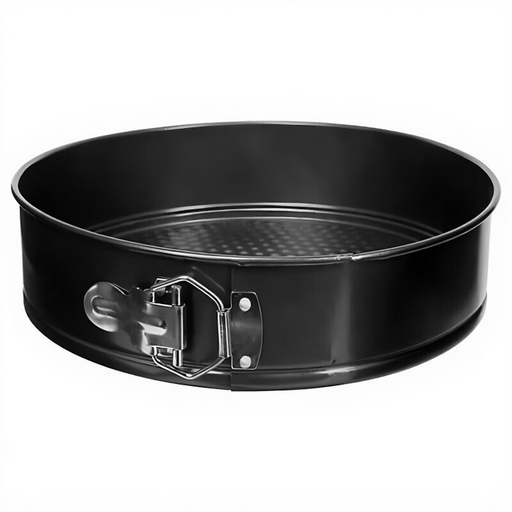
Why it's a great fit: For beginners, a versatile and reliable pan is essential. This round springform pan with a 26 cm diameter is a standard size for countless classic cake recipes. It's the ideal tool for your first tortes, cheesecakes, or fruit flans.
The springform mechanism eliminates the risky process of inverting delicate cakes. The sturdy steel material ensures even heat distribution and prevents the pan from warping.
Secure latching mechanism for easy cake release. Durable steel construction for consistent baking results.
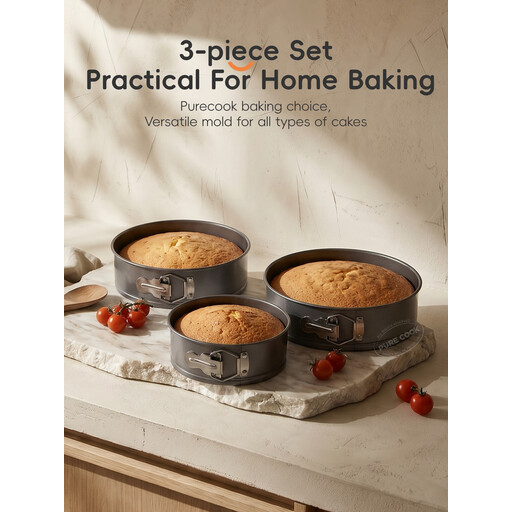
Why it's a great fit: Anyone who bakes regularly for family or special occasions needs flexibility. This baking pan set offers three different sizes (18, 20, 24 cm), covering everything from a small birthday cake to a multi-tiered torte.
Instead of buying several mismatched individual pans, this set provides a coordinated solution. The buckle closure is designed to prevent batter leakage—a common frustration with cheaper springform pans.
Three popular sizes for maximum flexibility. The non-stick carbon steel surface facilitates easy release and cleanup.
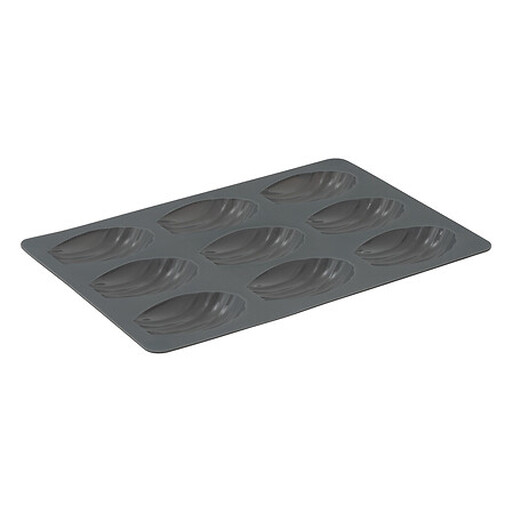
Why it's a great fit: For authentic French p?tisserie like madeleines, the shape is everything. A standard muffin tin cannot replicate the characteristic shell shape with its fine ridges. This special silicone mould is designed specifically for that purpose.
It solves the problem of standard pans being unsuitable for specialty pastries. The flexible silicone allows you to easily pop out the delicate madeleines without breaking their fragile ridges.
Creates the authentic shell shape for classic madeleines. The material allows for effortless release of the pastries and is easy to clean.
If you haven't found the right pan for your baking project yet, our full category features a wider selection that also meets objective quality criteria.
1. How do you properly care for a non-stick baking pan? To maximize the coating's lifespan, always wash the pan by hand with warm water and a soft sponge. Avoid metal scouring pads and sharp objects. Allow the pan to cool completely after baking before bringing it into contact with cold water.
2. Are silicone moulds suitable for all types of batter? Silicone moulds are excellent for batters, muffins, intricately shaped cakes, and frozen desserts because the baked goods release so easily. For breads or pastries that require an extra-crispy crust, a metal pan (e.g., a loaf pan made of carbon steel) is often the better choice due to its more direct and intense heat transfer.
3. My springform pan is leaking—what can I do? With very liquid batters, such as those used for cheesecake, some models may be prone to leaking. A proven trick is to tightly wrap the outside of the closed pan with aluminium foil before filling it. In the long run, investing in a model with a precisely sealing latch mechanism is the most reliable solution.