
Lieferung heute & morgen

Qualitätsgarantie

Willkommens-Angebote freischalten: KOSTENLOSE Lieferung | Bis zu 80 % RABATT | Kostenlose 30-Tage-JoyPlus-Testphase
App herunterladen
Choosing the right baking pan can be the difference between a perfectly baked cake and a sticky disappointment. However, the market is flooded with products whose marketing promises often don't hold up in practice. Before you make a decision, it's helpful to know the typical pitfalls that lead to frustration in the kitchen.
As a Joybuy Product Recommendation Officer, I analyse product data to give you objective and practical guidance. This guide focuses on the crucial features that define a durable and functional baking pan, helping you to avoid bad buys.
Many baking pans look solid at first glance but reveal their weaknesses after just a few uses. Pay special attention to these three problem areas:
To avoid these problems, you should examine three core aspects. These objective criteria are more important than any advertising claim.
The material determines how evenly the heat is distributed and how durable the pan is.
The pan must suit the baking project. A basic set covers most needs.
Good construction is evident not only in the material but also in the design. Check that edges are smoothly finished to prevent injuries. On a springform pan, the base should fit flush with the ring to minimise leaks. Rolled edges can further increase the pan's stability.
Here are some product recommendations tailored to specific user profiles and the quality criteria mentioned above.
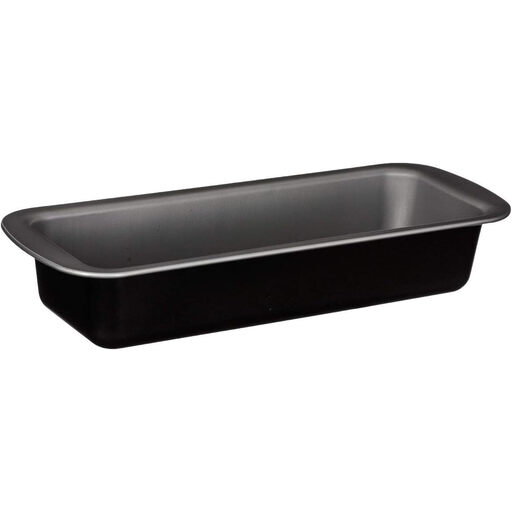
Why it's a good fit: Ideal for baking novices looking for a reliable and simple loaf pan for classic cakes or their first homemade bread. It's straightforward and designed for ease of use.
Its one-piece construction means there are no leaky seals. The sturdy metal is designed for standard baking temperatures and resists warping with proper use.
A versatile standard size (30 cm) suitable for a wide range of recipes. The simple shape makes it easy to clean by hand, which promotes longevity.
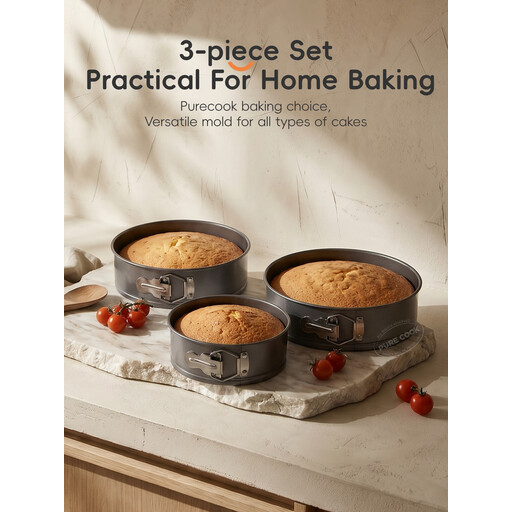
Why it's a good fit: This bakeware set is aimed at hobby bakers who want to create multi-layered cakes or cheesecakes in various sizes. The three round springform pans (18, 20, 24 cm) offer the necessary flexibility.
The adjustable metal latch is designed to lock the seams tightly, preventing batter from leaking—a direct solution to the most common problem with a springform pan.
The carbon steel material ensures even heat distribution. The non-stick inner wall makes it easy to release the cake and simplifies cleaning.
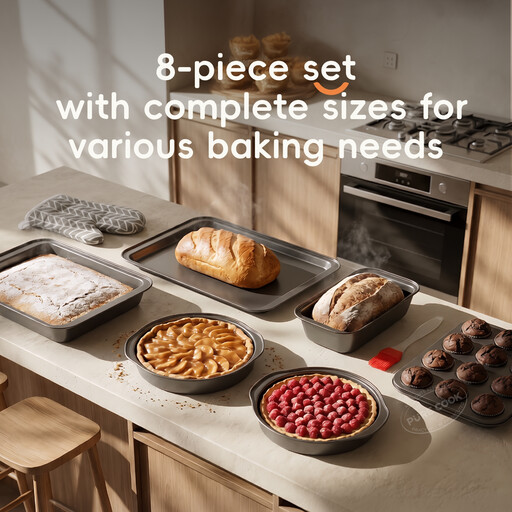
Why it's a good fit: For families, frequent bakers, and small baking studios that produce a wide range of baked goods. This comprehensive bakeware set includes various rectangular pans for brownies, sheet cakes, lasagne, and more.
The set is made entirely of carbon steel, a material known for its structural stability and even heat distribution. This counteracts warping under heat.
The 8-piece set offers great versatility for sweet and savoury dishes. The pans are lightweight and stackable, which simplifies storage.
We have compiled a complete, up-to-date list of products that fully meet these strict selection criteria and rigorous safety standards.
The longevity of a non-stick coating heavily depends on its care. After it has cooled, clean the pan with warm water, mild dish soap, and a soft sponge. Avoid abrasive scouring pads or harsh cleaning agents. Most manufacturers advise against cleaning in the dishwasher, as the salts and high temperatures can damage the coating. Also, do not use metal utensils like knives or forks in the pan.
Although carbon steel is a durable material, hand washing is almost always recommended for coated pans. The aggressive detergents and high temperatures in a dishwasher can damage the non-stick surface and shorten its lifespan. Uncoated pans could also develop flash rust. Always check the manufacturer's instructions for definitive guidance.
A good indicator is the weight and material thickness. A pan that feels heavy and solid is usually made of thicker material and is less prone to warping. Also, look for rolled or reinforced edges, as these provide additional stability. Carbon steel pans are generally more resistant to warping than those made from very thin aluminium sheet.