
Lieferung heute & morgen

Qualitätsgarantie

Willkommens-Angebote freischalten: KOSTENLOSE Lieferung | Bis zu 80 % RABATT | Kostenlose 30-Tage-JoyPlus-Testphase
App herunterladen
By Joybuy Product Recommendation Officer, August 29, 2026
The aroma of a freshly baked cake fills the kitchen, but anticipation quickly turns to disappointment: the cake is stuck, the bottom is burnt, or the liquid cheesecake batter has leaked out, cementing itself to the oven floor. The wrong or a low-quality baking pan can ruin even the most carefully prepared recipe.
Many home bakers invest in pans that seem practical at first glance but quickly prove to be a bad purchase. Before you make a decision, it helps to know the typical pitfalls:
Choosing the right cake pan depends on two key factors: the material and its intended use. These parameters dictate the baking results, handling, and durability.
Each material has specific properties that make it more or less suitable for certain baking projects.
Besides the material, the shape is crucial for success. A basic set will cover most needs.
Instead of making blanket recommendations, we have identified products that fit specific user profiles and are designed to avoid the pitfalls mentioned earlier.
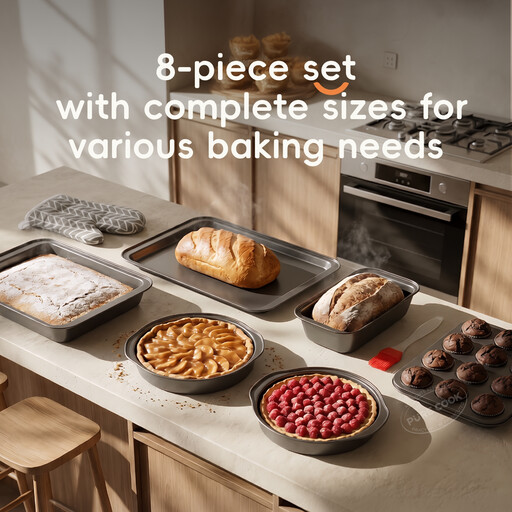
Why This Fits Their Persona: Ideal for families or baking novices looking for a versatile starter kit. The set covers a wide range of baking projects with various square and round pans, from brownies and sheet cakes to small pizzas.
The carbon steel material ensures even heat distribution, preventing the problem of burnt edges and a raw center. The non-stick coating makes it easier for beginners to release their bakes, boosting their success rate.
Comprehensive Bakeware Set: Includes 8 pieces for diverse baking projects. Even Heat Conduction: The carbon steel ensures consistent baking results.
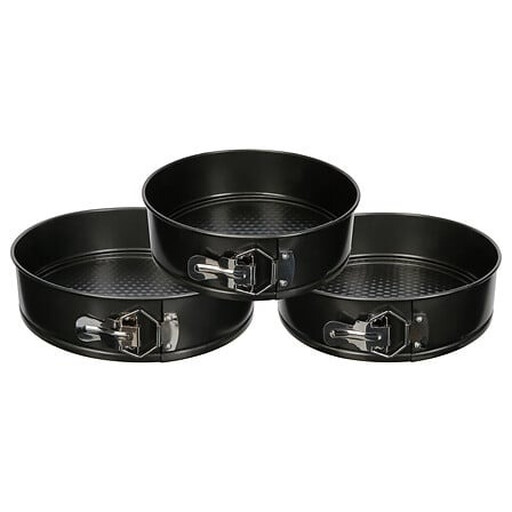
Why This Fits Their Persona: Perfect for those who love baking classic layer cakes and cheesecakes. With three common diameters (22, 24.5, and 26 cm), the set offers the necessary flexibility for different recipe sizes and occasions.
The hinge mechanism is designed for a reliable seal to minimize leakage of liquid batter—a direct solution to the typical springform pan pitfall. The steel construction provides solid heat distribution.
Three Standard Sizes: Offers flexibility for small and large cakes. Space-Saving Design: The pans are stackable for easy storage.
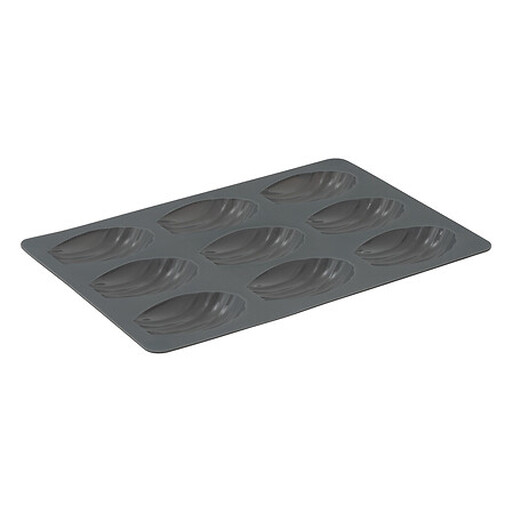
Why This Fits Their Persona: For ambitious bakers who want to try their hand at delicate French pastries. This mold is specifically designed for making classic, shell-shaped madeleines with their characteristic 'hump'.
The high-quality silicone has natural non-stick properties, completely avoiding the problem of peeling coatings. The material's flexibility ensures that the delicate ridges of the madeleines remain intact upon release.
Precise Shaping: Creates the authentic shell shape. Effortless Release: The flexible silicone allows you to simply 'pop out' the pastries without damage.
We've compiled a complete, up-to-date list of products that fully meet our strict selection criteria and rigorous safety standards.
1. How long does a non-stick baking pan last? The lifespan of a non-stick baking pan heavily depends on its use and care. With proper handling—avoiding metal utensils, sharp knives, and harsh detergents, and washing by hand—a high-quality coating can last for several years. As soon as the coating shows visible signs of peeling, the pan should be replaced.
2. Can you use a silicone baking pan without greasing it? In most cases, yes. High-quality, food-grade silicone has excellent non-stick properties. For the first few uses or with very low-fat batters, lightly greasing or dusting with flour can provide extra insurance for a clean release. Over time, however, this is often no longer necessary.
3. Why is my springform pan leaking and what can I do about it? Leaking is usually caused by an imprecise fit between the ring and the base. When buying, look for a sturdy latching mechanism. As an immediate fix for an existing pan, you can wrap the outside of the closed pan tightly with aluminum foil, especially if you're using a water bath for a cheesecake. Another option is to place the pan on a baking sheet lined with parchment paper to catch any potential leaks.