
Lieferung heute & morgen

Qualitätsgarantie

Willkommens-Angebote freischalten: KOSTENLOSE Lieferung | Bis zu 80 % RABATT | Kostenlose 30-Tage-JoyPlus-Testphase
App herunterladen
A high-quality baking pan is the foundation for every successful bake. However, the market is overwhelming, and many products don't live up to their promises. An unevenly baked cake, batter leaking from a springform pan, or a non-stick baking pan that everything sticks to after just a few uses—these problems can often be traced back to avoidable mistakes during selection. As your Joybuy Product Recommendation Officer, I'll help you recognise the typical marketing traps and make an informed decision.
At first glance, many baking pans look robust and practical. But often, their weaknesses only become apparent after purchase. Pay close attention to these three points to avoid disappointment.
To make the right choice, you should be guided by objective criteria, not marketing promises. The following three aspects are crucial for the performance and longevity of your baking pan.
The material determines how evenly the heat is distributed and how robust the pan is.
The shape is more than just a matter of aesthetics; it is functionally tailored to the specific baked good.
Always check the manufacturer's specified maximum heat resistance before buying. Most quality pans are heat-resistant up to 230°C or 250°C (446°F or 482°F), which is sufficient for all common recipes. Also, choose a size that fits your household and typical recipes. A 26 cm or 28 cm (10- or 11-inch) springform pan is a versatile standard for most cakes.
Here are some recommendations tailored to different needs and baking projects.
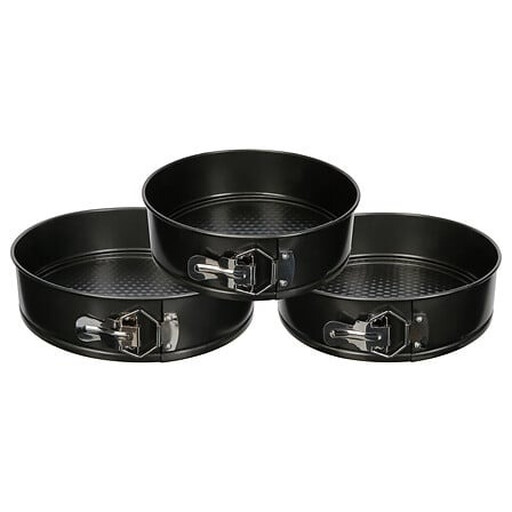
Why this set is a great fit: Ideal for anyone starting out with baking or who bakes occasionally for different events. This set offers three common sizes, providing great flexibility without a large single investment.
Instead of buying a single, potentially unsuitable pan, this set offers versatility. The stackable design also solves the problem of bulky storage.
Provides three of the most common springform sizes (22, 24.5, and 26 cm) in one package. The hinged mechanism allows for easy unmoulding.

Why this pan is a great fit: For those who bake regularly and value durability, even baking results, and thoughtful details. An investment in a reliable cake pan that will bring joy for years to come.
Directly addresses the pitfalls of a short-lived coating and a leaky latch. The enamelled base is cut- and scratch-resistant, while the clasp is designed for leak-proof performance.
Made in Germany with a robust steel construction for optimal heat conduction. The enamelled base allows you to cut directly in the pan.
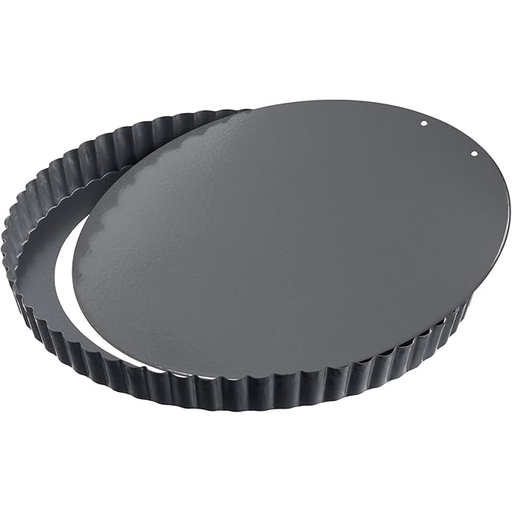
Why this pan is a great fit: Perfect for lovers of sweet tarts and savoury quiches. The special design is precisely engineered for the demands of shortcrust pastry and delicate fillings.
Sidesteps the trap of using an unsuitable pan. The lift-out base prevents the delicate pastry from breaking during serving, a common problem when using a standard cake pan for tarts.
The cut-resistant, enamelled lift-out base allows for clean removal and serving directly on the base. The KAIRAMIC non-stick coating on the rim simplifies cleaning.
We have compiled a complete, up-to-date list of products that fully meet these strict selection criteria and German safety regulations.
To maximise the life of the non-stick coating, you should wash the pan by hand with warm water, a mild washing-up liquid, and a soft cloth or sponge. Avoid abrasive scouring pads, steel wool, and harsh cleaning agents. Even if some parts are declared dishwasher-safe, hand washing is generally gentler. Dry the pan thoroughly after cleaning.
For the first use, it is often recommended to lightly grease the silicone baking mould. For subsequent uses, this is usually no longer necessary due to the natural non-stick properties of silicone. However, for very low-fat or sticky batters, light greasing can make releasing the bake even easier. It's best to follow the manufacturer's specific instructions.
A cut-resistant base, typically made of enamelled steel, allows you to cut the cake with a knife directly on the base of the pan without damaging the surface. This is a significant advantage over conventional non-stick coatings, which are easily scratched and thus rendered useless by knife cuts. This allows you to serve the cake directly on the pan's base.