
Lieferung heute & morgen

Qualitätsgarantie

Willkommens-Angebote freischalten: KOSTENLOSE Lieferung | Bis zu 80 % RABATT | Kostenlose 30-Tage-JoyPlus-Testphase
App herunterladen
A good baking pan is the foundation for every successful cake and crusty loaf of bread. But the market is flooded with products whose promises often don't hold up in practice. A cake that sticks to the bottom or a cake pan that warps after just a few uses are common frustrations. As your Joybuy Product Recommendation Officer, I'll help you identify the typical pitfalls and make an informed decision.
Before you invest, you should be aware of the most common issues that lead to frustration in the kitchen.
To avoid these problems, you should pay attention to a few objective features that define a high-quality baking pan.
The material determines the pan's heat conduction, durability, and maintenance.
Choose the pan type that suits your baking project.
Here are some recommendations tailored to different needs and baking habits.
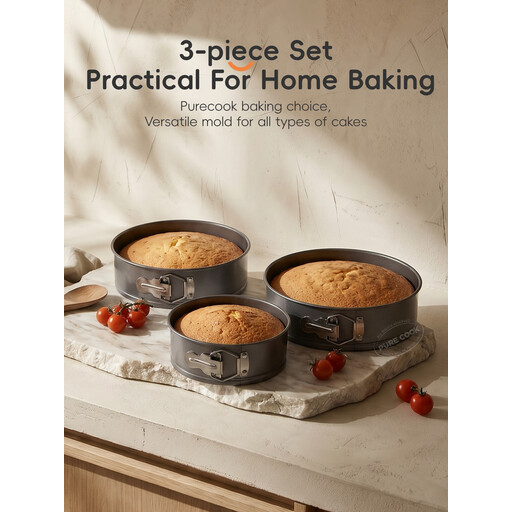
Why it's a fit: Ideal for those just discovering their passion for baking who need a basic set for various cake sizes without a large initial investment.
This set bypasses the trap of buying a single, expensive pan that might not be right for you. The carbon steel construction provides a solid foundation, and the latches are designed for easy release, addressing the problem of leaky seals common in entry-level models.
A versatile baking pan set with three common springform sizes (18, 20, 24 cm). The quick-release buckles make it easy to remove the cake.

Why it's a fit: For home bakers who regularly bake bread and value durability and material quality. It's especially suited for sourdough, whose acidity attacks many coatings.
It addresses the problems of material fatigue and peeling coatings. The pan is explicitly designated as sourdough-resistant. The cut-resistant enamel base and robust construction prevent warping and scratches.
A high-quality bread pan with a KAIRAMIC ceramic coating and a cut-resistant base. Its dimensional stability and acid resistance make it a long-term investment.
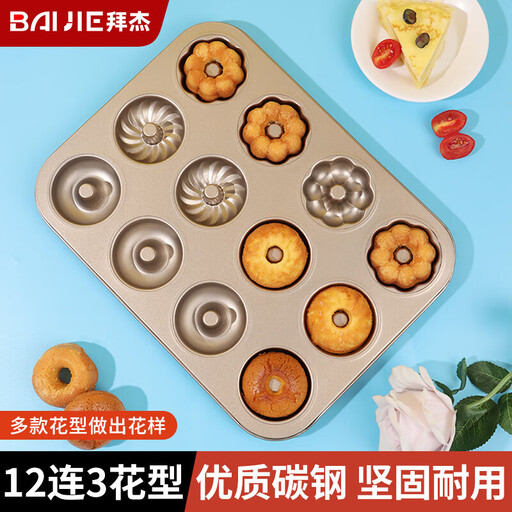
Why it's a fit: Perfect for bakers who love to prepare decorative small treats for parties, kids' birthdays, or as gifts, and who value an appealing presentation.
This is a specialty tool that doesn't try to be an all-rounder. The pan is optimised for a specific task: baking decorative mini-cakes. The non-stick coating is crucial for the success of the delicate patterns.
Allows you to make 12 uniform, decorative mini-cakes or doughnuts. The non-stick surface simplifies removal and subsequent cleaning.
We have compiled a complete, up-to-date list of products that meet these strict selection criteria and rigorous food safety standards.
Most manufacturers recommend hand washing, even if some products are labelled as dishwasher-safe. Use warm water, mild dish soap, and a soft cloth or sponge. Avoid abrasive scouring pads or harsh cleaning agents, as they can damage the coating. Stubborn residue can often be easily removed after a short soak.
Essentially, yes, but there are minor differences. Silicone conducts heat differently than metal, which can result in less browning around the edges. Since silicone molds are flexible, they should be placed on a sturdy baking sheet before filling to prevent spilling the batter when transferring it to the oven.
Sourdough contains acids that can attack and break down low-quality metal and non-stick coatings over time. A bread pan labelled as sourdough-resistant, like the Kaiser bakeware from the La Forme Plus series, has a special, durable coating (often ceramic or enamel-based) that can withstand this stress long-term without being damaged.