
Lieferung heute & morgen

Qualitätsgarantie

Willkommens-Angebote freischalten: KOSTENLOSE Lieferung | Bis zu 80 % RABATT | Kostenlose 30-Tage-JoyPlus-Testphase
App herunterladen
The right baking pan is the foundation for every perfect cake, moist loaf, and flawless tart. However, the market can be overwhelming, and many products fail to live up to their promises. As your Joybuy Product Recommendation Officer, I'm here to help you navigate the common pitfalls and make an informed decision that suits your baking ambitions.
Many buyers invest in baking pans that become unusable after just a few uses. This doesn't have to be the case. Watch out for the following three common defects to avoid disappointment:
To avoid these problems, you should check three core aspects before buying: material, construction, and size.
The choice of material has a direct impact on baking performance and handling.
The design determines functionality and versatility.
The size of the baking pan should match your recipes and the size of your oven. Standard diameters for a round baking pan are 24 cm or 26 cm. A baking pan set can be a cost-effective solution to be prepared for different occasions and batter quantities.
Here are some recommendations tailored to different needs that meet the quality criteria mentioned above.
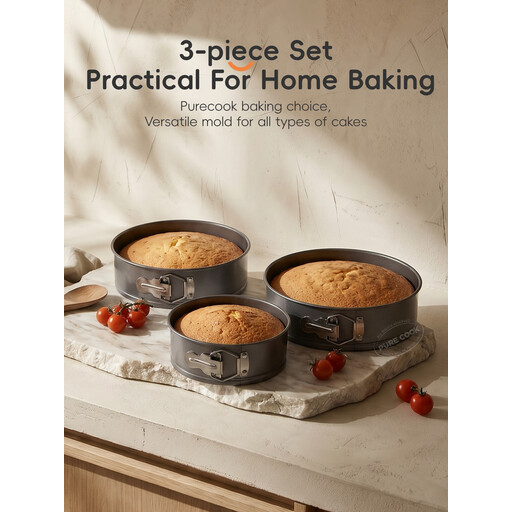
Why This Fits Their Persona: Ideal for those just starting their baking journey or who want to be equipped for various occasions without a large initial investment. This set covers most standard round cake recipes with three common sizes.
The adjustable metal buckles on the rim ensure a tight seal, minimising the risk of batter leakage—a common issue with cheaper springform pans.
Three common sizes (18, 20, 24 cm) in one package; non-stick coating for easy release; carbon steel for even heat distribution.
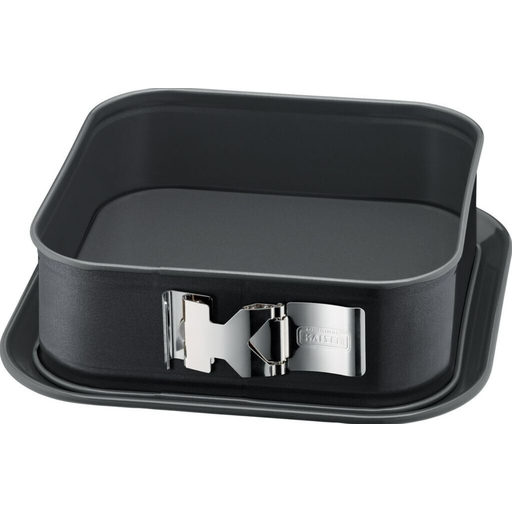
Why This Fits Their Persona: Perfect for ambitious bakers who value durability, precise craftsmanship, and reliable results. The square shape is ideal for brownies, layered cakes, and savoury casseroles.
The high-quality steel construction ensures excellent and even heat distribution, preventing burnt edges with a raw centre. The robust non-stick coating is designed for longevity.
Made in Germany; heat-resistant up to 250 °C; the base is dishwasher-safe, and the locking mechanism is designed to be leak-proof.
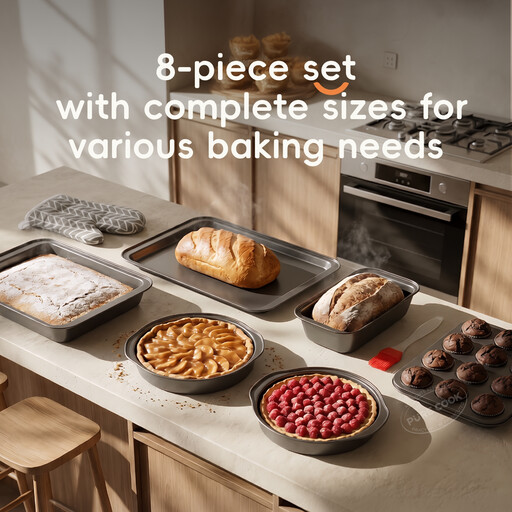
Why This Fits Their Persona: For home bakers or even small baking studios that produce a wide range of baked goods—from square cakes and bread to pizza. This set offers maximum flexibility for creative projects.
This comprehensive baking pan set eliminates the need to buy a separate, potentially inferior pan for each new recipe. The consistent material quality ensures reliable results across the board.
Comprehensive 8-piece set for maximum versatility; includes various rectangular pans and accessories; made of carbon steel for good heat conduction.
We've curated a complete, up-to-date list of products that fully meet these strict selection criteria and rigorous safety standards.
1. How do you clean a non-stick baking pan properly to protect the coating? The longevity of a non-stick baking pan heavily depends on proper care. Always clean the pan by hand with warm water, a soft sponge, and mild dish soap. Absolutely avoid metallic scouring pads, abrasive brushes, or harsh cleaning agents, as these will permanently damage the coating. Dry the pan thoroughly after cleaning to prevent rust.
2. Can you place a silicone baking pan directly on the oven rack? Technically, this is possible as silicone is heat-resistant. However, it is recommended to place the silicone baking pan on a solid baking sheet for better stability. This makes it easier to safely insert and remove it from the hot oven, especially when the batter is still liquid, and prevents the flexible pan from buckling.
3. How can I identify a leak-proof springform pan? Look for three features: a wide, sturdy latch that closes snugly without any play; clean and precise workmanship at the join between the ring and the base plate; and ideally, a slightly raised edge on the base that acts as an additional barrier, often referred to as a "leak-proof rim." High-quality construction is the key to a tight seal.