
Lieferung heute & morgen

Qualitätsgarantie

Willkommens-Angebote freischalten: KOSTENLOSE Lieferung | Bis zu 80 % RABATT | Kostenlose 30-Tage-JoyPlus-Testphase
App herunterladen
A new baking pan should heighten the anticipation for home-baked treats. Yet, all too often, the purchase ends in frustration: the cake won't release, the pan warps in the heat, or cleaning becomes a test of patience. Many of these problems can be avoided by paying attention to crucial features that go beyond the marketing promises on the packaging.
As your Joybuy Product Recommendation Officer, I'll help you separate the wheat from the chaff. We'll shed light on the three most common pitfalls when buying a cake pan and show you what really matters.
To avoid a bad purchase, you should focus on three objective criteria: the material, the pan type, and the build quality.
The material is crucial for the baking result and the longevity of the pan.
Not every pan is suitable for every recipe. Choosing the right type is critical for success.
Here are some product recommendations tailored to specific needs and user profiles.
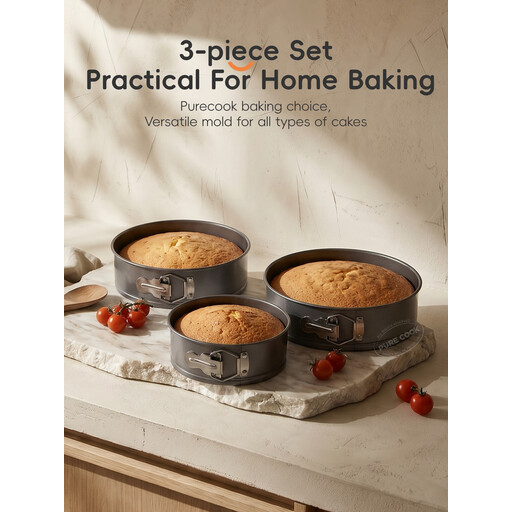
Why it's a good fit: This baking pan set is ideal for anyone starting out with baking. It includes three springform pans in the most common sizes (18, 20, 24 cm), covering everything from a small birthday cake to a larger torte for family celebrations.
The adjustable metal latch seals the rim tightly, minimizing the risk of batter leakage—a direct solution to the problem of leaky springform pans.
The carbon steel set ensures dimensional stability and even heat distribution. The non-stick coating facilitates easy release and cleanup.
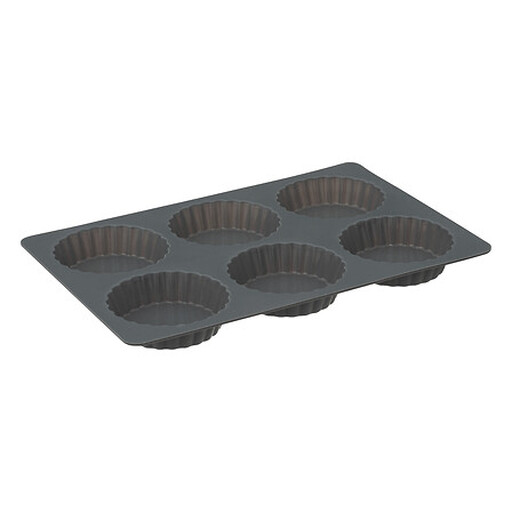
Why it's a good fit: Anyone looking to move beyond simple loaf cakes and try their hand at delicate tarts, quiches, or flans needs a specialized pan. This flat, rectangular silicone mold is designed for such projects.
The high-quality silicone is naturally non-stick and durable. There is no coating that can wear out or be scratched. Its flexibility ensures a clean release without the risk of breakage.
The mold is suitable for both the oven and the freezer. This allows for the preparation of baked tartlets as well as chilled mousse desserts in the same mold.
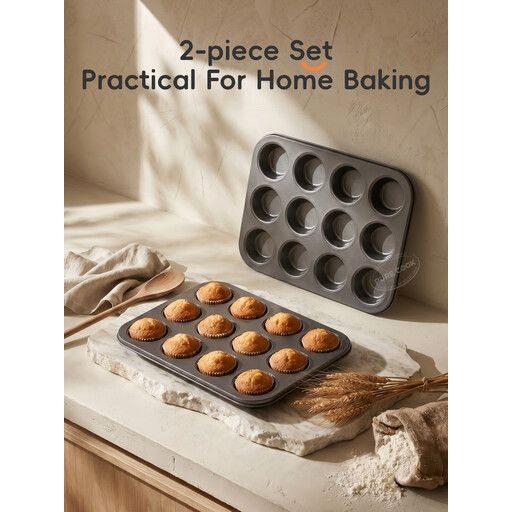
Why it's a good fit: For operators of small bakeries, dessert shops, or families who love to bake in larger quantities. This set of two muffin tins allows 24 small cakes or muffins to be baked simultaneously, enormously increasing efficiency.
The carbon steel material prevents the pan from warping and, thanks to its excellent heat conduction, ensures uniform baking results across all 12 wells—no uneven cooking.
The pans are lightweight and stackable, allowing for space-saving storage. The non-stick coating facilitates quick unmolding and cleaning, which saves time in small-batch production.
We have compiled a complete, up-to-date list of products that fully meet these strict selection criteria and German safety regulations.
1. How long does a non-stick baking pan last? The lifespan of a non-stick pan depends heavily on its care. To protect the coating, you should avoid metal utensils, abrasive sponges, and cleaning in the dishwasher. Hand washing with warm water and a soft cloth is recommended. With proper care, a high-quality pan can last for several years.
2. Can you place a silicone mold directly on the oven rack? Technically, it's possible, but not recommended. Since a silicone mold is flexible, it can bend when being filled and transported. To prevent batter from spilling and to ensure a stable, level baking surface, the silicone mold should always be placed on a solid baking sheet before going into the oven.
3. Why does my baking pan warp in the oven? The warping of a baking pan is usually a sign of insufficient material thickness or low-quality manufacturing. Thin sheets of metal, especially aluminum, expand unevenly when heated quickly and deform. Pans made of thicker carbon steel are significantly more dimensionally stable and resistant to warping.