
Lieferung heute & morgen

Qualitätsgarantie

Willkommens-Angebote freischalten: KOSTENLOSE Lieferung | Bis zu 80 % RABATT | Kostenlose 30-Tage-JoyPlus-Testphase
App herunterladen
As a Joybuy Product Recommendation Officer, I see the vast number of bakeware options on the market every day. Finding the right baking pan can be crucial for the success of your cakes, breads, or tarts. However, well-intentioned marketing promises often lead to disappointment in the kitchen. Before you make a decision, it's helpful to understand the typical pitfalls that only become apparent after several uses.
This guide focuses on the objective features that distinguish a good baking pan from an unsuitable one, helping you make an informed choice.
Many baking pans look promising on the shelf but only reveal their weaknesses in a hot oven. Three problems are particularly common:
To avoid these problems, you should focus on three crucial technical features. These define the performance and durability of your future baking pan.
The material is the foundation for any good baking result. The most common materials are carbon steel, aluminum, and silicone, each with different properties.
The coating is crucial for easy release of your baked goods and for cleanup. There are significant differences in quality here.
The shape—whether round or rectangular—is just the beginning. Construction details determine its practical usability.
Based on these objective criteria, we have selected a few products from our range that suit different needs.
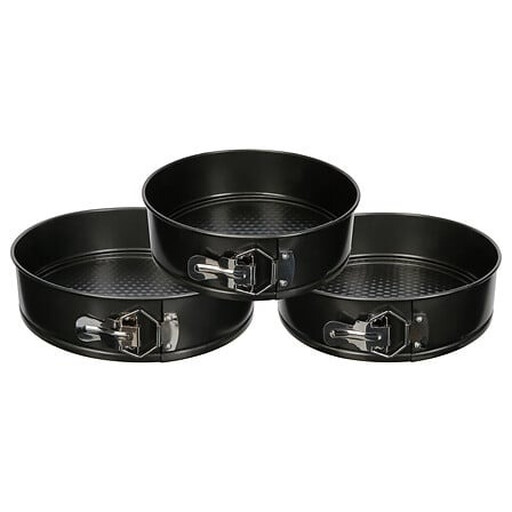
Why this set is a great fit: Ideal for anyone starting out with baking who wants a flexible starter kit without making a large initial investment. The set covers the most common cake sizes.
This baking pan set offers versatility over a single, overpriced promise. Instead of relying on one expensive pan, you get three different sizes for various recipes and occasions.
Three common diameters (22, 24.5, and 26 cm) in one package. The pans are stackable, saving valuable space in your kitchen cabinet.

Why this pan is a great fit: For ambitious bakers who bake regularly and value durability, reliability, and perfect results. An investment in lasting quality.
Addresses all three main problems: The KAIRAMIC non-stick coating is durable, the SafeClick latch ensures a leak-proof design, and the enameled base is cut-resistant and robust.
Made in Germany from robust steel for shape retention. The base is dishwasher-safe and can be used for serving. It comes with a 10-year manufacturer's warranty.

Why this pan is a great fit: Specifically designed for the demands of bread baking, especially for sourdough loaves, whose acidity can damage conventional coatings.
The combination of a KAIRAMIC coating on the rim and a cut-resistant, sourdough-resistant enamel base prevents corrosion and sticking—a common problem when using unsuitable cake pans for bread.
Designed for 1 kg loaves. The thick material provides excellent heat retention and distribution, which leads to an even crust.
We've compiled a complete, up-to-date list of products that fully meet these strict selection criteria and quality standards.
Proper care is crucial. Clean the pan by hand with a soft sponge and mild dish soap. Avoid the dishwasher, even if the manufacturer permits it, as harsh detergents can damage the coating. Never use metal or sharp-edged utensils in the pan. Wood, silicone, or plastic tools are the better choice.
A cut-resistant base, usually made of enamel, offers a clear practical advantage: you can slice and serve the cake directly in the pan without damaging the surface or having to awkwardly transfer it to a platter. For home bakers who value convenience and durability, this is a worthwhile feature.
You can identify a reliably leak-proofspringform pan by the precise construction of its base and ring. The base should fit perfectly into the ring and feature a small groove or a raised edge that seals it. A sturdy, wide-fitting locking mechanism that clamps the ring evenly and tightly around the base is also a good indicator of a leak-proof design.