
Lieferung heute & morgen

Qualitätsgarantie

Willkommens-Angebote freischalten: KOSTENLOSE Lieferung | Bis zu 80 % RABATT | Kostenlose 30-Tage-JoyPlus-Testphase
App herunterladen
The right baking pan is often the deciding factor between a perfect cake and a disappointment. But the market is flooded with products whose marketing promises don't hold up in practice. As your Joybuy Product Recommendation Officer, I'm here to help you spot the typical pitfalls and make an informed decision that suits your baking habits.
Before you invest, it's crucial to understand the most common problems that arise with low-quality baking pans. These often lead to frustration and unnecessary expense.
To avoid these issues, you should focus on three key features. These define the quality and longevity of a baking pan.
The material is the foundation of safety and functionality. For silicone molds, it's essential to look for food-grade silicone. This material is designed for a wide temperature range (often from -40°C to over 220°C), is BPA-free, and won't leach harmful substances into your baked goods. A high-quality cake pan or muffin tin made from this material will remain dimensionally stable and odour-neutral even after many wash cycles. For metal pans, the quality of the coating is crucial.
A good baking pan must hold its shape. For a loaf pan used for bread or heavy batters, stability is especially important. Some modern silicone molds solve this problem with an integrated steel frame, combining the flexibility of silicone with the stability of metal. With pure silicone molds, a greater material thickness is a good indicator of more stability. For safety, always place flexible molds on a baking sheet before filling them.
Every baked good has its own requirements. A shallow tart pan ensures a crispy shortcrust base, while a tall, round pan is ideal for airy sponge cakes. Specialty molds, like those for madeleines or cannelés, are precisely designed to create the characteristic shape and texture of the respective pastry. The right baking accessories set, including a pastry brush and spatula, is also essential for preparation and finishing touches.
Here are some recommendations tailored to different needs and use cases, all of which meet the quality standards mentioned above.
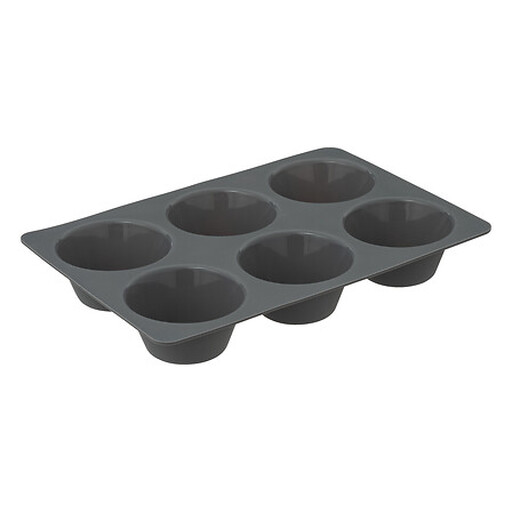
Why it's a great fit: Perfect for anyone who regularly bakes muffins or cupcakes. The mold is designed for even browning and perfectly shaped domes—a reliable tool for everyday baking projects.
The high-quality, food-grade silicone prevents batter from sticking and won't become tacky over time. Its high flexibility allows for an effortless "pop-out" release without damaging the baked goods.
Even heat distribution for consistent baking results. The non-porous surface is stain-resistant and dishwasher-safe, making cleanup significantly easier.
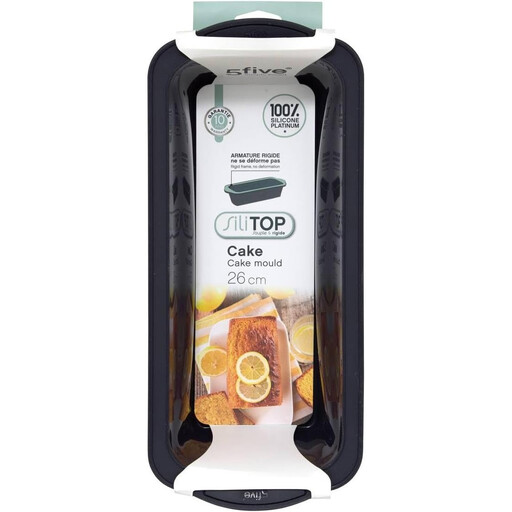
Why it's a great fit: Perfect for bakers who value a precise shape for their breads and loaf cakes. This pan is aimed at users who refuse to compromise on stability.
The integrated steel frame completely solves the problem of poor structural integrity. The pan maintains its exact loaf shape and won't bow, even with heavy batters.
Combines the stability of metal with the non-stick properties of silicone. Heat-resistant up to 220°C and dishwasher-safe for hassle-free handling.
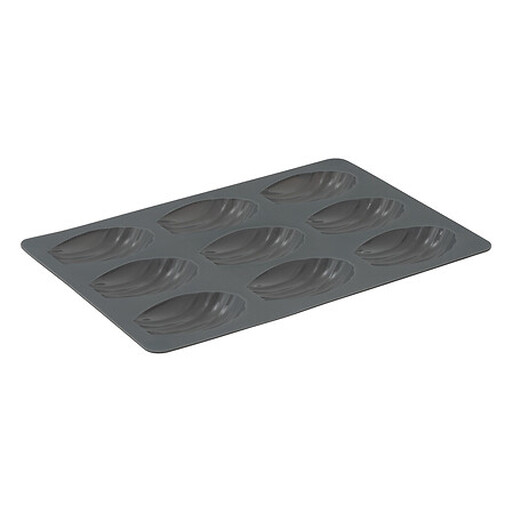
Why it's a great fit: For anyone who wants to bake authentic French madeleines with their characteristic shell shape and signature "hump." A specialty tool for a perfect, classic result.
The precisely shaped cavities guarantee an authentic look. The thin, heat-responsive silicone ensures the rapid heat transfer needed for the madeleines' signature "hump"—something generic molds can't achieve.
Effortless release of the delicate little cakes without breakage. The mold is also versatile enough for chocolates or other small pastries and can be rolled up for space-saving storage.
We have compiled a complete, up-to-date list of products that fully meet these strict selection criteria and safety regulations.
Yes, as long as they are made from high-quality, food-grade silicone. Look for products explicitly labelled as BPA-free that comply with EU regulations for food contact materials (like (EC) No 1935/2004). This is typically the case with branded products, whereas caution is advised with extremely cheap, no-name offers.
Most quality molds are dishwasher-safe. For handwashing, warm water and a mild dish soap are sufficient. Avoid abrasive sponges. If a greasy film develops over time, it can help to "bake" the empty mold in the oven at 180°C (350°F) for about an hour to break down the residue. Alternatively, a paste made of baking soda and water can help.
This is a classic sign of insufficient material thickness or low-quality silicone. The batter pushes the flexible walls outward. To prevent this, choose models with thicker silicone or a loaf pan with an integrated, rigid frame for maximum stability. As a general rule, flexible molds should always be placed on a sturdy baking sheet before being filled.