
Lieferung heute & morgen

Qualitätsgarantie

Willkommens-Angebote freischalten: KOSTENLOSE Lieferung | Bis zu 80 % RABATT | Kostenlose 30-Tage-JoyPlus-Testphase
App herunterladen
The selection of baking pans can be overwhelming. From the classic springform pan to the specialty Bundt pan, manufacturers often make big claims, but not every product delivers on its promise. An unevenly baked cake, batter leaking into the oven, or a coating that peels off after a short time are common frustrations. To help you with your choice, we'll highlight the crucial features of a good baking pan and show you how to avoid typical buying mistakes.
Before deciding on a new cake pan, it's helpful to know the most common problems that often only appear after the purchase.
To make an informed decision, you should carefully examine three technical aspects: material, construction, and pan type.
The material determines how evenly the cake browns and how durable the pan is.
The design is crucial for everyday functionality.
The right shape is the foundation for a successful recipe.
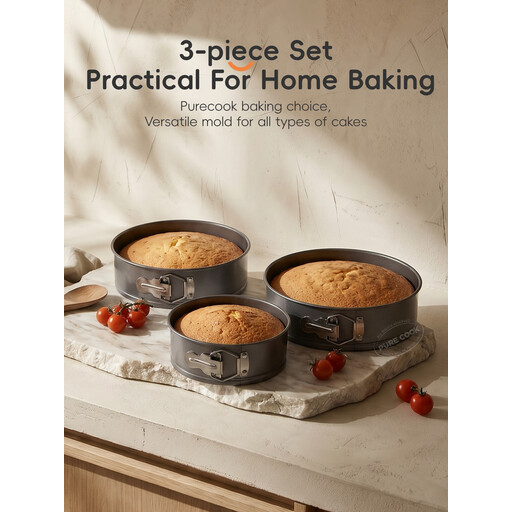
Why This Fits Their Persona: Ideal for those looking to build their baking collection without immediately investing in expensive individual pans. This set provides three of the most common springform pan sizes for a wide variety of recipes.
Instead of bundling many impractical pans, this set focuses on a single, versatile pan type in three useful sizes (18, 20, 24 cm). The buckle clasp is designed to improve the seal and minimize leaks.
Material: Carbon steel for good heat conduction.
Feature: Three common sizes for high flexibility in recipe selection.

Why This Fits Their Persona: For home bakers who bake regularly and value durability, reliable results, and easy handling. An investment in a pan that will perform for years to come.
This pan addresses common weaknesses with high-quality materials. The ceramic-reinforced non-stick coating is robust, and the heavy-gauge steel construction ensures it is warp-resistant and provides a leak-proof seal. The cut-resistant enamel base prevents scratches.
Construction: Leak-proof clasp and cut-resistant base.
Coating: Durable KAIRAMIC non-stick coating.
Origin: Made in Germany.
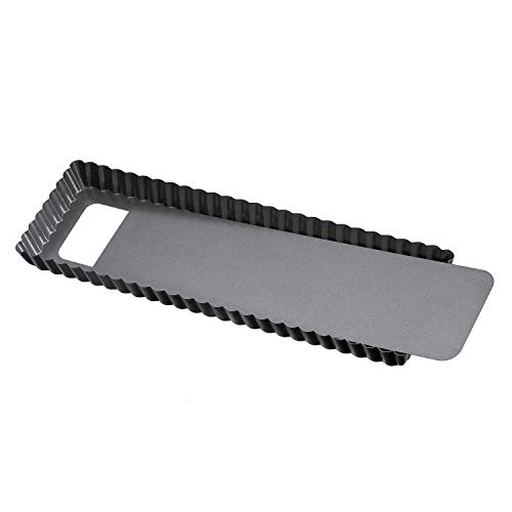
Why This Fits Their Persona: Perfect for lovers of sweet and savory tarts who want a pan that not only delivers even baking results but also allows for a flawless presentation.
This specialty pan solves a core problem: removing delicate shortcrust pastry. The loose bottom eliminates the need to invert the pan and prevents the tart from breaking. The robust construction and coating meet a high standard of quality.
Function: Loose bottom for easy and safe removal.
Material: Cut-resistant enamel base allows for slicing directly in the pan.
Shape: Rectangular form for modern tart creations.
We've put together a special selection for cheesecakes, where an absolutely leak-proof pan is crucial, that meets these high demands.
Proper care is crucial. After the pan has cooled, clean it by hand with warm water, a mild dish soap, and a soft sponge. Avoid abrasive scouring pads or harsh cleaning agents. Even if some bases are labeled as dishwasher-safe, hand washing is gentler on the ring's coating and significantly extends the life of the entire pan.
Silicone pans have their own pros and cons. They are flexible, which makes releasing the cake very easy, and they are shatterproof. However, they conduct heat differently than metal, which can lead to a lighter and softer crust. For cakes where a deep browning is desired (e.g., bread crusts), a metal pan is often the better choice. For detailed cakes like Bundt cakes or for chilled desserts, silicone is very practical.
"Leak-proof" means that the ring of the springform pan seals so precisely and tightly with the base that even thin batter cannot escape. Look for a solid material thickness so the pan doesn't warp in the oven. A high-quality, wide clamping ring that closes evenly and firmly is the most important feature. In models like the Kaiser La Forme Plus series, this is ensured by a special construction and an optimized locking mechanism.