
Lieferung heute & morgen

Qualitätsgarantie

Willkommens-Angebote freischalten: KOSTENLOSE Lieferung | Bis zu 80 % RABATT | Kostenlose 30-Tage-JoyPlus-Testphase
App herunterladen
A ruined cake stuck in its pan, or a new baking pan that warps after its third trip to the oven—such setbacks are frustrating and costly. The market is flooded with products whose marketing promises quickly fall short in a real home kitchen. As your Joybuy Product Recommendation Officer, I'm here to help you separate the wheat from the chaff and make an informed decision.
Before you invest, you should be aware of the three most common pitfalls that lead to disappointment:
A good cake pan is a long-term investment. Therefore, pay close attention to the key features that define a high-quality pan.
To avoid the problems mentioned above, you should check three key parameters before buying. These determine the pan's durability, baking performance, and ease of use.
The material is the foundation of any baking pan. It affects not only its stability but also how evenly your cake browns.
A good non-stick performance is essential, but the differences in quality are enormous.
The choice of the right pan depends directly on what you plan to bake.
Instead of presenting an overwhelming list, we have selected products for specific user profiles.
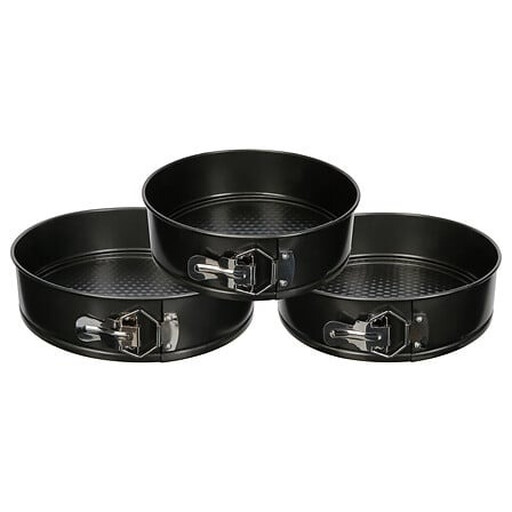
Why it's a match: This baking pan set is ideal for anyone just discovering their passion for baking. It offers the necessary flexibility for various cake sizes with three common diameters (22, 24.5, and 26 cm), eliminating the need to buy multiple individual pans right away.
Instead of owning a single, inflexible pan, this set provides an adaptable starter kit. The non-stick coating makes it easier for beginners to release the cake.
Three sizes for maximum versatility. The pans are nestable, saving valuable space in your kitchen cupboard.

Why it's a match: For ambitious bakers who bake regularly and want to invest in durability and perfect results. This pan is designed for frequent use.
The heavy-gauge steel quality prevents warping. The SafeClick latch is designed for a leak-proof seal and durability, and the cut-resistant enamel base withstands scratches from knives.
Equipped with the KAIRAMIC ceramic non-stick coating and a leak-proof, cut-resistant base. According to the manufacturer, the product is made in Germany.

Why it's a match: This loaf pan is specifically designed to meet the demands of heavy bread and sourdoughs. Its size is suitable for loaves up to 1500g, ideal for families or ambitious home bread bakers.
According to the manufacturer, the enamelled base is sourdough-resistant. The aggressive acids in the dough cannot attack the surface, a common cause of failure in basic coatings.
Cut- and scratch-resistant enamel base that allows for cutting directly in the pan. The robust steel construction ensures it remains stable even with heavy doughs.
We have compiled a complete, up-to-date list of products that fully meet these strict selection criteria and German safety regulations.
1. How do I properly care for a non-stick baking pan to extend its lifespan? The most important rule is to wash it by hand. Use warm water, mild washing-up liquid, and a soft sponge or cloth. Avoid the dishwasher, steel wool, or abrasive scouring pads, as these will damage the coating. Dry the pan thoroughly after cleaning to prevent rust from forming on any uncoated edges or latches.
2. Can I use metal utensils in my baking pan? In most non-stick pans, you should not use metal utensils like knives or metal dough scrapers. These can scratch the surface and destroy the non-stick properties. An exception is pans with a specially hardened, cut-resistant enamel base. You can cut on these, but you should still be careful with the coated side walls.
3. What does "sourdough-resistant" mean for a bread pan? Sourdough contains lactic and acetic acids, which are chemically quite aggressive. Over time, these acids can attack and damage simple metal surfaces or low-quality non-stick coatings. A pan declared "sourdough-resistant," usually one with an enamel coating, is resistant to these acids, making it particularly suitable and more durable for regular sourdough bread baking.