
Lieferung heute & morgen

Qualitätsgarantie

Willkommens-Angebote freischalten: KOSTENLOSE Lieferung | Bis zu 80 % RABATT | Kostenlose 30-Tage-JoyPlus-Testphase
App herunterladen
The selection of baking pans is vast, but not every pan delivers on its promise. An unsuitable or low-quality cake pan can not only compromise your baking results but also quickly become unusable. As your Joybuy Product Recommendation Officer, I'll help you identify the key features and avoid common purchasing pitfalls, ensuring your next cake is a success.
Many home bakers invest in products that quickly turn out to be poor purchases. Watch out for these three common issues to avoid disappointment:
To make the right decision, you should focus on objective criteria. The following three parameters are crucial for the function and longevity of your new baking pan.
The material significantly influences heat conduction and, therefore, the baking result.
The type of non-stick coating is an indicator of quality.
The most common sizes for round cake pans are 26 cm and 28 cm in diameter. These are suitable for most standard recipes. For special projects, there are dedicated pans:
Here are some recommendations tailored to different needs and use cases.
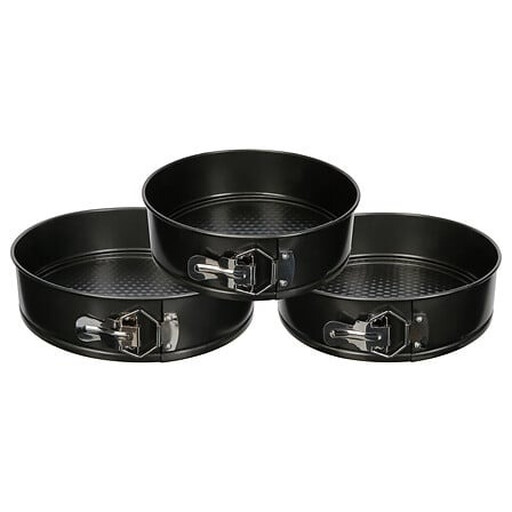
Why this set is a great fit: Ideal for those starting out with baking who want flexibility without a large initial investment. With three different sizes, you're equipped for both small and large cakes.
This set solves the "one-size-fits-all" problem by offering three common diameters (22, 24.5, and 26 cm). This ensures you always have the right pan on hand.
The set is stackable, saving valuable space in your kitchen cabinet. The steel construction with a non-stick coating provides a solid foundation for various baking projects.

Why this pan is a great fit: For anyone who values durability and reliable results. This is an investment in a pan designed for frequent baking.
This Kaiser baking pan addresses the issues of instability and poor-quality coatings. The SafeClick latch is designed for leak-proof performance, and the KAIRAMIC non-stick coating is considered exceptionally robust.
The enamelled base is cut- and scratch-resistant, so the cake can be cut and served directly in the pan. The manufacturer provides a 10-year warranty on the product.
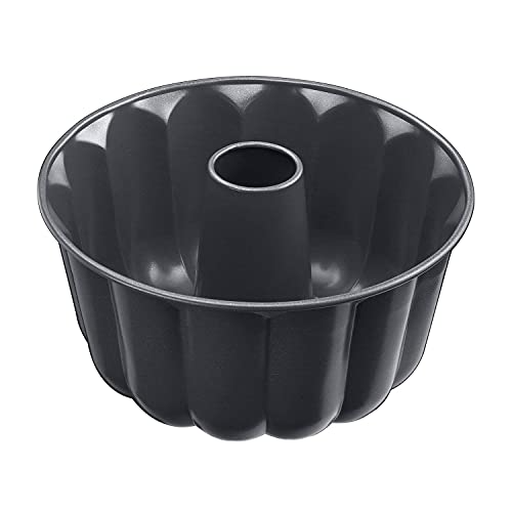
Why this pan is a great fit: For ambitious bakers who want to create classic cakes like marble cake or Bundt cake to perfection.
This Bundt pan is specifically designed for tall, dense batters. The central chimney ensures even heat distribution and prevents the cake from being raw in the middle—a common problem when using unsuitable pans.
The high-quality KAIRAMIC coating makes it easy to release the intricately detailed cake, while the heavy-gauge steel construction ensures stability and an even baking result.
We have compiled a comprehensive, up-to-date list of products that fully meet these strict selection criteria and German safety standards.
1. How do you properly clean a non-stick baking pan to extend its lifespan? After it has cooled, clean the pan with warm water, a mild dish soap, and a soft cloth or sponge. Avoid abrasive scouring pads and harsh cleaning agents. Even if some parts are declared dishwasher-safe (often just the base), hand washing is generally recommended to protect the coating.
2. Is a silicone mold or a metal baking pan better? There's no one-size-fits-all answer; it depends on the application. Metal pans (steel) offer better heat conduction and ensure more even browning, making them ideal for classic cakes and breads. Silicone molds are unbeatable when it comes to easily releasing detailed cakes or preparing chilled desserts.
3. My springform pan leaks, what can I do? If an older or less expensive springform pan is leaking, you can wrap the base and the bottom edge tightly with aluminium foil from the outside. This will catch most of the leaking batter. For a permanent solution, however, investing in a higher-quality model with a reliable locking mechanism is recommended.