
Lieferung heute & morgen

Qualitätsgarantie

Willkommens-Angebote freischalten: KOSTENLOSE Lieferung | Bis zu 80 % RABATT | Kostenlose 30-Tage-JoyPlus-Testphase
App herunterladen
A baking tin must suit the recipe, your oven and the portion size you want to prepare. Yet product descriptions often lead to unsuitable purchases: a tin may be advertised as versatile but be too shallow for casseroles or too small for a household. Other models have a non-stick coating but cannot be put in the dishwasher or used with metal utensils.
A non-stick baking tin can make it easier to remove cakes, muffins or brownies. However, this does not automatically mean that it is scratch-resistant, dishwasher-safe or suitable for high temperatures. The manufacturer’s information is crucial:
For example, the Le Creuset muffin tin is specified as suitable for oven use up to 240 °C. At the same time, it should be washed by hand with warm soapy water and a soft sponge. Sharp tools and abrasive cleaners should be avoided.
A baking tin measuring 28 cm in length is not automatically suitable for every family-sized portion. The height and internal volume affect how much batter or casserole it can hold. Deep sides are important for lasagne, potato dishes or tall cakes. A shallow baking tray, on the other hand, is more suitable for traybakes, pizza or shallow oven dishes.
You should therefore check:
A metal baking tin generally heats up more quickly than a heavy ceramic or cast-iron tin. However, depending on its construction and coating, it may be more susceptible to scratches or warping. A ceramic baking tin retains heat for longer and is often suitable for serving too. However, it must be protected from sudden changes in temperature.
With cast iron, you need to take its high weight, heat retention and longer heating time into account. This is considerably more relevant for a Takoyaki pan weighing around 2,02 kg than for a lightweight metal tray.
A cake tin with a non-stick coating is a sensible choice when easy release is the priority. For lasagne or casseroles, however, a rectangular ceramic or metal oven dish may be more suitable.
For individual portions or smaller households, a compact tin such as the Mondex Roasting Tray measuring 17 × 11 × 7,5 cm may be sufficient. The depth of 7,5 cm is useful for small roasts, side dishes or brownies. Its stated weight of 0,162 kg makes it easy to handle and store.
For family meals, larger formats with a documented capacity are more practical. The 5five Bakery Pro Metal Oven Dish is available in two versions: 2,4 litres at 28 × 22 cm and 3 litres in the larger version. Before buying, you should check that the dimensions will actually fit the available oven space.
A tin is only practical for everyday use if its care requirements suit your household. “Dishwasher-safe” should not be inferred from general marketing claims, but should be confirmed in the specific product information. If the information is contradictory, careful hand washing is the safer approach.
The same applies to ceramic and cast iron: do not cool hot tins immediately with cold water. This can create material stress. Damaged coatings, cracks or chipped glaze are reasons to stop using the product.
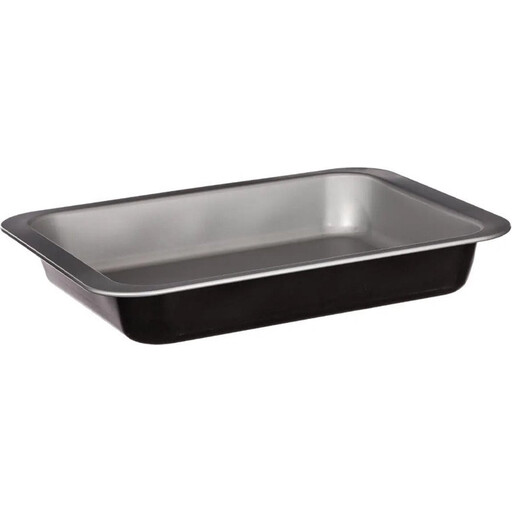
Why this product suits this profile: With a capacity of 2,4 litres, this rectangular metal dish is designed for everyday casseroles, potato dishes and lasagne.
The documented capacity helps you choose the dish based on more than just its external dimensions. However, the coating means you should still check the care instructions before buying.
2,4-litre capacity, 28 × 22 cm base dimensions and metal construction with ILAG non-stick coating.
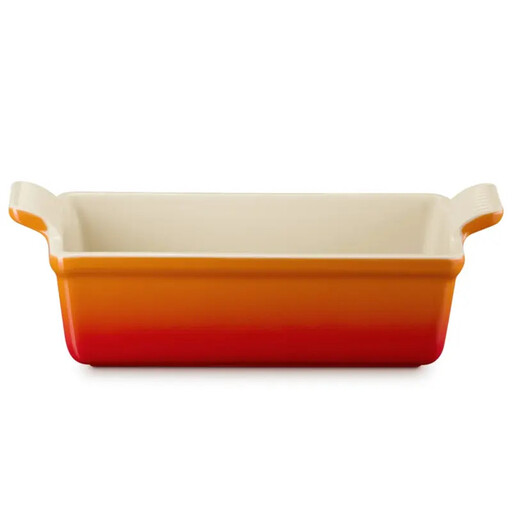
Why this product suits this profile: With a capacity of 1,4 litres, this stoneware model is suitable for bread, cakes, meatloaf and lasagne and, according to the product information, can also be used in the freezer, microwave and dishwasher.
The temperature range from -23 °C to 260 °C and the capacity are clearly specified. Despite its temperature resistance, sudden changes in temperature should still be avoided.
Stoneware, 1,4-litre capacity, oven-safe up to 260 °C and, according to the description, suitable for the freezer, microwave and dishwasher.
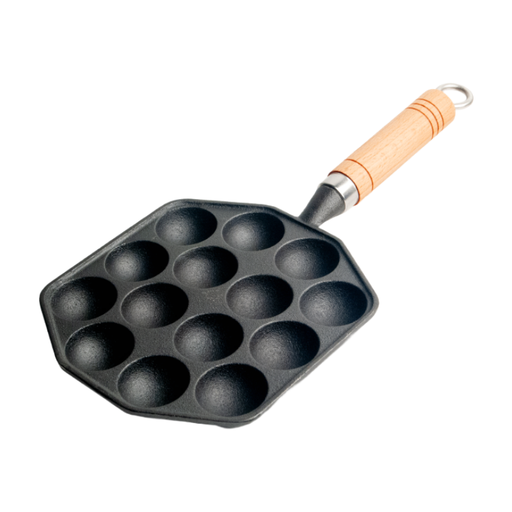
Why this product suits this profile: This specialist cast-iron pan is designed for Takoyaki and can be used on the hob. The wooden handle makes it easier to handle.
Its intended use is clearly defined, preventing you from buying a standard muffin tin for a speciality dish. Before use, prepare the pan according to the manufacturer’s instructions and wash it by hand.
Cast iron, 27,5 × 18 cm, 1,5 cm height, wooden handle and a design for preparing Takoyaki on the hob.
We have put together a complete, regularly updated list of products that fully meet these strict selection criteria and the safety regulations applicable in the EU.
A deep loaf tin made from metal, steel or stoneware is suitable for many cake and bread recipes. The recipe volume, internal dimensions and maximum oven temperature are key. With yeast dough, the tin should provide enough room for the dough to rise.
Its lifespan depends on the material, use and care. Coated tins should not be handled with sharp or metal objects. Cast iron and glazed stoneware can remain usable for a long time when treated properly, but must be protected from knocks and sudden changes in temperature.
Lightly greasing a coated tin can still be useful, particularly when using it for the first time or when working with sticky dough. The manufacturer’s specific instructions are decisive. Baking paper, soft silicone utensils and hand washing can help preserve the surface for longer.