
Lieferung heute & morgen

Qualitätsgarantie

Willkommens-Angebote freischalten: KOSTENLOSE Lieferung | Bis zu 80 % RABATT | Kostenlose 30-Tage-JoyPlus-Testphase
App herunterladen
A baking tin needs to suit your recipe, your oven and the level of care you’re prepared to give it. Yet product descriptions can often lead to the wrong purchase: a tin may be coated but unsuitable for metal utensils. A baking tray may look large enough, but not fit on your oven’s shelf runners. Or the stated size may refer to the outside dimensions, while the usable baking area is much smaller.
This guide explains which details matter before you buy a metal baking tin, baking tray or oven dish. You’ll also find a selection of options to suit hobby bakers, families and frequent users.
For a 30 x 40 cm baking tin, for example, the outside dimensions may be larger than the actual inside area. High sides also reduce the usable space. Before you buy, compare the following measurements:
Depending on your oven model, a baking tray measuring 39,5 x 30 x 5,2 cm may fit differently from a shallow pizza tray with a diameter of 33 cm.
A non-stick baking tin can make it easier to remove cakes, pizzas or casseroles. However, the coating is more likely to stay intact for longer if you avoid sharp or metal utensils. Sudden temperature changes and harsh cleaning can also cause problems.
For coated models, it’s particularly important to check:
Several products in this selection are recommended for handwashing, despite some claims that they’re easy to clean. This is therefore the gentler option if you want to take the best possible care of them.
A shallow pizza tin is suitable for a thin base, but not necessarily for lasagne or a tall loaf. A deep loaf tin can work well for cakes and brownies, but you’ll need enough room above it. If you regularly make a variety of dishes, it’s worth choosing between shallow, deep, round and square tins.
A metal baking tin, or a steel one, is usually lightweight and easy to store. Steel tins can distribute heat evenly to the dough or food. However, the results also depend on the oven temperature, the amount of dough and the thickness of the tin.
Cast iron is much heavier and retains heat for longer. This can be useful for certain slow-cooked and oven-baked dishes. However, a cast-iron dish is less easy to handle and should be protected from sudden temperature changes.
Avoid using metal knives or turners with PTFE-coated products. Wooden, plastic or silicone utensils are more suitable. Lightly greasing a coated tin can also be helpful, particularly with sticky dough or very long baking times.
For the 5five models mentioned here, the term ‘ILAG’ indicates a corresponding non-stick coating. It’s still important to check the care instructions for each product.
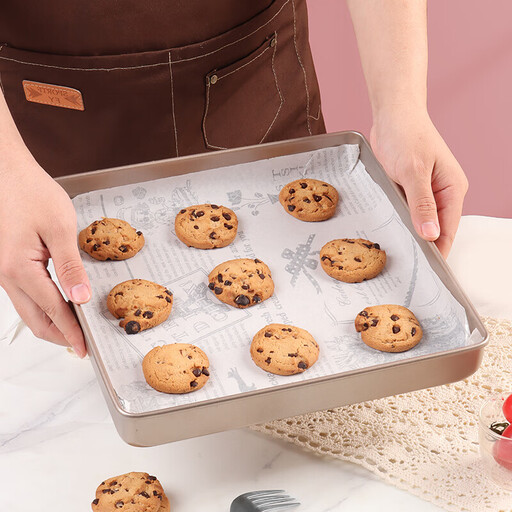
Why this product suits this profile: The square tin is designed for pizza, bread, brownies and other oven-baked dishes, making it suitable for a range of everyday uses.
The product description lists several uses rather than limiting the tin to a single recipe. The non-stick coating can make food easier to remove.
Square shape, coated surface and suitable for pizza, bread and shallow bakes.
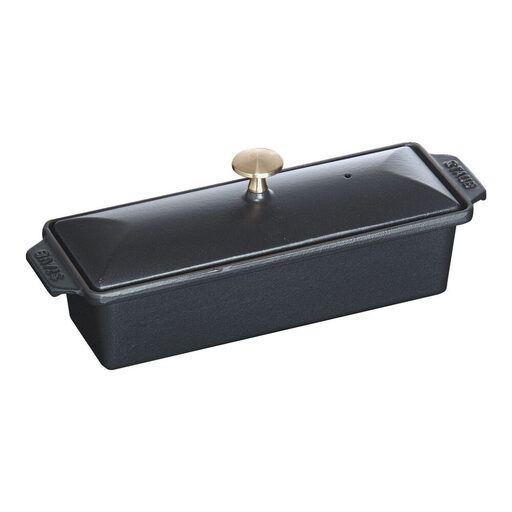
Why this product suits this profile: This cast-iron terrine with lid is a good fit for households looking for a substantial, well-defined dish that can be used on the hob and in the oven.
The specifications state the material, 1,45-litre capacity, lid and temperature limits. This makes it easier to assess whether the dish is right for you before buying.
Cast iron, a lid, side handles and, according to the product details, suitability for induction hobs, ovens and freezers.
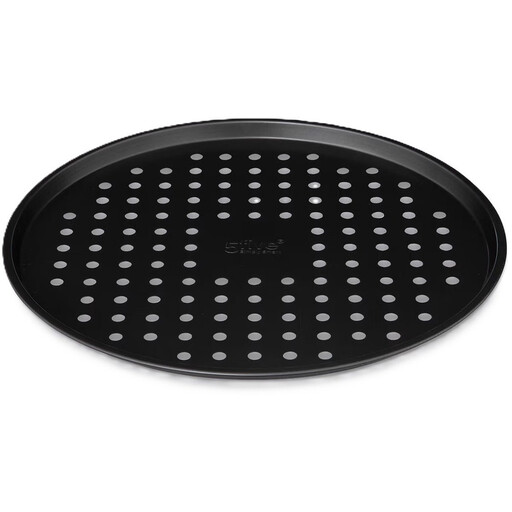
Why this product suits this profile: This round, perforated pizza tray has a diameter of 33 cm and is designed for making pizza, making it a good option for households that cook pizza regularly.
The diameter and height are clearly stated as 33 cm and 1,2 cm respectively. The PTFE coating means you should avoid sharp and metal kitchen utensils.
Perforated steel, a 33 cm diameter, an ILAG non-stick coating and a weight of 250 g, according to the product details.
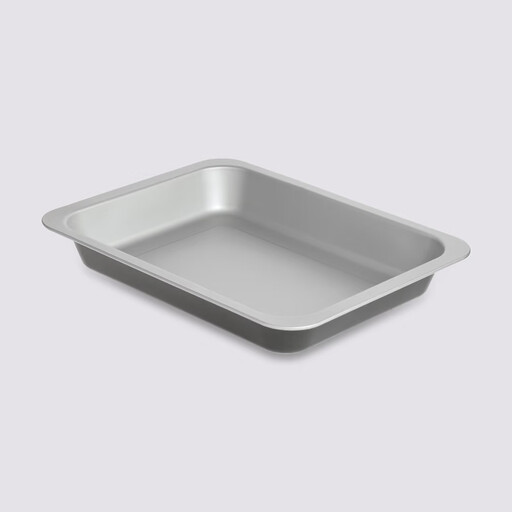
Why this product suits this profile: The long metal dish is suitable for larger casseroles, traybakes and family-sized portions, provided your oven’s internal dimensions are sufficient.
The dimensions of 39,5 x 30 x 5,2 cm and weight of 490 g are clearly stated. This makes it easier to check whether the dish will fit on your oven shelves before buying.
Metal body, shallow sides measuring 5,2 cm high and a size suited to larger oven-baked dishes.
We’ve put together a comprehensive, regularly updated list of products that meet these strict selection criteria and fully comply with the safety regulations in force in the EU.
Choosing the right cake tin, loaf tin, lasagne dish or oven dish isn’t just about the coating. The intended use, dimensions, sides, material and care requirements all matter.
Shallow round tins with a diameter of around 32 to 33 cm are suitable for pizza. A perforated pizza tray may differ from a solid pizza tin because of the holes in its base. Before you buy, compare the diameter, side height and care instructions.
It depends on the product and its coating. Handwashing is recommended for several of the metal tins mentioned here. As a rule, coated surfaces shouldn’t be cleaned with harsh detergents or abrasive materials.
A larger 30 x 40 cm baking tin can be handy for making several portions. A 23 x 23 cm baking tin is better suited to smaller quantities, taller cakes or compact casseroles. The key thing is to check that the tin fits in your oven and is the right size for the amount of food you want to make.