
Lieferung heute & morgen

Qualitätsgarantie

Willkommens-Angebote freischalten: KOSTENLOSE Lieferung | Bis zu 80 % RABATT | Kostenlose 30-Tage-JoyPlus-Testphase
App herunterladen
Whether you are baking a cake, bread, muffins or quiche, the right baking tin affects ease of use, baking time and how easily your bake can be removed afterwards. However, many purchasing decisions go wrong not because of the recipe, but because of unclear material specifications, unsuitable dimensions or cleaning requirements that prove more time-consuming than expected. The Joybuy Product Recommendation Officer team has therefore assessed the key product features objectively and explains which baking tins suit different needs.
A non-stick baking tin can make it easier to remove your bake. However, this does not automatically mean that it is scratch-resistant or dishwasher-safe. With coated steel or carbon-steel tins, metal utensils, scouring pads and harsh cleaning products are often unsuitable. If you overlook the care instructions, the surface may become damaged prematurely.
You should therefore look for specific information such as:
A silicone baking tin can be stored in a space-saving way and may make it easier to remove your bake. However, very soft silicone can make filling and carrying the tin awkward. The tin should be placed on a sturdy baking tray or oven rack, particularly when using runny batter. Reinforcements, a firm rim or a steel frame can make handling easier.
The external dimensions of a cake tin do not always show how much batter it can actually hold. This matters when using small ovens, air fryers or several tins on one oven shelf. In addition to length and width, check:
A baking-tin set with several sizes is practical if you bake different quantities. For a specific recipe, however, a single springform tin, tart tin or bread tin may be a better fit.
Carbon steel and steel transfer heat comparatively directly and are suitable for cakes, bread and bakes that need to hold their shape. Coated models should not be heated beyond the stated maximum temperature. An enamel coating can offer additional benefits, such as resistance to cutting and an odour- and taste-neutral surface.
Silicone is flexible, lightweight and often space-saving. The actual temperature resistance should always be stated in the product description. A stable support is also advisable when handling soft batter.
Enameled stoneware retains heat and can be taken from the oven to the table, provided the relevant manufacturer’s instructions are followed. Take care when moving between very cold and very hot conditions, as sudden temperature changes can create stresses in the material.
A tin designed for the oven is not automatically suitable for use in a microwave, on a hob or under a grill. The product information must explicitly permit each intended use. Examples from our selection:
A dishwasher-safe baking tin saves time, but this option is not available for all materials. Coated tins that require hand washing can remain usable for a long time if cleaned gently. Use warm water, mild washing-up liquid and a soft sponge. Allow hot tins to cool before cleaning them or removing the bake.
Other baking accessories also matter: a suitable cooling rack, baking paper, dough scraper and heat-resistant oven gloves help reduce strain on the tin and its coating.
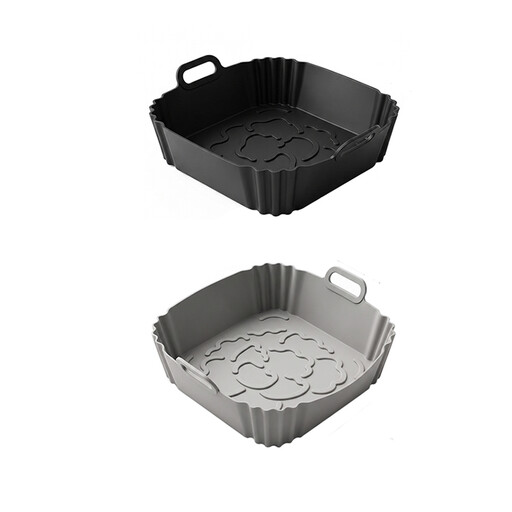
Why this product suits this profile: Two square silicone tins measuring 21.5 × 21.5 cm provide a simple base for cakes, brownies or savoury bakes. The two-piece set is ideal for households that want to prepare several portions.
The fixed dimensions are clearly stated. Before buying, you should still check whether a stable support and the required temperature rating are available.
Two pieces; flexible silicone; square format for sweet and savoury recipes.
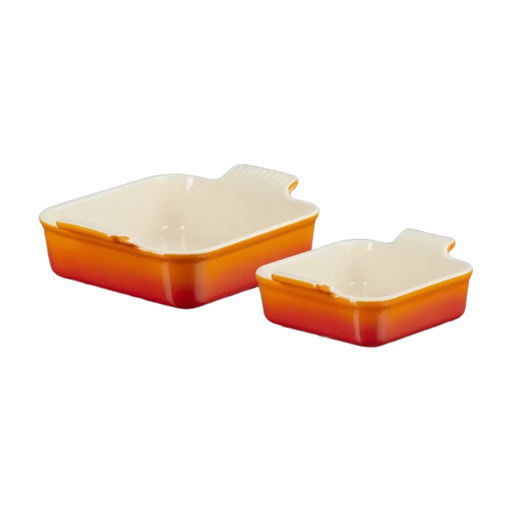
Why this product suits this profile: This enameled stoneware set includes two square dishes with side lengths of 13 and 20 cm. They are suitable for individual desserts, side dishes, gratins and bakes.
The temperature range of −18 °C to 260 °C, along with the microwave and dishwasher specifications, is clearly stated. Nevertheless, sudden temperature changes should be avoided.
Two sizes; enameled stoneware; according to the product information, suitable for ovens, microwaves, freezers and dishwashers.
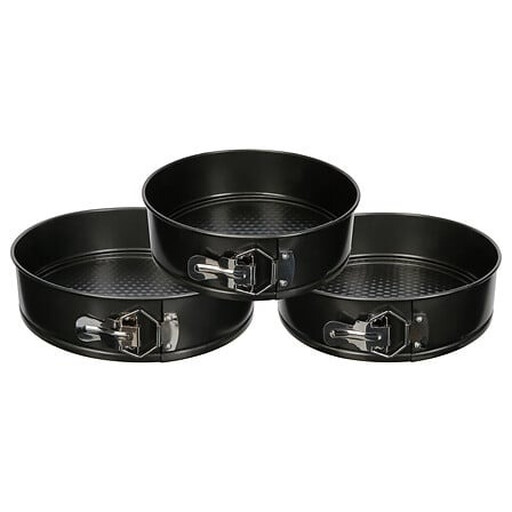
Why this product suits this profile: Three sizes—22, 24.5 and 26 cm—cover different cake quantities. The springform mechanism and removable base are designed for cakes and gateaux with delicate surfaces.
The sizes and maximum temperature range of 280 °C are stated. Before use, make sure the closure is fully secured and protect the coating from metal utensils.
Three diameters; stackable design; removable base with hinge mechanism.
We have put together a complete, regularly updated list of products that fully meet these strict selection criteria and the safety regulations applicable in the EU.
For beginners, easy-to-use tins with clearly stated dimensions are a sensible choice. A springform tin is suitable for many cake recipes, while a silicone baking tin can make releasing the bake easier. With silicone, a stable support is important. If you want to try several types of recipe, you can choose a baking-tin set with different sizes.
It depends on how you intend to use them. Silicone is flexible, lightweight and space-saving. Metal and carbon steel are sturdy and transfer heat directly. The key factors are the stated temperature resistance, the level of browning you want, stability when filling the tin and the care instructions.
There is no universal lifespan. It depends on use, temperature, cleaning and the utensils used. Soft sponges, mild washing-up liquid and silicone or wooden kitchen tools help protect the coating. Do not exceed the stated maximum temperature and replace the tin if the coating visibly starts to come away or is badly damaged.