
Lieferung heute & morgen

Qualitätsgarantie

Willkommens-Angebote freischalten: KOSTENLOSE Lieferung | Bis zu 80 % RABATT | Kostenlose 30-Tage-JoyPlus-Testphase
App herunterladen
Whether you are baking a cake, bread, muffins or a casserole, choosing the right baking tin affects how easy it is to use, the baking time and how easily your bake comes out of the tin. An affordable tin can be a sensible choice if it suits the recipes you make. Problems arise when important details about the material, temperature range or cleaning requirements are missing.
This buying guide helps keen home bakers, families and beginners compare baking tins objectively and make a suitable choice.
A non-stick baking tin makes it easier to remove cakes or muffins. However, the coating is not automatically dishwasher-safe or suitable for metal utensils. Using sharp kitchen tools, abrasive scourers or high temperatures can damage the surface.
You should therefore check:
The measurement “26 cm” often refers to the diameter of a cake tin, not its usable surface area or height. With a loaf tin, length, width and height are all important. A small difference can change the baking time or cause the batter to overflow.
Before buying, check:
An oven-safe baking tin cannot automatically be used on the hob, under the grill or over an open flame. Microwaves, freezers and dishwashers also have their own specific approvals. Particularly with stoneware, a sudden change from very cold to very hot can cause thermal shock.
For this reason, rely on the specific manufacturer’s instructions rather than general advertising claims.
A baking tin set can be a sensible choice if you need different cake and casserole dishes. If you regularly bake bread and little else, however, you are likely to benefit more from a sturdy bread tin in the right dimensions.
Steel baking tins heat up relatively quickly and retain their shape well in many models. A non-stick coating can make it easier to remove your bake, but it requires gentle cleaning. Carbon steel is also commonly used for muffin tins, tart tins and bread tins.
Stoneware baking tins retain heat and, depending on the model, can help provide even cooking. It is particularly important to observe the stated temperature limit and instructions regarding sudden temperature changes. The material is generally heavier than thin metal.
Do not just compare the maximum temperature; also consider the care requirements. Some tins are approved for use up to 230, 240, 250 or 260 °C. This does not mean that every tin is suitable for grill functions or direct heat.
When cleaning, the following usually applies:
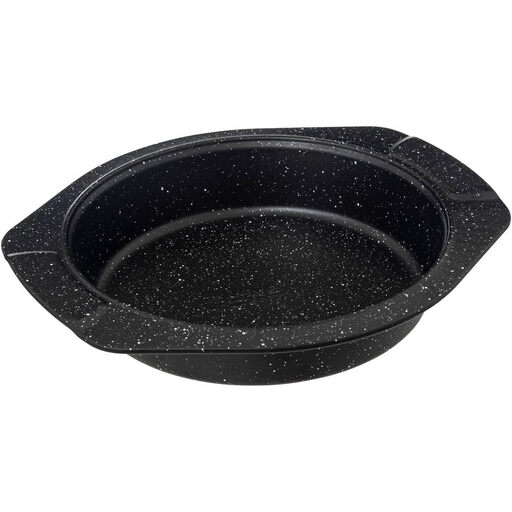
Why this product suits this user profile: With a diameter of 26 cm and a capacity of 1.9 l, this cake tin is designed for classic cake recipes. The steel body with PTFE coating provides all the essentials for everyday baking.
The product details specify the material, dimensions and oven suitability, and clearly state that the tin should not be put in the dishwasher or microwave.
Steel construction, 26 cm format, 1.9 l capacity and integrated handles; hand-washing is recommended.
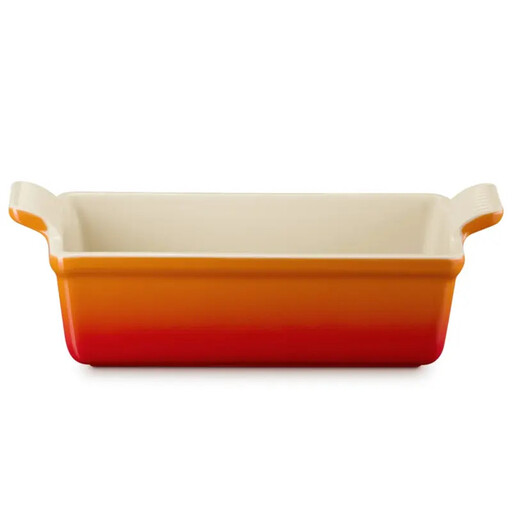
Why this product suits this user profile: With a capacity of 1.4 l, this stoneware loaf tin is suitable for bread, cakes, lasagne and meatloaf. According to the product details, it is approved for use in the oven, freezer, microwave and dishwasher.
The temperature range from -23 °C to 260 °C is clearly specified. Direct heat from a hob is expressly excluded.
An enamelled stoneware surface, stated thermal resistance and several ways to use it for both sweet and savoury dishes.
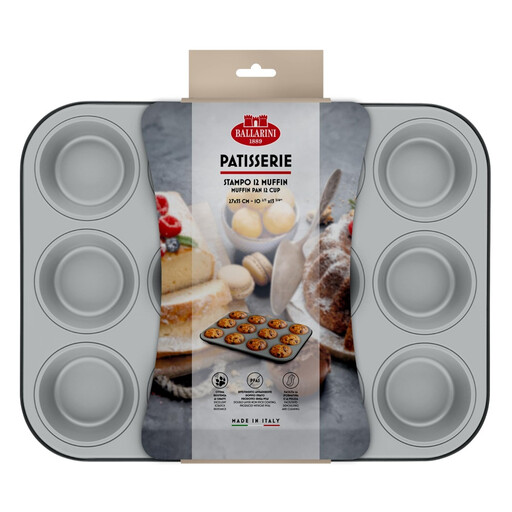
Why this product suits this user profile: This muffin tin has 12 wells and is suitable for sweet or savoury muffins and cupcakes.
The product details specify 230 °C as the maximum temperature, rule out microwave use and direct heat, and recommend hand-washing without metal utensils.
12 baking wells, carbon steel and a two-layer PFAS-free non-stick coating, according to the product description.
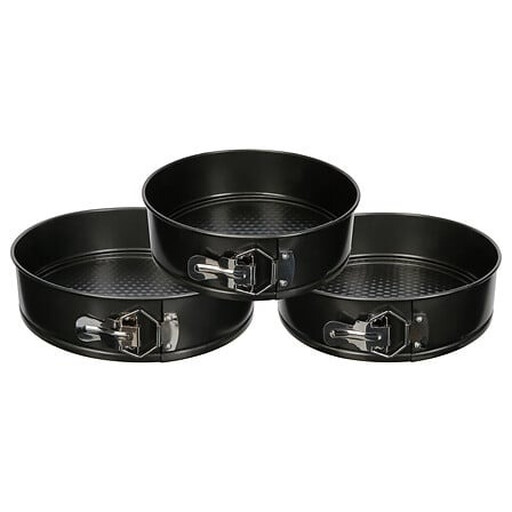
Why this product suits this user profile: Three sizes – 22, 24.5 and 26 cm – accommodate different quantities of cake and can be nested for compact storage.
The three diameters and their respective heights are specified. The spring mechanism with removable bases helps delicate cakes come out of the tins more easily.
Three stackable steel tins with non-stick coating and stated oven suitability up to 280 °C.
We have put together a complete, regularly updated list of products that fully meet these strict selection criteria and the safety regulations applicable in the EU.
Always read the product instructions before using a tin for the first time. Check the tin for cracks, warping or damaged coatings. Hot baking tins should be placed on a stable, heat-resistant surface. Use oven gloves when removing them, and allow stoneware or coated tins to cool before cleaning.
With steel baking tins, lightly greasing the surface can make it easier to remove your bake, even when the tin has a non-stick coating. With coated models, knives and metal spatulas should not be used directly on the surface.
For beginners, a classic cake tin, a springform tin or a small baking tin set with clear size details is a practical choice. A non-stick coating can make it easier to remove your bake. The care instructions and maximum oven temperature remain important.
Their lifespan depends on the material, coating, cleaning and storage. Steel and stoneware tins can provide many years of service when used correctly. Coated tins should be replaced if the surface is visibly flaking, heavily scratched or misshapen.
Not necessarily. Some models can be put in the dishwasher, while others must be washed by hand. The product details are decisive. Hand-washing is often recommended for non-stick baking tins to help protect the coating.