
Lieferung heute & morgen

Qualitätsgarantie

Willkommens-Angebote freischalten: KOSTENLOSE Lieferung | Bis zu 80 % RABATT | Kostenlose 30-Tage-JoyPlus-Testphase
App herunterladen
A baking tin set can replace several individual cake tins, springform tins or baking accessories. At the same time, unclear size specifications, delicate coatings and unsuitable materials can quickly lead to a poor purchase. If you’re shopping for your kitchen, you shouldn’t just focus on the number of tins, but also on the intended use, temperature range, cleaning requirements and storage space.
A set with numerous pieces may look versatile at first glance. However, if the tins are very small, unusually shaped or not compatible with your own recipes, they often end up unused. For classic cakes, springform tins between roughly 22 and 26 cm are common. For bread, muffins or individual portions, different measurements apply.
Check before you buy:
A non-stick coated baking tin can make releasing your bakes easier. However, the coating will only remain functional for longer if you follow the temperature limits and cleaning instructions. Metal utensils, scouring pads and harsh cleaners can damage the surface.
It’s also important to note the difference between “dishwasher-safe” and “hand wash only”. Several of the carbon steel tins listed here should, according to the product details, be cleaned with warm water and a soft sponge. Dishwasher cleaning is not recommended for those.
Baking tins made from carbon steel or coated steel are generally intended for the oven. That doesn’t automatically mean they are suitable for the microwave, hob, induction hob, open flame or grill. Before buying, you should check the stated intended use against your own appliances.
Carbon steel is lighter than cast iron and can distribute heat evenly in the oven. This is relevant for cakes, bread and brownies, but it doesn’t replace the correct temperature and baking time from your recipe. Steel tins can be sturdy, but they require careful handling of the coating.
Silicone baking tins are lightweight, flexible and often space-saving. They are particularly suitable for muffins, small cakes, jellies or chocolate desserts. With flexible tins, it’s advisable to place them on a sturdy baking tray so the batter can be safely transferred to the oven. You must check the specific temperature range on the product page.
Ceramic ramekins retain heat and are ideal for individual portions such as crème brûlée, soufflés, quiches or baked dishes. You should avoid sudden temperature changes, as these can cause cracking.
A loaf tin around 25 cm in length is suitable for many bread and loaf cake recipes. For a muffin tin, the number of wells is what matters. Twelve wells allow for a larger batch, while small silicone moulds are more suited to portioned desserts.
With springform tins, you should consider both the diameter and the height together. A set with 22, 24.5 and 26 cm offers different volume levels, but also requires enough storage space.
Pay attention to the lowest stated temperature limit of all the components in a set. For the PURECOOK pumpkin-shaped tin set, for example, the coating is stated to be heat-resistant up to 230 °C. The 5Five springform tins are, according to the product details, suitable for the oven up to 280 °C. These values refer to the respective product specifications and should not be applied to other tins.
For care, different rules apply depending on the material:
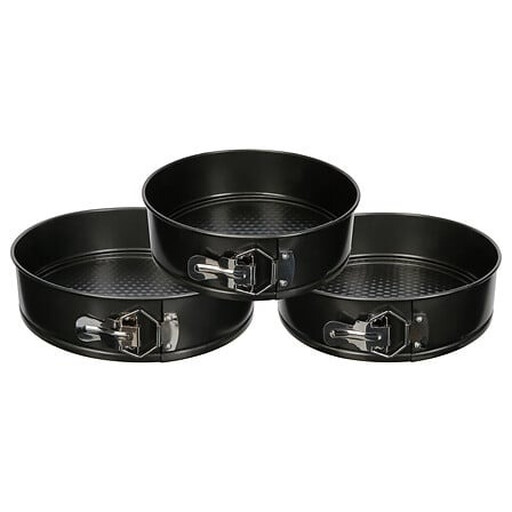
Why this product fits the profile: Three graduated sizes cover different cake quantities and offer a straightforward introduction to classic springform tins.
The dimensions of 22, 24.5 and 26 cm are clearly stated. This reduces the risk of choosing a set with only awkwardly sized tins that are hard to use.
Stackable design, removable base and hinge mechanism; according to the product details, suitable for the oven up to 280 °C.
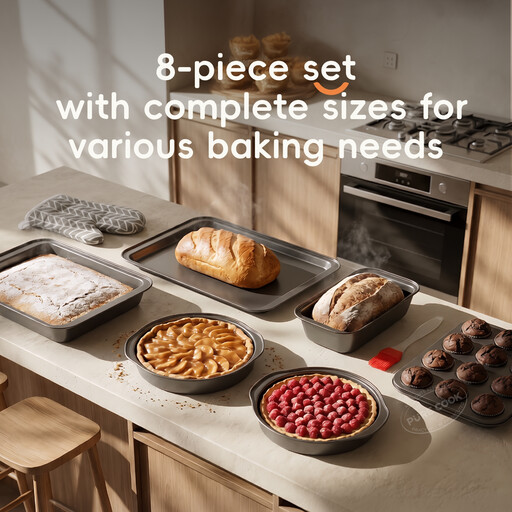
Why this product fits the profile: The combination of several square, round and rectangular tins is aimed at households with varying baking projects.
The product description lists the individual tin types and dimensions. This makes it easier to assess storage space before buying.
Stackable carbon steel tins with non-stick coating; according to the details, intended for use in the oven and air fryer.
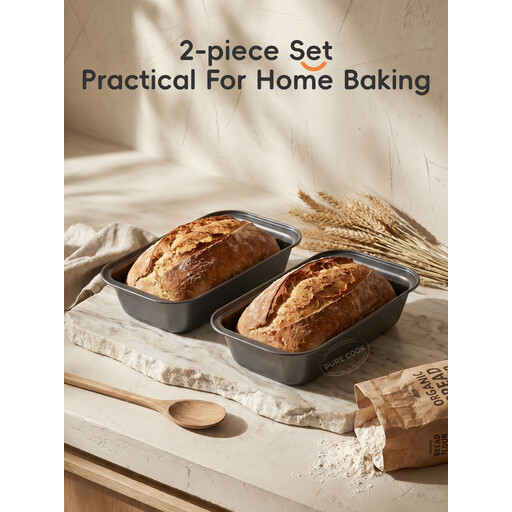
Why this product fits the profile: Two square bread tins appeal to households that regularly make toast, wholemeal bread, cakes or meatloaf.
The stated intended use is limited to the oven or steam oven. The hob, microwave and open flame are excluded.
Two tins with stated dimensions of 13.2 × 25.5 cm; hand washing with a soft sponge is recommended.
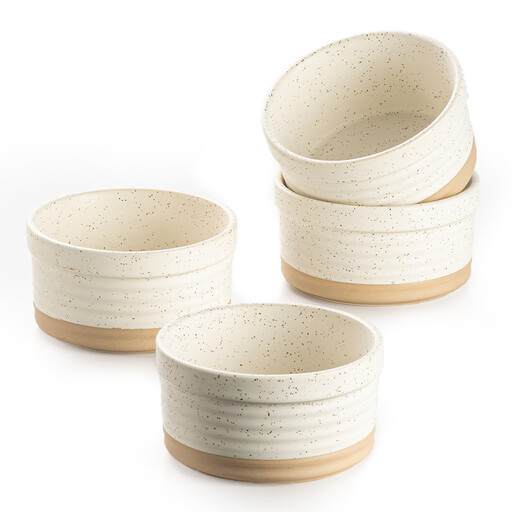
Why this product fits the profile: The ceramic ramekins are designed for individual desserts, soufflés, quiches and crème brûlée.
The capacity of 8 oz and the intended use for the oven, freezer and dishwasher are clearly stated.
Four porcelain ramekins with a glazed surface; according to the product details, suitable for the oven, freezer and dishwasher.
We’ve put together a full, regularly updated list of products that fully meet these strict selection criteria and the safety regulations in force in the EU.
Not every baking tin set needs additional items. For regular decorating, a 23-piece set of piping bags and three nozzles can be useful. It is intended for cakes, cupcakes and tortes, and should be cleaned with warm soapy water after each use and dried thoroughly.
A 3-piece BJ baking set comprising a dough scraper, brush and whisk complements simple workflows. For muffins or mini cakes, a twelve-hole, square PURECOOK cake tin with two trays and a total of 24 wells is an option. What matters most is whether the quantity matches your own baking volume.
For many households, a springform tin, a loaf tin, a muffin tin and a baking tray are sufficient. If you bake bread often, you should add a suitable bread tin. For desserts and individual portions, ceramic ramekins or silicone moulds are a good idea.
It’s impossible to give a fixed lifespan. It depends on the temperature, cleaning, storage and the kitchen utensils you use. Soft sponges, avoiding metal objects and following the manufacturer’s instructions can help preserve the coating.
For the PURECOOK tins mentioned, hand washing is recommended. Even if the tin itself is sturdy, dishwasher detergent, heat and friction can put more strain on the non-stick coating. The specific care instructions on the respective product page are what you should follow.