
Lieferung heute & morgen

Qualitätsgarantie

Willkommens-Angebote freischalten: KOSTENLOSE Lieferung | Bis zu 80 % RABATT | Kostenlose 30-Tage-JoyPlus-Testphase
App herunterladen
A baking tin set can be a useful addition to your kitchen equipment – or quickly turn into a poor purchase. What matters is not how many tins are in the pack, but whether the material, size, temperature range and cleaning requirements suit your recipes. As a Joybuy Product Recommendation Officer, I therefore assess the most important details according to practical criteria rather than marketing claims.
A non-stick baking tin is generally easier to remove baked goods from than an uncoated metal tin. However, the coating only remains effective if it is cared for correctly. Metal utensils, abrasive cleaners and deep scratches can damage the surface. In addition, “easy to clean” does not automatically mean “dishwasher-safe”.
You should therefore check for:
Not every cake tin is suitable for every heat source. Many carbon steel or coated steel tins are intended for use in the oven only. Microwaves, hobs, induction hobs, open flames and grills are often excluded.
Handling temperature changes is also important with glass and ceramic. A tin taken from the freezer should not be placed directly into a very hot oven unless the manufacturer expressly permits this. With ceramic baking tins, a sudden change in temperature can cause cracks.
A large set may initially seem versatile. In practice, however, tins with unusual dimensions, low sides or hard-to-reach recesses may rarely be used. Before buying, check whether the tin fits in your oven and whether its size suits the quantities typically used in your household recipes.
Carbon steel and steel transfer heat relatively directly and are commonly used for cakes, bread, pizza and muffins. A coating can make it easier to remove the bake. However, hand washing is often required, and the tin must not be used on the hob.
A silicone baking mould is flexible and space-saving. It is particularly suitable for smaller cakes, desserts and decorative shapes. When filling it, we recommend placing it on a sturdy baking tray underneath, so that the soft mould can be placed safely in the oven. Always check the exact approved temperature in the product details.
Glass baking dishes are practical when you want to take food straight from the oven to the table. One example from the selection is a two-piece set measuring 26 × 18 cm and 35 × 25 cm, which the product description states is oven-safe up to 300 °C and suitable for the microwave, freezer and dishwasher. Even so, sudden temperature changes should be avoided.
Ceramic baking dishes retain heat and are suitable for gratins, bakes and desserts. With enamelled stoneware, it is also important to check whether the manufacturer states that the dish is suitable for the microwave, freezer and dishwasher.
Compare the maximum temperature not only with the recipe, but also with your oven. The selection includes, for example:
These values apply only to the specific use described. Plastic lids, for example, must not be placed in a hot oven with the actual dish. A dish designed for the oven is also not automatically suitable for hobs or open flames.
When choosing a baking tin set for cakes, diameter, height and internal capacity are more important than the number of pieces alone. A set of springform tins measuring 22, 24.5 and 26 cm covers a range of cake sizes. For bread or loaf cakes, length, width and height are the key dimensions.
Stackable tins are useful when storage space is limited. With baking dishes, you should also consider handles, side height and weight. High sides are helpful for gratins and moist cakes, while shallow tins are suitable for tarts or traybakes.
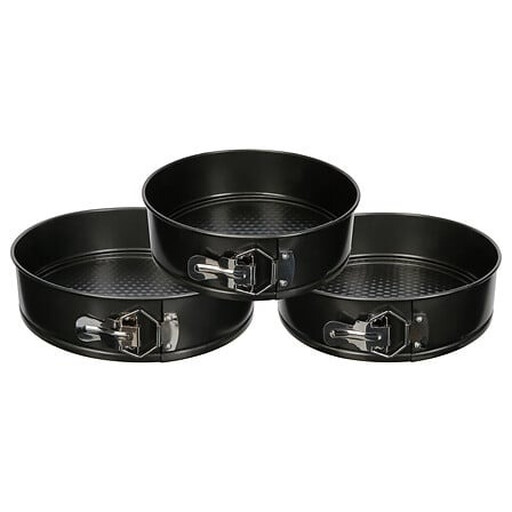
Why this product suits this profile: Three graduated sizes cover different quantities of cake and are suitable for households looking to start with a manageable set.
The dimensions are clearly stated; the spring mechanism and removable base help you release the cake easily.
Three diameters from 22 to 26 cm; stackable design and stated oven suitability up to 280 °C.
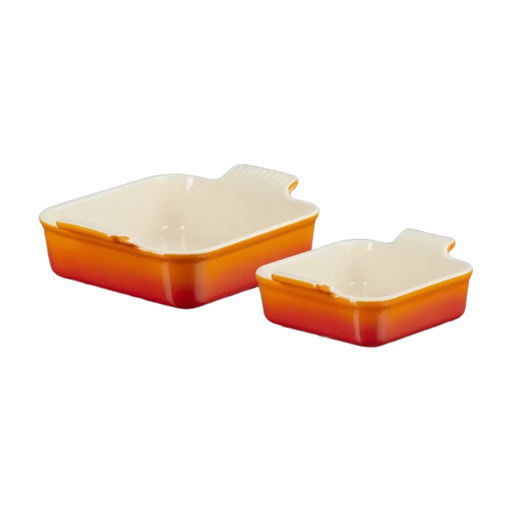
Why this product suits this profile: The two square enamelled stoneware dishes combine baking, serving and storage in different sizes.
The temperature range, dimensions and care options are clearly specified rather than being promoted only with general claims of versatility.
Two sizes with side lengths of 13 and 20 cm; according to the product details, suitable for the oven, microwave, freezer and dishwasher.
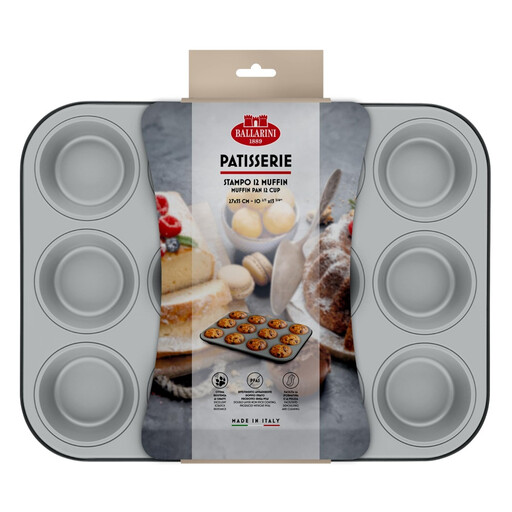
Why this product suits this profile: This muffin tin is designed for households that regularly bake twelve evenly sized muffins or cupcakes at once.
The number of cups, material, maximum temperature and hand-washing requirement are clearly stated.
Twelve baking cups across 27 × 35 cm; two-layer, PFAS-free non-stick coating according to the product description.
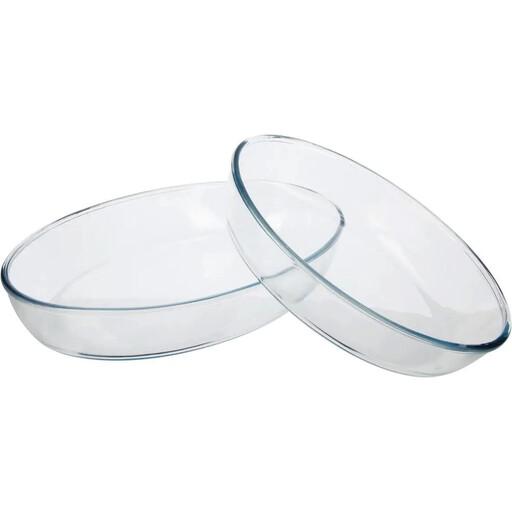
Why this product suits this profile: Two oval glass dishes are suitable for bakes, side dishes and cakes in smaller or family-sized quantities.
Both dimensions and the temperature range are specified; glass also does not rely on a delicate non-stick coating.
Two sizes, stated suitability up to 300 °C, plus dishwasher-, microwave- and freezer-safe properties according to the product description.
We have put together a complete, regularly updated list of products that fully meet these strict selection criteria and the safety regulations applicable in the EU.
The lifespan depends greatly on the material and how the tin is used. For coated tins, use soft sponges, mild washing-up liquid and heat-resistant plastic or silicone utensils. Allow the tin to cool before cleaning it. With steel tins, thorough drying prevents moisture from collecting around the edges or joints.
With ceramic and glass dishes, you should avoid sudden temperature changes. Silicone moulds should not be placed directly on the bottom of the oven. Before each use, check that the coating, rim, base and fastening mechanism are undamaged.
For getting started, a set with several common sizes is a sensible choice, such as springform tins or a combination of a cake tin, muffin tin and baking tray. Clear dimensions, easy cleaning and a clearly stated oven approval are more important than a high number of pieces.
Not necessarily. Some manufacturers permit dishwasher cleaning, while others recommend hand washing only. The specific care instructions for the product in question are decisive. Gentle cleaning can help the coating last longer.
There is no general answer. Uncoated glass or enamelled stoneware can be used for a long time if handled carefully. Coated metal tins are more susceptible to scratches and unsuitable cleaning. Proper use in accordance with the stated temperature and care instructions is crucial for durability.