
Lieferung heute & morgen

Qualitätsgarantie

Willkommens-Angebote freischalten: KOSTENLOSE Lieferung | Bis zu 80 % RABATT | Kostenlose 30-Tage-JoyPlus-Testphase
App herunterladen
A baking tin set can replace several individual tins, saving space in your kitchen cupboard. However, sets can vary considerably in terms of material, care requirements, temperature range and possible uses. If you focus only on the number of pieces or an apparently high-quality coating, you may end up buying tins that are unsuitable for your oven or the recipes you want to make.
A baking tin set containing several small tins may initially seem versatile. However, what matters is whether you will actually use the sizes in everyday life. For families, larger cake tins, oven dishes or a baking tray set are often more practical than several speciality tins. Small ramekins, on the other hand, are ideal for desserts, soufflés and individual portions, but they cannot replace a springform tin.
Before buying, check:
A non-stick baking tin can make it easier to remove cakes or bread. However, this does not automatically mean that it is dishwasher-safe or resistant to metal utensils. Several of the coated steel and carbon steel tins in this selection are intended to be hand-washed. Scouring pads and metal tools can damage the surface.
The same applies to silicone baking tins: their flexibility makes it easier to release food, but a sturdy baking tray may be needed underneath soft tins.
“Oven-safe” does not necessarily mean suitable for every kitchen appliance. Some oven-safe baking tins must not be used on a hob, induction hob or open flame. Similarly, microwave, freezer and dishwasher use may require separate approvals.
Pay attention to:
Aluminium is lightweight and easy to handle. The 5Five Aluminium Cake Tin Set includes three sizes: 20 × 10 cm, 15 × 10 cm and 10 × 10 cm. According to the product information, each tin is 10 cm high. The tins are stated by the manufacturer to be suitable for electric hobs, induction and ovens, but not for microwaves. They should be washed by hand.
Carbon steel combines relatively low weight with a sturdy shape. Coated versions can make it easier to release baked goods. At the same time, you need to observe the temperature limit and care instructions. According to the product information, the PURECOOK Carbon Steel Bread Tin Set is suitable for temperatures up to 220 °C and is intended exclusively for oven use.
Ceramic baking tins retain heat and can be used for serving. Glazed stoneware tins are often dishwasher- and microwave-safe, but should not be exposed to sudden changes in temperature. The stated temperature range for the Le Creuset set is -18 °C to 260 °C.
Silicone baking tins are lightweight, flexible and easy to store. According to the product description, the six-piece heart-shaped set is suitable for ovens, microwaves and freezers at temperatures from -40 °C to 230 °C. When using flexible tins, placing them on a flat surface while filling them is advisable.
A cake tin set with different diameters is suitable for households that regularly bake different quantities of cake. A springform tin set offers additional flexibility for cheesecakes, gateaux and cake bases. The 5Five set contains three springform tins measuring 22 cm, 24.5 cm and 26 cm in diameter; the stated maximum oven temperature is 280 °C.
For bread, toast and meatloaf, bread tins with straight sides are practical. Rectangular or square ceramic dishes are suitable for bakes, gratins and desserts. Also check whether the dimensions are compatible with the shelf height and width of your oven.
A coating can make it easier to release baked goods, but it does not replace careful handling. Allow the tin to cool before removing the cake or bread. Use warm water, mild washing-up liquid and a soft sponge unless the manufacturer’s instructions state otherwise. Ceramic tins may be dishwasher-safe, whereas coated carbon steel tins often require hand-washing.
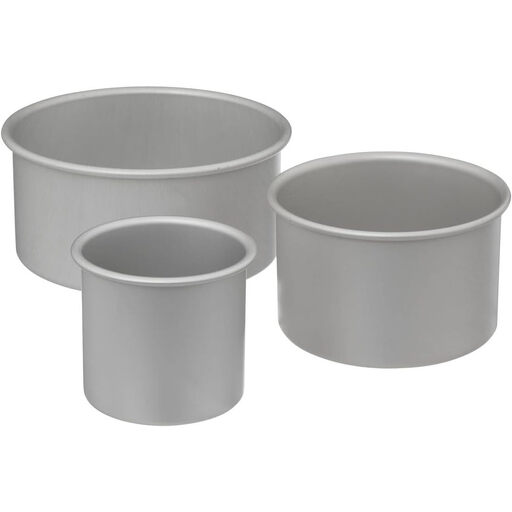
Why this product suits the profile: Three compact tins in graduated sizes cover different quantities and are suitable for simple cake recipes.
The sizes and care instructions are clearly stated. This makes it easy to check before buying whether hand-washing and avoiding the microwave suit your household.
Aluminium construction, three sizes, a low stated product weight of 270 g and a space-saving set design.
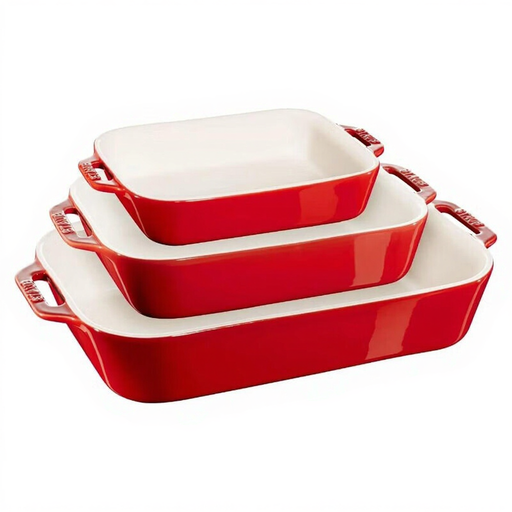
Why this product suits the profile: Three rectangular sizes are suitable for gratins, bakes, side dishes and desserts and can also be used for serving, according to the product information.
The stated temperature range of up to 260 °C, along with suitability for the dishwasher, microwave and freezer, makes it easier to check appliance compatibility and care requirements.
Enameled stoneware, three stackable sizes, ergonomic handles and a stated total capacity of 4.5 litres.
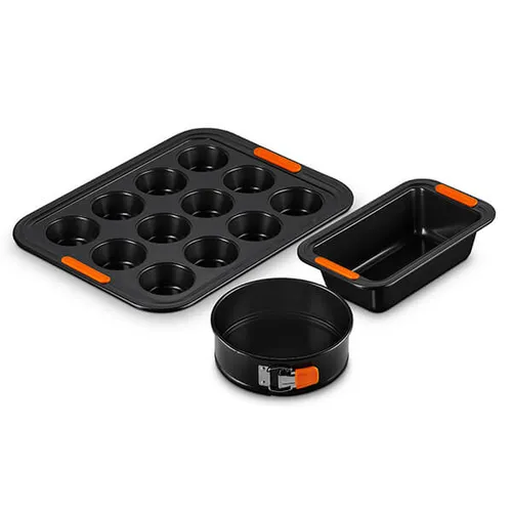
Why this product suits the profile: The combination of a muffin tin, loaf tin and springform tin covers cakes, muffins and bread in one set.
The three clearly defined pieces prevent a heavily promoted set from consisting mainly of speciality tins that are rarely used.
Carbon steel, non-stick coating, stated PFAS-free construction and a maximum oven temperature of 240 °C.
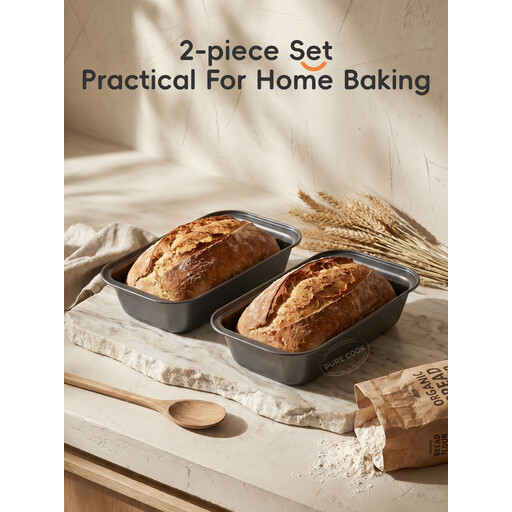
Why this product suits the profile: Two identical tins are practical when you want to bake several loaves, sandwich loaves or cakes at the same time.
Its clear designation for oven use and stated temperature limit of 220 °C help prevent unsuitable purchases for microwave, hob or grill use.
Two carbon steel loaf tins, stated dimensions of 13.2 × 25.5 cm and a coated interior for easier release.
We have put together a complete, regularly updated list of products that fully meet these strict selection criteria and the safety regulations applicable in the EU.
For beginners, a springform tin, a loaf tin and a muffin tin are useful choices. This combination covers a wide range of cake, bread and dessert recipes. Clearly legible size information, straightforward care instructions and a temperature limit suitable for your oven are also important.
The materials serve different purposes. Ceramic is particularly suitable for bakes, gratins and desserts that can be served directly in the dish. Silicone is flexible, lightweight and easy to store, making it suitable for small cakes, muffins or frozen desserts. No general ranking can be established based on these differences.
Its lifespan depends on the material, coating, temperature and care. Coated tins should not be used with metal utensils or harsh cleaning products. Ceramic should be protected from sudden changes in temperature. Always follow the manufacturer’s instructions and regularly check tins for cracks, distortion or damaged coatings.