
Lieferung heute & morgen

Qualitätsgarantie

Willkommens-Angebote freischalten: KOSTENLOSE Lieferung | Bis zu 80 % RABATT | Kostenlose 30-Tage-JoyPlus-Testphase
App herunterladen
A baking tin needs to suit the recipe, the oven and the desired portion size. When choosing a rectangular cake tin, loaf tin or bread tin, design and price are not the only considerations. Internal dimensions, capacity, material and care instructions also affect whether bread, cakes, brownies or savoury oven dishes turn out reliably.
A measurement such as “30 cm” often describes the length of the tin rather than the actual usable interior surface. Reinforcements, rim width and the height of the tin reduce its capacity. For planning recipes, the capacity in litres is therefore more informative than the external length alone.
A 30 cm bread tin may be designed for significantly different quantities of dough depending on its width and height. Using a recipe for a 1 kg bread tin in a smaller loaf tin could result in the dough overflowing or the crust browning unevenly.
A non-stick baking tin can make it easier to remove baked goods. However, this does not mean that greasing is always unnecessary. With delicate doughs, sticky fruit or long baking times, applying a thin layer of fat can be helpful.
Metal kitchen utensils, scouring pads and harsh cleaning products can damage coated surfaces. Even with tins labelled as dishwasher-safe, hand washing may help protect the coating over the long term. Always follow the relevant manufacturer’s instructions.
“Oven-safe” does not automatically mean that a baking tin is suitable for use in a microwave, freezer or on a hob. For example, a tin may be designed for use in the oven but not on a hob. Before buying, you should therefore check the maximum temperature, approved appliances and permitted temperature changes.
When choosing a baking tin for bread and cakes, length, width, height and volume are all relevant. A shallow tin is better suited to quiche, brownies or portions of traybake. A taller loaf tin is designed for bread, pound cake and compact loaves.
As a guide:
Recipe quantities should not be followed blindly. If the volume differs significantly, the baking time will change too.
With a rectangular cake tin, a removable base can make it easier to transfer the bake to a serving plate. A rectangular springform tin with a removable side is particularly practical for delicate cakes, brownies or layered bakes. For quiches and tarts, a lift-off base can offer similar advantages.
The following are also important:
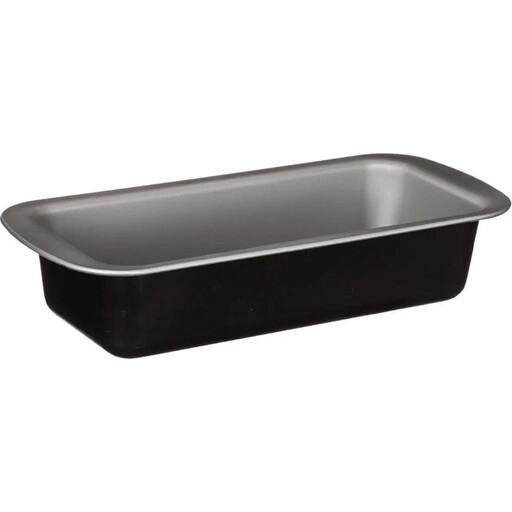
Why this product suits this profile: This compact metal tin is designed for everyday baking and, with a capacity of 1.3 litres, offers a manageable size for smaller households or those just starting out.
The dimensions and capacity are clearly stated. It is also explicitly noted that the tin is not suitable for the dishwasher or microwave.
Metal construction, 29 × 13 × 6.2 cm, 1.3-litre capacity and oven suitability. Hand washing is recommended.

Why this product suits this profile: This 30 cm loaf tin is designed for loaves of up to 1,000 g, as well as cakes and savoury bakes. The enamelled base complements the coated steel construction.
The maximum temperature is stated as 250 °C. The care instructions rule out the dishwasher and hob, and recommend gentle hand washing.
Coated steel, enamelled base, 30 × 10.01 × 8.51 cm and suitable for loaves of up to 1,000 g.
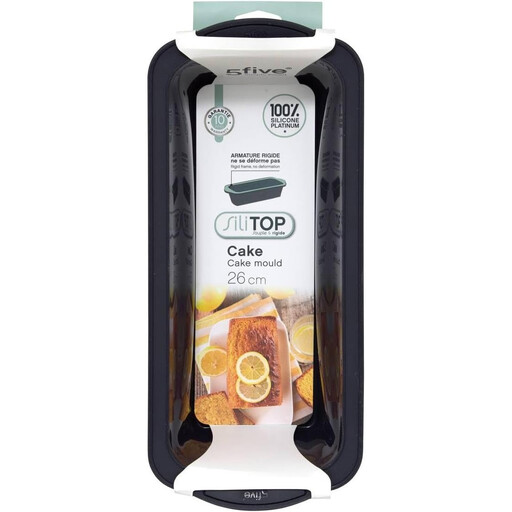
Why this product suits this profile: The combination of a steel frame and silicone offers flexible removal with added stability. The tin is suitable for bread and cakes, and for use in the oven or microwave.
The integrated sturdy frames help reduce deformation when the tin is being carried. The temperature limits are also stated as 220 °C in the oven and −20 °C in the freezer.
Steel-and-silicone construction, 1.59-litre capacity, dishwasher-safe and suitable for the oven and microwave.
We have put together a complete, regularly updated list of products that fully meet these strict selection criteria and the safety regulations applicable in the EU.
To help a baking tin retain its properties for as long as possible, follow these simple rules:
With very large tins, such as a 35 cm bread tin, you should also check that they fit fully on the baking tray and leave enough space around the oven walls.
A taller loaf tin is suitable for loaves of bread and pound cakes. Check the capacity and recommended quantity of dough. For larger loaves, models with a capacity of approximately 1.5 litres or more may be suitable.
This depends on the individual product. Some tins can be put in the dishwasher, while others should only be cleaned by hand. The manufacturer’s instructions are crucial. With coated tins, hand washing with a soft sponge can help protect the surface.
Check the maximum temperature and whether the tin is approved for use in a microwave, freezer or other appliances. Being oven-safe alone does not mean that it can be used on a hob. Significant temperature changes should also only be made if expressly permitted by the manufacturer.