
Lieferung heute & morgen

Qualitätsgarantie

Willkommens-Angebote freischalten: KOSTENLOSE Lieferung | Bis zu 80 % RABATT | Kostenlose 30-Tage-JoyPlus-Testphase
App herunterladen
Whether you need a cake tin, muffin tray or small ceramic ramekin, there is a wide range of baking tins and baking accessories to choose from. For home bakers, looks are not the only consideration. The material, dimensions, temperature range and cleaning requirements all determine whether a baking tin is genuinely practical for everyday use.
Silicone baking moulds are easy to store and often make it easier to remove baked goods. However, thin-walled models can deform or spill over the edge when being carried to the oven. A stable base, such as a baking tray, is advisable for runny mixtures.
So pay attention to stability, wall thickness and overall dimensions. A lightweight model is convenient to store, but may need additional support when being filled.
A non-stick baking tin is not automatically suitable for the dishwasher. Harsh detergents, metal utensils and abrasive sponges can damage the coating. For example, hand washing is recommended for the Ballarini PATISSERIE Muffin Pan, even though its two-layer coating is stated to be PFAS-free.
Always check the information on cleaning, coating type and maximum temperature. The description “easy to release” does not replace specific care instructions.
A muffin tin with twelve wells is suitable for several small portions, but it cannot replace a cake tin. Conversely, a deep cake tin may take up more space than necessary in a small household. With soufflé ramekins, crème brûlée ramekins and ceramic ramekins, the individual capacity is also important.
Choose a capacity that matches the quantity specified in your recipe. A capacity of 200 ml is suitable for a single dessert portion, while 340 ml can accommodate larger portions or savoury bakes.
Silicone is flexible, lightweight and space-saving. It is suitable for cakes, tarts, madeleines and, in some cases, frozen desserts. Releasing the contents is often straightforward. For easy handling, the mould should be placed on a sturdy tray.
Carbon steel conducts heat differently from silicone and provides a firm construction for many cake and bread tins. Coated models should generally not be used with metal utensils. The permitted temperature must be stated in the product description.
Stoneware and porcelain retain heat and are suitable for oven-safe baking dishes, soufflé ramekins and crème brûlée ramekins. However, sudden temperature changes can cause stress and cracks. A mould should not be placed directly from the freezer into a hot oven unless the manufacturer expressly permits this.
Compare the stated maximum temperature with your recipe and oven. For example, the Le Creuset stoneware ramekin is specified as suitable for temperatures of up to 260 °C; however, it must not be used directly on a hob.
If dishwasher-safe baking accessories are important to you, this feature must be stated explicitly. For some products, only the mould is dishwasher-safe, while lids or accessories should be washed by hand.
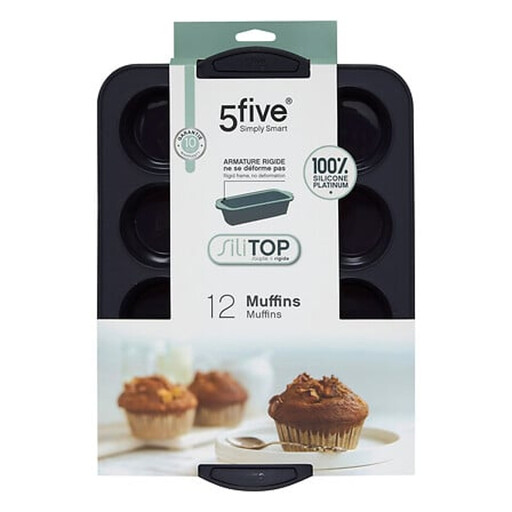
Why this product suits this profile: The muffin tin has 12 wells, each measuring 6.5 cm in diameter, making it suitable for muffins, cupcakes and small savoury bakes.
The integrated steel structure supports the flexible silicone mould and makes it easier to fill and carry to the oven.
12 individual wells, silicone construction and a total capacity of 0.85 l; dimensions are 33.1 × 23.7 × 4.1 cm.
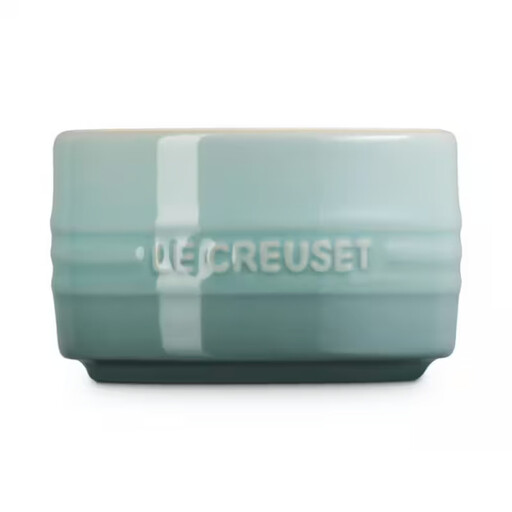
Why this product suits this profile: This stackable stoneware ramekin is designed for individual desserts, starters and snacks, and can also be used for serving.
The 200 ml capacity is clearly stated. The manufacturer also provides guidance on cooling times and avoiding thermal shock.
Stoneware with scratch-resistant enamel, freezer-safe construction and a stated oven-safe temperature of up to 260 °C; according to the product details, it is dishwasher-safe.
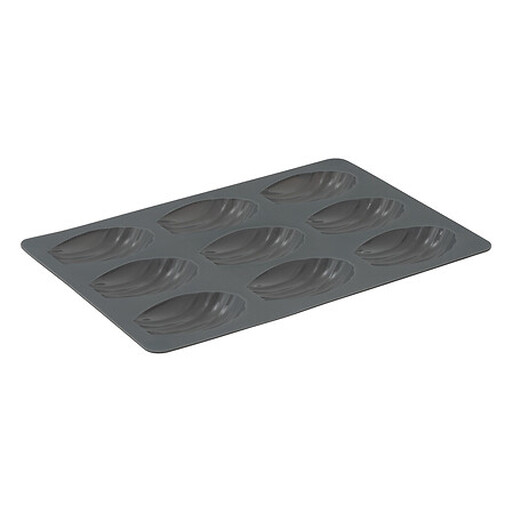
Why this product suits this profile: This mould is designed for madeleines and features several shell-shaped wells to create their characteristic ridged surface.
The dimensions of 36 × 21.5 × 2 cm are clearly stated. Before buying, you should still check that the mould fits your baking tray and oven.
Food-safe silicone, flexible release and, according to the product description, suitability for the oven, freezer and dishwasher.
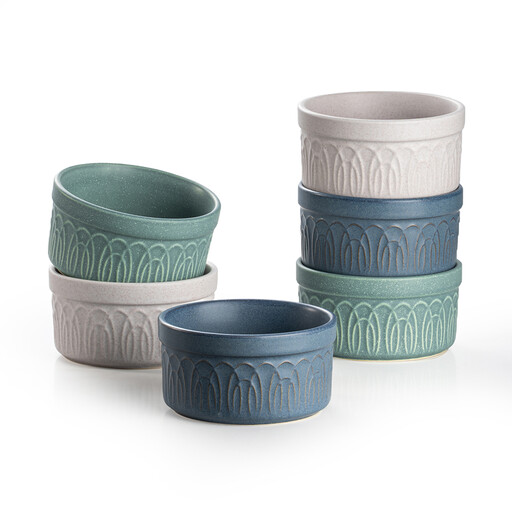
Why this product suits this profile: This set of six ceramic ramekins is suitable for crème brûlée, soufflé, mousse, quiche and small side dishes.
The set capacity and suitability for the oven, freezer and dishwasher are stated. As these are ceramic, sudden temperature changes should be avoided.
Six ramekins made from ceramic stated in the product details to be lead-free, with an 8 fl oz capacity and smooth glaze.
We have put together a complete, regularly updated list of products that fully meet these strict selection criteria and the safety regulations applicable in the EU.
A clearly sized muffin tin or flexible silicone cake mould is practical for many beginners. Muffin tins portion the batter in advance, while silicone often makes it easier to remove the baked goods. With runny mixtures, the mould should be placed on a sturdy baking tray.
That depends on the recipe and how you intend to use the mould. Silicone is lightweight, flexible and space-saving. Metal tins are stable and can affect browning differently with certain baked goods. The key factors are the permitted temperature, dimensions, cleaning requirements and whether the shape is suitable for the recipe.
Avoid sudden temperature changes. Do not place a cold ramekin straight into a very hot oven, and do not put a hot ramekin on a cold or wet surface. You should also follow the manufacturer’s safety instructions.