
Lieferung heute & morgen

Qualitätsgarantie

Willkommens-Angebote freischalten: KOSTENLOSE Lieferung | Bis zu 80 % RABATT | Kostenlose 30-Tage-JoyPlus-Testphase
App herunterladen
When buying baking tins and baking accessories, people often focus first on price, appearance or getting the largest possible set. For good everyday usability, however, other factors are more important: will the tin fit in your oven? Can you remove the baked goods without damaging them? And is cleaning it compatible with your kitchen routine?
This buying guide from the Joybuy Product Recommendation Officer shows what hobby bakers, families, baking beginners and small dessert studios should look out for.
A set of baking tins with lots of pieces may seem practical at first. In reality, individual tins can be too small, too shallow or unsuitable for your own baking routine. Someone who mainly bakes bread needs different dimensions to someone who makes muffins, layer cakes or traybakes.
Before buying, you should therefore be clear about which recipes you regularly make:
Non-stick coated baking tins can make releasing baked goods easier. However, the coating remains sensitive to metal utensils, scouring pads and incorrect temperatures. What’s more, not all tins are dishwasher-safe.
That’s why the specific care instructions are important. For several of the carbon steel tins featured here, hand washing with warm water and a soft sponge is recommended. This extends the life of the surface, but does require a little more time than a dishwasher cycle.
Not every tin is suitable for every heat source. Carbon steel baking tins are designed for the oven, but not for the microwave, hob, induction hob, open flame or charcoal grill. Silicone baking tins can have different temperature ranges depending on the product.
The maximum temperature must match your intended use. A tin with a stated upper limit of 220 °C, for example, is not suitable for recipes that consistently require higher temperatures.
Carbon steel is relatively light and conducts heat evenly through the tin. This material is suitable for cakes, bread, brownies and savoury bakes. With coated tins, the surface should be cleaned gently after cooling.
Silicone is flexible and can make it easier to release small cakes, desserts or jellies. Before buying, it’s worth checking the temperature range, stability and whether the tin is approved for the oven, microwave, freezer or dishwasher.
Stainless steel is often used for cutters, nozzles and presses. For such baking utensils, a smooth finish and easy cleaning are more important than a non-stick function.
The external dimensions must fit your oven rack. The height is also relevant: tall cake tins can hit the top heating element or restrict air circulation.
For springform tins, several diameters are practical. A set with 22 cm, 24.5 cm and 26 cm covers different cake quantities. For bread tins, on the other hand, the internal shape should match the desired slice size and the amount of dough.
Coated tins should not be treated with metal knives or abrasive cleaners. The tin should be allowed to cool completely before turning out. Hot baking tins should be kept out of reach of children.
For small kitchens, stackable tins are useful. With a set, you should also check whether all the pieces actually fit inside each other or need to be stored separately.
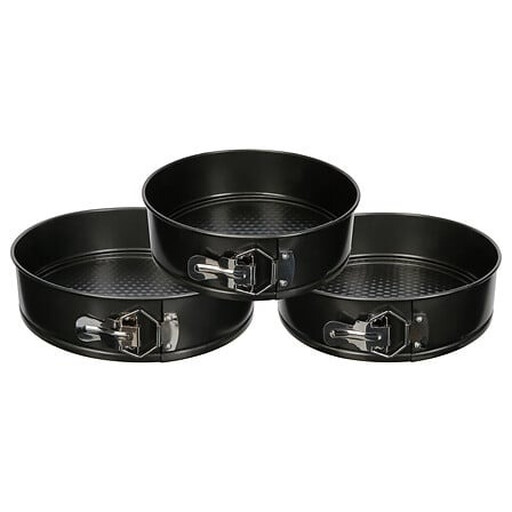
Why it fits the profile: Three diameters support families and beginners with cakes of different sizes, without having to buy several individual tins.
The sizes 22 cm, 24.5 cm and 26 cm are clearly stated. This makes it easier to match the baking quantity to your recipe.
Steel with non-stick coating, removable base, hinge mechanism and stackable design.
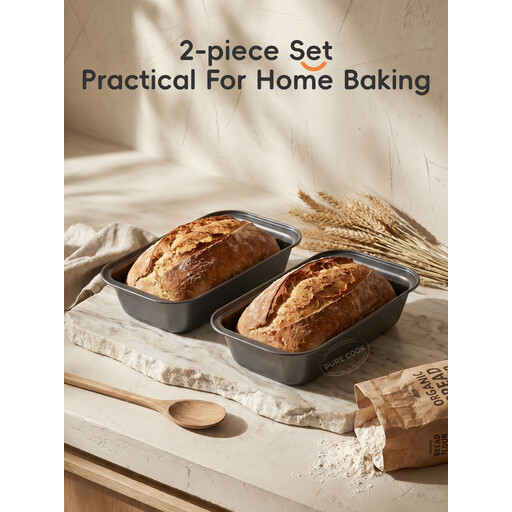
Why it fits the profile: For regular toast bread, wholemeal bread, loaf cakes or meatloaf, you get two square tins, each with a 2.13 quart capacity.
The product details explicitly state oven use and the exclusion of hob, microwave, induction and open flame.
Carbon steel, dimensions approx. 13.2 × 25.5 cm, non-stick coating up to 220 °C and two identical tins for parallel baking.
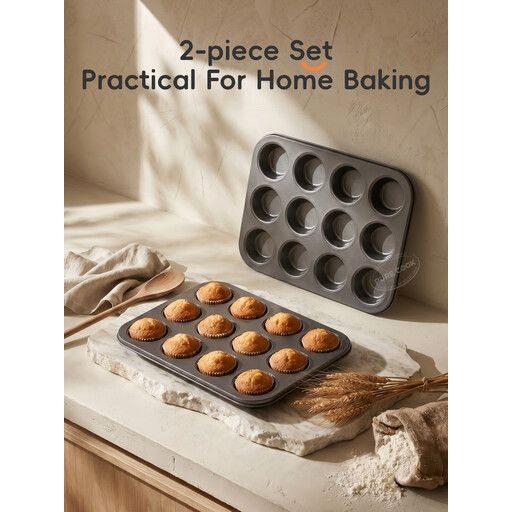
Why it fits the profile: Various square, round and segmented tins are suitable for alternating sweet and savoury recipes as well as multiple portions.
The individual tin types and dimensions are listed. This allows you to check in advance whether the selection fits your oven and intended production volume.
Eight-piece set, stackable design, carbon steel and suitable for oven or air fryer according to the product description.
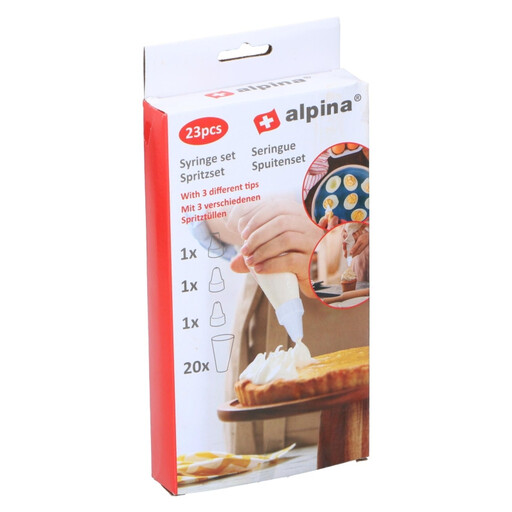
Why it fits the profile: The set supports families, baking beginners and users who want to decorate cakes, cupcakes or tarts with multiple patterns.
The contents list mentions 20 reusable PE piping bags and three nozzles. This makes the selection more transparent than a vague accessories listing.
23 pieces, three different nozzles and reusable bags; cleaning with warm soapy water is recommended.
We’ve put together a current selection of products based on the selection criteria for baking tins and baking accessories mentioned above.
To get started, a springform tin, a loaf tin or bread tin, a baking tray and some basic baking utensils such as a whisk, spatula and pastry brush are usually enough. A large set of baking tins is only worthwhile once you regularly make different recipes.
The lifespan depends on the material thickness, temperature, cleaning and how you treat the coating. Metal utensils, harsh abrasives and unnecessarily high temperatures can damage the surface. Hand washing with a soft sponge is the recommended care for many coated tins.
Silicone baking tins are not automatically approved for every temperature and every heat source. Before use, you should check the manufacturer’s information on maximum temperature, oven type, microwave, freezer and dishwasher. For firm doughs, a baking tray underneath can also be useful as a support.