
Lieferung heute & morgen

Qualitätsgarantie

Willkommens-Angebote freischalten: KOSTENLOSE Lieferung | Bis zu 80 % RABATT | Kostenlose 30-Tage-JoyPlus-Testphase
App herunterladen
Anyone looking to buy baking tins and baking accessories will find a wide range of options for cakes, bread, bakes, biscuits and festive baking. However, product images and descriptions do not always reveal how practical an item will be in everyday use. The key factors are the material, dimensions, care instructions and intended use.
Three common purchasing decisions in particular can lead to unnecessary expense:
The material affects heat distribution, weight, cleaning and storage:
Look for clear information such as “oven use only”, “not suitable for use on hobs” or a specific maximum temperature. These details are more important than broad advertising claims about durability.
The right cake tin depends on the recipe and the size of your household. A springform tin is practical when delicate cakes or gateaux need to be removed without turning them out. A 12-hole muffin tin is suitable for individual bakes, but it needs enough room in the oven.
For bread, compare the internal dimensions of the loaf tin with the amount of dough. For example, a 13.2 × 25.5 cm tin may be suitable for rectangular loaves, toast or certain cakes. With baking trays, the rim height is just as important as the length and width, particularly for traybakes, roasted vegetables or runny batters.
When considering sets with several sizes, it is worth taking a quick inventory:
Some coatings may only be cleaned with a soft sponge and warm water. Hand washing is expressly recommended for several PURECOOK moulds. Metal scouring pads and sharp objects can damage the surface.
Practical baking accessories also include baking paper, dough scrapers, whisks, brushes, cooling racks and heat-resistant gloves. For piped biscuits or decorative icing, a biscuit press or a stainless-steel nozzle set with interchangeable discs may be useful. With every product, check which parts are included and read the care instructions.
The following recommendations categorise specific products according to typical requirements. Technical details are based on the relevant product information.
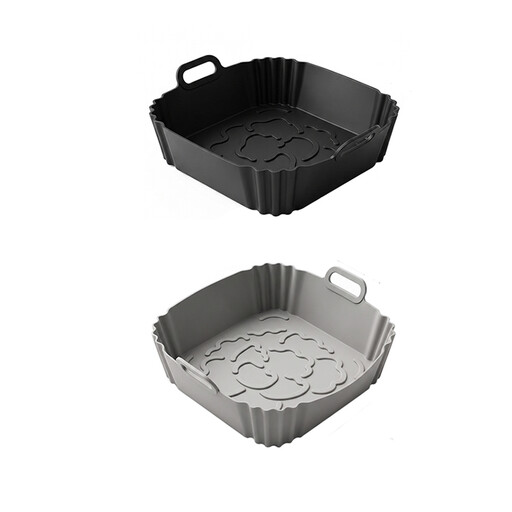
Why this product suits the profile: Two square silicone baking moulds measuring 21.5 × 21.5 cm are suitable for smaller batches and take up little storage space.
The precise dimensions make it easier to check suitability before buying. For stability when filling, the flexible mould should be placed on a baking tray.
Two pieces in the set; flexible material and compact square dimensions for smaller recipes.
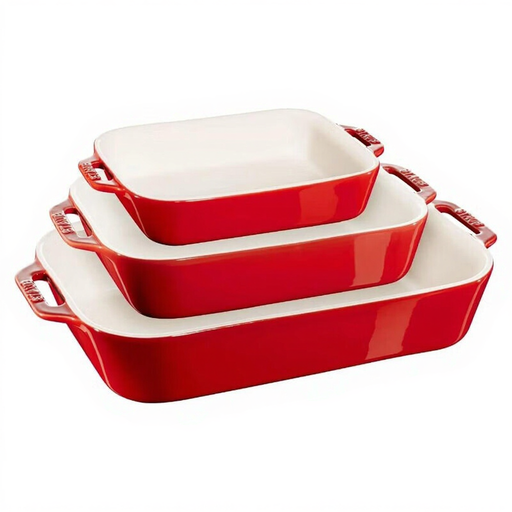
Why this product suits the profile: Three rectangular ceramic dishes measuring 20 × 16 cm, 20 × 27 cm and 24 × 34 cm provide a range of sizes for bakes, gratins and desserts.
The three stated dimensions and total capacity of 4.5 litres make it easier to choose the right dish for portions and recipes than a simple size description would.
Enamelled ceramic; according to the product information, oven-safe up to 260 °C, dishwasher-safe and stackable.
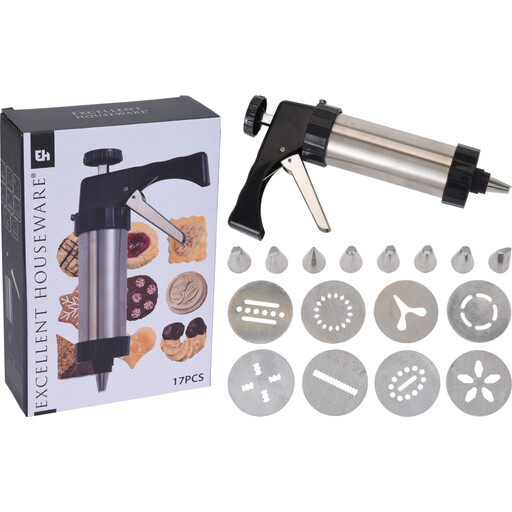
Why this product suits the profile: With 16 discs, this press is designed for users who want to make piped biscuits, butter biscuits or decorative icing in a range of shapes.
The number of interchangeable discs is clearly stated. This makes it easier to compare the range of functions with your own baking plans before buying.
Stainless-steel construction; 16 interchangeable discs; hand washing and thorough drying are recommended.
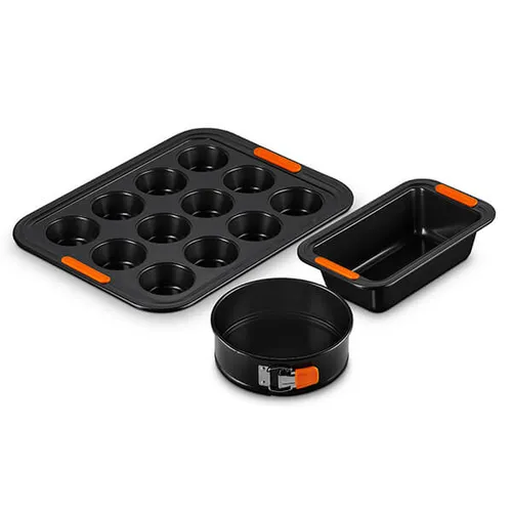
Why this product suits the profile: The set combines a 12-hole muffin tin, a 24 cm loaf tin and a 20 cm springform tin for sweet and savoury recipes.
The types of tin included and the temperature range up to 240 °C are clearly specified. This makes it easier to check whether the set suits your oven and recipes.
Three frequently used tins; carbon steel with a non-stick coating; according to the product information, PFAS-free.
We have put together a complete, regularly updated list of products that fully meet these strict selection criteria and the safety regulations applicable in the EU.
For seasonal baking, stainless-steel biscuit cutters are a practical option if they are rust-resistant and easy to clean. A set with ten Christmas cutters covers classic designs such as stars, characters and gingerbread shapes. If you bake with children, also look for designs with fewer sharp edges and ensure they are used in an age-appropriate way under supervision.
A 22-piece Christmas set from La Cucina combines 21 biscuit cutters with a 42 × 29 cm baking tray. Before buying, check whether this size will fit in your oven. For decorative biscuits and piped bakes, the stainless-steel press mentioned above can be supplemented with different discs.
For many households, a springform tin, a loaf or bread tin, a muffin tin and a baking tray are enough to start with. Dough scrapers, whisks, pastry brushes, cooling racks and heat-resistant gloves are useful additions. A baking tin set is worthwhile if several of the included tins will be used regularly.
Silicone baking moulds are flexible and can make it easier to release baked goods, but they need a firm base when being filled. Metal tins made from carbon steel or stainless steel are rigid and distribute heat differently. The best option depends on the recipe, oven, storage space and the relevant care instructions.
There is no fixed lifespan that applies in every case. It depends on how the tin is used, the temperature, cleaning and how the coating is handled. Use soft cleaning utensils, avoid metal cutlery on the surface and follow the maximum temperature specified by the manufacturer. If the tin shows visible damage, it should no longer be used.