
Lieferung heute & morgen

Qualitätsgarantie

Willkommens-Angebote freischalten: KOSTENLOSE Lieferung | Bis zu 80 % RABATT | Kostenlose 30-Tage-JoyPlus-Testphase
App herunterladen
Bread, toast, cakes, quiche and bakes do not depend on the recipe alone. The baking tin affects the shape, browning, quantity of dough and cleaning effort. If you focus only on an eye-catching non-stick coating or a particularly cheap loaf tin, you can easily overlook important details.
Common purchasing mistakes include choosing the wrong size, unclear material specifications and unrealistic expectations about cleaning. A non-stick baking tin, for example, is not automatically dishwasher-safe. Similarly, although a stoneware tin stores heat well, it is more sensitive to sudden temperature changes than many metal tins.
The measurement “30 cm” does not always describe the actual internal length. For bread and cakes, however, the internal dimensions and capacity are what matter. A 30 cm baking tin can hold significantly different quantities of dough depending on its width and height. For larger loaves or around 1 kg of dough, the capacity should be checked explicitly.
A 35 cm baking tin is not automatically suitable for every oven size, either. Before buying, you should consider the oven interior, the height of the tin and the available space beside other trays.
Coated steel or carbon-steel tins make it easier to remove baked goods. However, metal knives, abrasive sponges and harsh cleaning products can damage the surface. Some models are intended for hand washing only, while others are labelled as dishwasher-safe baking tins.
The manufacturer’s cleaning instructions should therefore always take priority. “Easy to clean” does not necessarily mean that the tin is suitable for every dishwasher cycle.
Stoneware baking tins retain heat and can be used for bread, cakes, gratins or bakes. However, they are not designed for direct heat sources such as hobs or naked flames. Hot stoneware should also never come into immediate contact with cold water.
Metal tins generally heat up more quickly and are often suitable for precise browning. Coated versions, however, require careful handling. The stated temperature range is always the deciding factor, not simply the description “heat-resistant”.
A loaf tin is suitable for loaf cakes, banana bread, meatloaf and many types of bread. A bread tin with a lid, such as a toast tin, helps produce an even, angular shape. A quiche tin or tart tin with a loose base makes it easier to remove delicate bases.
Rectangular tins with sufficient depth are practical for bakes and gratins. Depending on the size of your household, two different formats may be more useful than one large model. For example, the Le Creuset set with 25 cm and 32 cm tins covers smaller to medium-sized portions.
Before buying, the following points should be included in the product details:
A tin should only be used on hobs or under direct heat if this is expressly permitted. If there are visible cracks, chips or severely damaged coating, it should no longer be used.
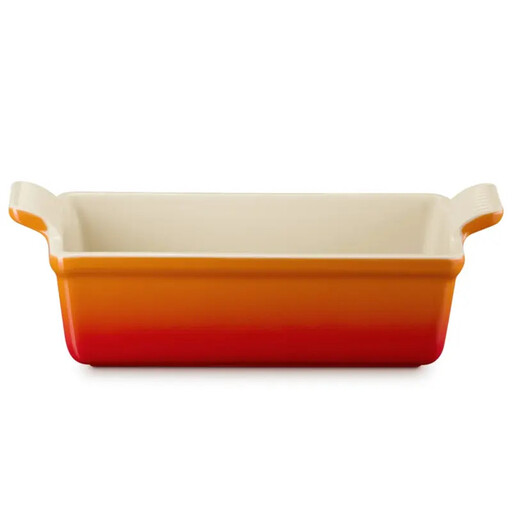
Why this product suits this profile: The 23 cm loaf tin is designed for bread, cakes, lasagne and meatloaf, covering several typical uses in a compact size.
The temperature range from -23 °C to 260 °C, along with its stated dishwasher, microwave and freezer suitability, is clearly specified.
Stoneware with scratch-resistant enamel; suitable for ovens, microwaves and freezers according to the product specifications.
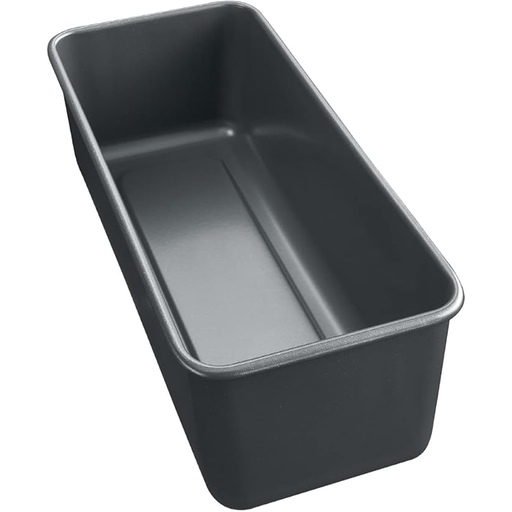
Why this product suits this profile: The 30 cm steel cake tin is designed for cakes and bread, while its 2.4 l capacity provides clear guidance on the quantity of dough it can hold.
The product details specify a maximum oven temperature of 250 °C and expressly state that the tin should be hand-washed and used without metal utensils.
Coated steel, enamelled base, 30 cm length and a ten-year guarantee on the non-stick coating stated by the manufacturer.

Why this product suits this profile: The toast tin with lid is aimed at households that want to bake square toast bread and small loaves in a precisely defined shape.
The stated 450 g capacity and supplied lid make the intended use clear, rather than promising only general versatility.
Non-stick coating and lid; suitable for toast, small loaves and cakes according to the respective product specifications.
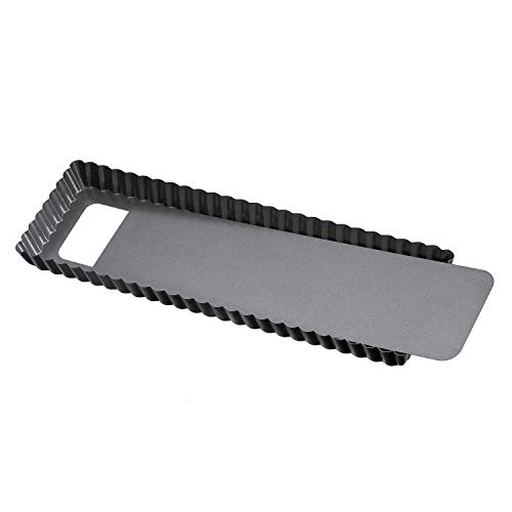
Why this product suits this profile: Measuring 35 × 13 cm, this rectangular quiche tin with loose base is designed for tarts, quiches and shallow cakes that can be removed cleanly.
The loose base and product dimensions are clearly specified. The details also state 250 °C and include instructions for gentle cleaning and avoiding metal utensils.
Coated steel, enamelled base, 1 l capacity and stated dishwasher suitability.
We have put together a complete, regularly updated list of products that fully meet these strict selection criteria and the safety regulations applicable in the EU.
Coated tins should be cleaned with warm water and mild washing-up liquid before first use. Lightly greasing the tin can make it even easier to remove baked goods. Do not use metal tools on non-stick surfaces, and allow the tin to cool before washing it.
Stoneware should be allowed to cool gradually. Before using any tin, check for visible cracks, chips or damaged coating. A baking dish or baking tin should not be placed on the hob unless the manufacturer expressly permits this.
It depends on the quantity specified in the recipe and the oven. A 24 cm baking tin is suitable for smaller households and compact cakes. A 30 cm tin offers more capacity for larger loaves and cakes. A 35 cm bread tin is more suitable for large loaves; here, the dough weight, tin height and oven interior should all be compatible.
Not always. Some stoneware tins and certain coated tart tins are dishwasher-safe according to the product specifications. Other models, particularly some steel loaf tins, may only be cleaned by hand. The manufacturer’s care instructions are decisive.
A quiche tin with a removable base makes it easier to release delicate pastry. With a tart tin featuring a loose base, you should check the base dimensions, rim height, coating and maximum oven temperature. For bakes and gratins, however, a sufficiently deep, heat-resistant baking dish is more practical.