
Lieferung heute & morgen

Qualitätsgarantie

Willkommens-Angebote freischalten: KOSTENLOSE Lieferung | Bis zu 80 % RABATT | Kostenlose 30-Tage-JoyPlus-Testphase
App herunterladen
When buying baking tins for cakes, muffins and pastries, people often look first at the shape, colour and price. In everyday use, however, other details determine whether a tin is used regularly or left in the kitchen cupboard after a short time. Coating, stability, dimensions and cleaning are therefore important purchasing criteria.
A non-stick baking tin can make it easier to remove cakes, muffins or small tarts. However, the coating is sensitive to metal utensils, sharp knives and abrasive sponges. If clear care instructions are missing, the risk of scratches and premature wear increases.
The statement “dishwasher-safe” should also not automatically be applied to every tin. Some coated steel models are expressly intended for hand washing only.
Silicone baking moulds can be stored in a space-saving way and often make removing baked goods straightforward. With large or deep moulds, however, the soft material may give way when carrying them to the oven. A supporting frame or a baking tray underneath is then useful.
You should also check whether the silicone mould includes information about its temperature range, material and cleaning requirements. The term “food-safe” alone is not a substitute for specific product information.
A cake tin with unusual dimensions can cause a recipe not to rise as intended. With muffin tins and mini baking moulds, the number of cavities is just as relevant as their diameter and depth. If the cavities are overfilled, the batter may spill over; if they are underfilled, small pastries may remain flat.
Before buying, it is worth checking the external dimensions, cavity dimensions, capacity and oven size. Especially in small kitchens or with compact ovens, tins measuring 30 to 36 cm in length may not always fit easily.
Carbon steel and steel are shape-retaining and suitable for cake tins, muffin tins and tartlet tins. A coating can make removing baked goods easier, but it requires gentle cleaning. With the Le Creuset muffin tin, both the tin and the coating are made from carbon steel, with a stated heat resistance of up to 240 °C.
Silicone is flexible and often dishwasher-safe. The material can be folded or rolled up, but with liquid batter it should be placed on a firm baking tray. The manufacturer’s information on the temperature range and use in the oven, freezer or microwave is decisive.
A classic cake tin is suitable for loaf cakes, sponge cakes or smaller gateaux. A madeleine tin has shallow, shell-shaped indentations. A muffin tin is designed for several individual portions, while a tartlet tin usually allows you to make smaller tartlets or quiches.
For households that like trying different recipes, a baking tin set may be a sensible choice. If you mainly bake one particular type of pastry, however, a specialised tin is often more efficient.
Before buying, check:
One example of the differences: the Le Creuset 6-Cup Tartlet Mould is oven-safe up to 240 °C, but according to the product information it is not dishwasher-safe. By contrast, the 5FIVE silicone mould for Manqué cakes and the 5FIVE silicone mould for madeleines are described as dishwasher-safe. Such information should be checked against the relevant product data sheet before ordering.

Why this product suits the profile: Six small silicone moulds, each measuring 8 x 7.5 x 3.1 cm, offer an accessible introduction to making cupcakes, small cakes, jellies and frozen desserts.
The fixed individual dimensions make portioning more predictable. The stated temperature range of -40 °C to 230 °C covers use in the oven and freezer.
Silicone material, stackable design and stated dishwasher suitability.
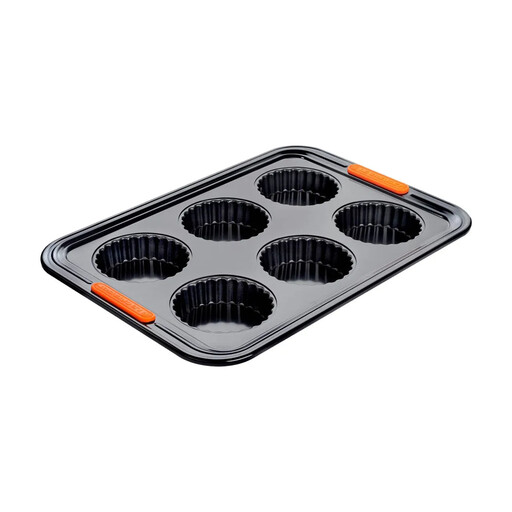
Why this product suits the profile: The six fluted cavities are designed for individual tartlets, mini quiches and sweet or savoury pastries.
The reinforced rim with silicone inserts helps you grip the tin securely. The care instructions are clear: hand wash only and no abrasive cleaning products.
Carbon steel, six fluted cavities, external dimensions of 38.7 x 26.9 cm and oven suitability up to 240 °C.
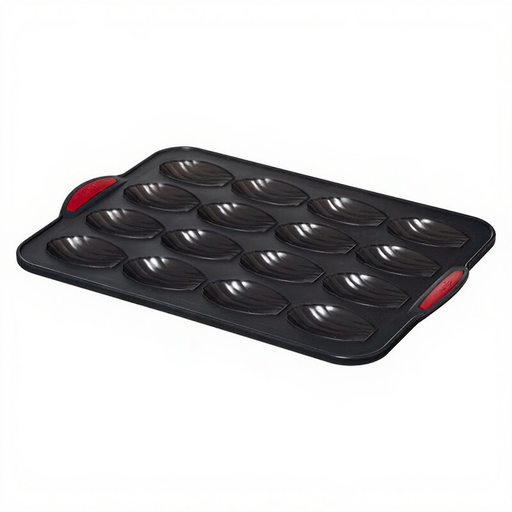
Why this product suits the profile: The mould bakes 16 madeleines per batch, making it suitable for families, larger quantities and small pastries.
The rigid frame reduces deformation when filling and carrying the mould. Dishwasher suitability makes cleaning easier after several batches.
16 cavities, food-safe silicone, framed construction and a stated weight of 0.31 kg.
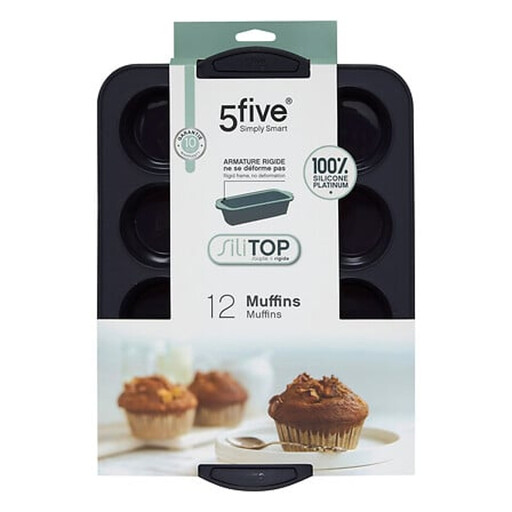
Why this product suits the profile: Twelve cavities measuring 6.5 cm in diameter are designed for muffins, cupcakes and similar individual portions.
The steel structure provides additional support for the flexible silicone when filling the tin. The product information states that it is dishwasher-safe and weighs 0.345 kg.
12-cup layout, silicone with steel reinforcement and external dimensions of 33.1 x 23.7 x 4.1 cm.
We have put together a complete, regularly updated list of products that fully meet these strict selection criteria and the safety regulations applicable in the EU.
A 12-cup or 16-cup muffin tin is suitable for baking several portions at once. Pay attention to the diameter and depth of the cavities. Paper cases can also be used for cupcakes, provided they fit inside the cavities.
Both materials have different properties. Metal tins retain their shape and transfer heat directly through their rigid structure. Silicone baking moulds are flexible, space-saving and often dishwasher-safe. With large or deep silicone moulds, a stable base is recommended.
It is not possible to give a general service life. This depends on the temperature, cleaning method and kitchen utensils used. Scratches, flaking or visible damage to the coating are reasons to stop using the tin. Proper care and following the manufacturer’s instructions can help extend its service life.