
Lieferung heute & morgen

Qualitätsgarantie

Willkommens-Angebote freischalten: KOSTENLOSE Lieferung | Bis zu 80 % RABATT | Kostenlose 30-Tage-JoyPlus-Testphase
App herunterladen
Whether you’re a home baker, a family cook or running a small baking studio, the price tag isn’t the only thing that determines how well baking tins and baking trays will work for you day in, day out. What really matters is the material, the dimensions, the temperature limits and how you care for them. A tin that looks versatile in an online listing can turn out to be impractical if it doesn’t fit your oven or if the coating isn’t treated properly.
As a Joybuy Product Recommendation Officer, I filter the most important product details and organise them by real-life usage scenarios. That way, you can more easily tell marketing claims apart from verifiable features.
A non-stick baking tin can make it easier to release cakes, bread or muffins. However, the coating will only stay intact for longer if you avoid metal knives, steel wool or abrasive cleaning products. For several of the models listed here, hand washing with warm water and a soft sponge is recommended. So the claim “dishwasher-safe” should always be explicitly stated in the product details.
“Oven-safe” doesn’t automatically mean a tin can be used on the hob, an induction cooktop or in the microwave. Several carbon steel models are intended exclusively for the oven. A bread tin, muffin tray or oven tin must not be placed directly over an open flame unless the manufacturer expressly allows it.
With baking trays, the external dimensions, usable internal area and rim height can all differ. A baking tray described as 37 × 32 cm may therefore have a different external measurement. Before you buy, measure the inside of your oven, the shelf height and the existing runners. The amount of batter also needs to match the tin size: a cake tin that’s too full can overflow, while one that’s too large often gives a flatter result.
Carbon steel heats up relatively quickly and is lighter than cast iron for many baking tins. However, heat distribution also depends on the material thickness and construction. With a loaf tin or bread tin, sturdy bases and even interior surfaces are helpful if you want your bake to come out with a regular shape.
Silicone is flexible and can make releasing your bake easier. A silicone baking mould should be placed on a sturdy baking tray when filling, so it goes into the oven safely. With thin silicone moulds, shape stability is also an important point to check.
The maximum temperature must suit your own baking routine. Examples from the product details:
These values apply to the oven and not automatically to hobs, open flames or microwaves. Before first use, you should also read the care instructions and safety notes from the respective manufacturer.
A springform tin, with its removable ring, is particularly suitable for delicate cakes, cheesecakes or brownies. A loaf tin, on the other hand, suits sponge cakes, toast and more compact loaves. For several small portions, a muffin tray with twelve cups is more practical than a large cake tin.
If you have limited storage space, look for stackable tins. A baking tin set can cover several sizes or formats, but it only saves space if the pieces can be nested or stacked on top of each other.
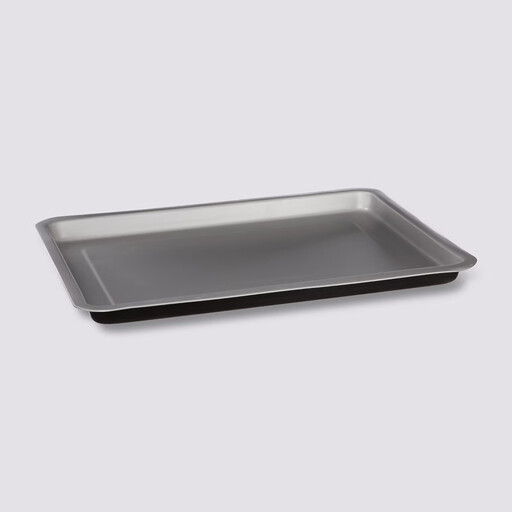
Why this product suits the profile: This rectangular baking tray is designed for family portions and simple oven dishes. The product data lists a metal material, a weight of 510 g and a rim height of 2.5 cm.
The stated external dimensions and the recommended hand washing help you realistically assess the space needed and care requirements before buying.
Rectangular format, lightweight design and 2.5 cm rim height for baking and oven dishes.
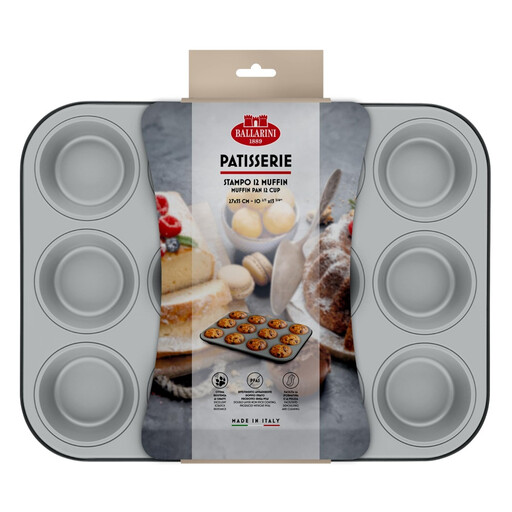
Why this product suits the profile: This carbon steel muffin tray offers twelve cups, a two-layer PFAS-free non-stick coating and a stated oven suitability up to 230 °C.
The temperature limit and the explicit note about hand washing make the usage requirements clear and understandable.
12 evenly spaced cups, carbon steel and a two-layer PFAS-free coating according to the product description.
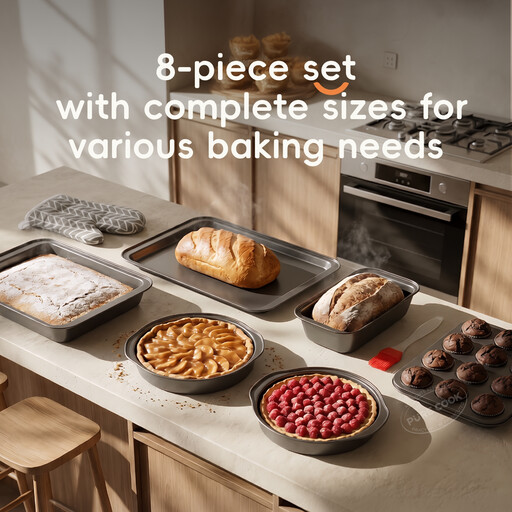
Why this product suits the profile: This baking tin set combines various square and rectangular tins for cakes, brownies, pizza, toast and savoury oven dishes.
Usage is clearly limited: oven only, no microwave, no hob and no open flame. This reduces the risk of misuse.
Eight-piece set, carbon steel, stackable design and suitable for both sweet and savoury bakes.
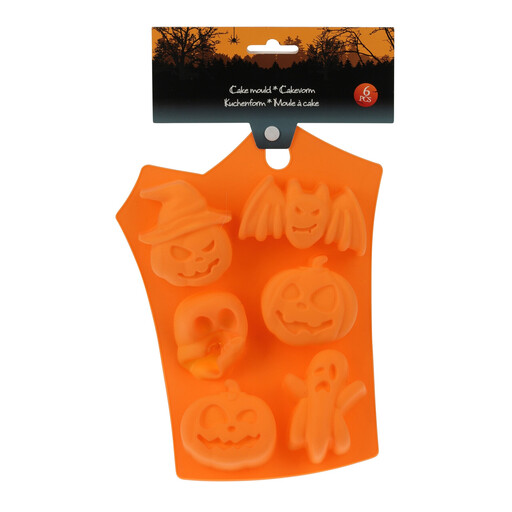
Why this product suits the profile: This themed Halloween silicone baking mould is designed for six small cakes and, according to the product description, can also be used for jelly, chocolate and ice cubes.
The flexible mould is designed for specific motifs. If you’re looking for a neutral everyday tin, compare the sizes and formats of a baking tin set instead.
Six themed cake moulds, flexible silicone construction and, according to the product description, suitability for oven, freezer and dishwasher.
We’ve put together a complete, regularly updated list of products that fully meet these strict selection criteria and the safety regulations in force in the EU.
A coated springform tin or a clearly sized loaf tin works well for many classic recipes. For several small portions, a muffin tray is a good choice. What’s important is a clear temperature limit and easy-to-understand care instructions.
It’s impossible to give a fixed lifespan. It depends on how often you use it, the temperature, how you clean it and how you treat the coating. Metal tools, abrasive cleaners and excessive overheating can damage the surface. If you see visible flaking or warping, stop using the tin.
A set can be worthwhile if you regularly bake different cakes, loaves, brownies or savoury dishes. However, before buying, check the dimensions, the actual contents, the temperature limits and your storage options. For occasional baking, a single, frequently used cake tin may be more economical.