
Lieferung heute & morgen

Qualitätsgarantie

Willkommens-Angebote freischalten: KOSTENLOSE Lieferung | Bis zu 80 % RABATT | Kostenlose 30-Tage-JoyPlus-Testphase
App herunterladen
Baking tins are part of the basic equipment in many British households. At the same time, cake tins, springform tins, muffin tins and tart tins can differ considerably in terms of material, care and intended use. An unsuitable tin can cause batter to stick, cakes to brown unevenly or the coating to become damaged after only a short time.
It is therefore worth checking the technical specifications before buying rather than relying on eye-catching marketing claims. The key factors are material, dimensions, temperature limit and cleaning instructions.
The term “non-stick baking tin” alone says little about how the product can actually be used. Some tins must only be washed by hand and are sensitive to metal utensils, abrasive sponges or sharp knives. If the surface is scratched, removing baked goods can become more difficult.
You should therefore look for specific details such as:
A cake tin with a diameter of 20 cm holds considerably less batter than a model measuring 24 or 26 cm. If a recipe is not adjusted accordingly, the cake may rise too high, overflow or take longer to cook in the centre.
With a springform tin, height, base construction and fastening are also important. A poorly fitting ring can allow runny batter to leak out. The tin should also fit inside your existing baking tray and oven.
An oven-safe baking tin is not automatically suitable for hobs, induction, naked flames or microwaves. Metal tins must generally not be used on a hob. With ceramic, you should also avoid thermal shock: a very cold tin should not be placed directly into a thoroughly preheated oven unless the manufacturer specifically permits this.
Steel and carbon steel heat up relatively directly in the oven and are suitable for cakes, bread, cake bases and muffins. A coating makes it easier to release baked goods, but requires gentle cleaning. Carbon steel can rust or become misshapen if cared for incorrectly.
Silicone baking moulds are flexible, lightweight and space-saving. Baked goods can often be released by carefully bending the mould. For soft or runny batters, a stable base is recommended, as a flexible mould can distort when being carried to the oven. The temperature limit must match the specifications for the particular model.
Stoneware and ceramic retain heat for longer and, depending on the design, can also be used for serving. However, they are heavier and more susceptible to impact than metal. Oven, freezer, microwave and dishwasher suitability should be checked individually.
The maximum temperature must not be exceeded. Examples from the selection include the Original Kaiser Bundt Tin, which is oven-safe up to 250 °C according to the product specifications, the Le Creuset Springform Tin up to 240 °C, and the Ballarini Muffin Tin up to 230 °C.
Allow baking tins to cool before cleaning them. For coated models, soft sponges and mild cleaning products are preferable. Ceramic tins should be protected from knocks and sudden changes in temperature. Always use suitable oven gloves when removing them from the oven.

Why this product suits this profile: Six individual silicone moulds allow you to make individual cakes, cupcakes, jellies and frozen desserts. The set is suitable for households looking to prepare a range of small bakes without needing much storage space.
The flexible mould helps you release bakes without using a knife. According to the product specifications, it is designed for temperatures from -40 °C to 230 °C and is suitable for ovens, microwaves and freezers.
Six moulds, stackable storage and dishwasher suitability according to the product description.
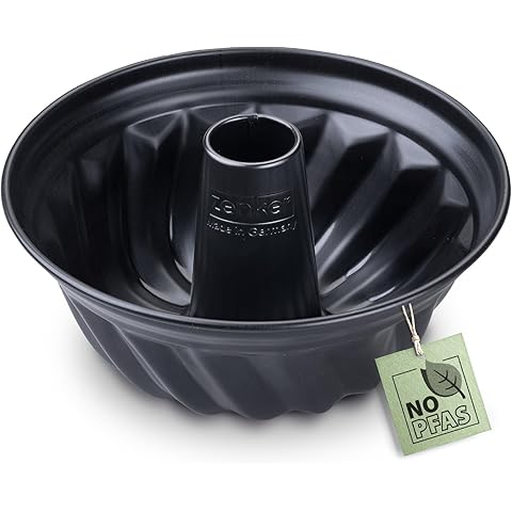
Why this product suits this profile: The 22 cm Bundt tin is aimed at people who regularly bake sponge cakes or classic Bundt cakes and value a sturdy, shape-retaining construction.
The extra-high rim and central tube accommodate the typical height and shape of a Bundt cake. According to the specifications, the coating is oven-safe up to 250 °C, and the tin must be washed by hand.
Steel construction, enamelled base, 2.8 l capacity and a stated guarantee for the coating.
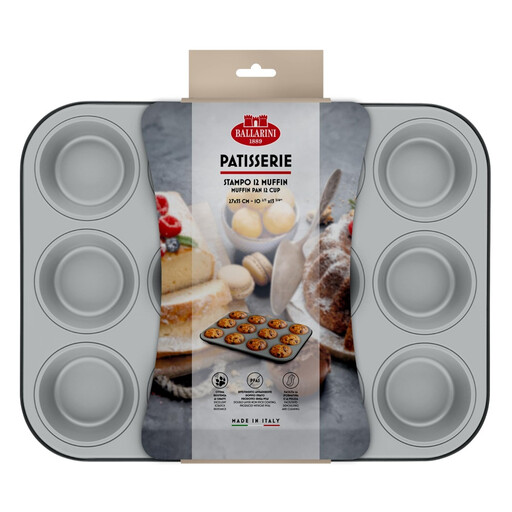
Why this product suits this profile: Families and frequent bakers can bake twelve muffins or cupcakes in one batch. Before buying, compare the dimensions of 27 × 35 cm with the inside of your oven.
The twelve clearly defined wells help prevent uneven portion sizes. According to the product information, the two-layer PFAS-free coating can be used up to 230 °C; hand washing is recommended.
12 baking wells, carbon steel and a stated temperature limit of 230 °C.
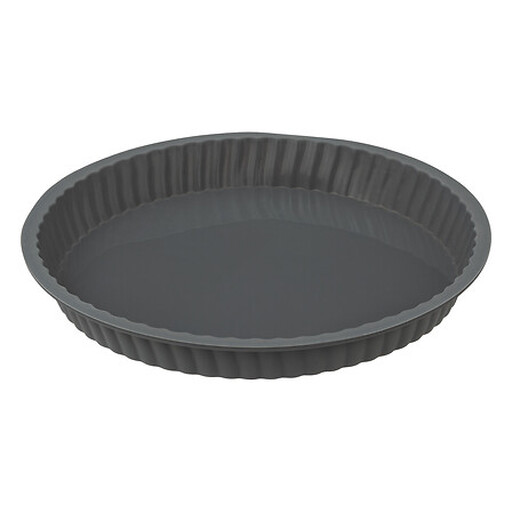
Why this product suits this profile: Measuring 31 × 31 × 4 cm, the flexible tart tin can be stored in a space-saving way and is suitable for tarts, quiches, flans and shallow cakes.
Silicone can be folded or stacked and does not require a fixed storage space. Before filling it, place the mould on a sturdy baking tray.
100% food-grade silicone according to the product information, flexible storage and suitability for ovens, microwaves and freezers.
We have put together a complete, regularly updated list of products that fully meet these strict selection criteria and the safety regulations applicable in the EU.
For beginners, a springform tin measuring around 20 to 26 cm in diameter is a versatile choice. It is suitable for sponge cakes, cheesecakes and many cake recipes. If you prefer baking individual portions, you can choose a muffin tin with six or twelve wells.
The lifespan depends on the material, coating and care. Coated steel tins should not be used with sharp or metal utensils. Ceramic can be damaged by knocks, while silicone remains flexible when used at the correct temperature and cared for properly. Visible cracks, distortion or a damaged coating are all reasons to stop using the tin.
This depends on the model and the recipe. A thin layer of grease can make releasing the bake even easier, even when the manufacturer states that the tin has a non-stick effect. With structured tins such as Bundt tins, careful greasing is particularly helpful, as batter can stick in the ridges and around the central tube.